Modern Front Yard Landscaping Designs for a Stylish Home
Your front yard sets the tone before you even say hello. It whispers (or shouts) who lives inside. Want curb appeal that feels unfussy, welcoming, and a little “wow”?
Let’s design a front yard that works hard, looks great, and doesn’t eat your weekends alive.
Start With a Game Plan (Not Just Pretty Plants)
You can buy a cart of plants and wing it. Or you can plan once and relax later. I vote plan.
Sketch your yard, note sun patterns, drainage, and key sightlines from the street and your front door. Ask yourself:
- Where do people walk naturally? Create paths that match how folks actually move.
- What do you want to highlight—front door, a big tree, a porch swing?
- What problems exist—ugly utility boxes, bare spots, a slope?
Keep the front yard simple. Pick a clear focal point and support it with plants and hardscape, not the other way around. You’re not building Versailles, IMO.
Design Principles You Can Actually Use
Forget jargon.
Think vibes and balance. A few rules make everything click.
- Repeat shapes and colors. Echo the curve of your walkway in your bed lines. Repeat a leaf shape or a plant color three times.
Instant cohesion.
- Layer your plants. Tall in back, medium in middle, low in front. Aim for soft steps, not a wall of green.
- Frame the entry. Flank the front door or path with matching containers or shrubs to guide the eye.
- Leave negative space. Lawn or mulch patches give your eye a break. Not every square inch needs a plant, FYI.
- Choose a simple palette. Two to three dominant colors + one accent = harmony.
Front Door: The Star of the Show
Your door should pop.
Paint it a confident color, then echo that color in seasonal pots or a small accent plant near the entry. Add house numbers and a mailbox with clean lines. Small moves, big payoff.
Hardscape First, Plants Second
The non-plant stuff gives structure.
Get it right, and the rest becomes easy.
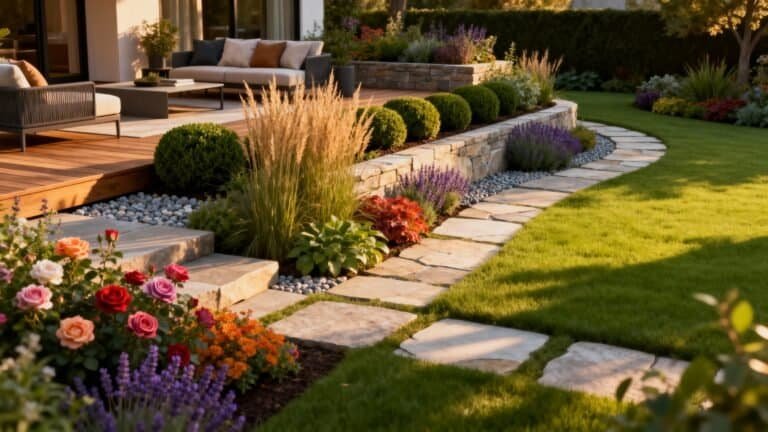
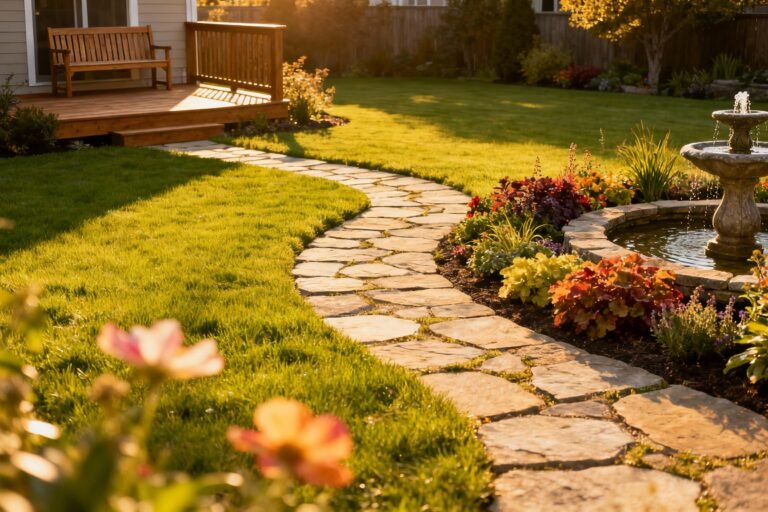
- Walkways: Make them wide enough (at least 3.5–4 ft). Curves? Keep them gentle, not the drunken-snake look.
- Steps and edges: Natural stone ages beautifully.
Concrete looks crisp. Pick one style and stick with it.
- Lighting: Path lights set low and subtle. Uplights on a specimen tree or the facade add “I know what I’m doing” energy.
- Mulch: Keep it consistent.
Dark brown or black usually wins. Avoid the neon orange stuff unless you enjoy regret.
Driveway Glow-Up
Add a border of pavers or groundcovers like creeping thyme to soften edges. If water pools, consider a permeable driveway strip.
Your knees and storm drains will thank you.
Plants That Look Good Without Drama
Pick plants for your climate and your lifestyle. If you travel a lot, skip divas. Choose workhorses that look good 80% of the year. Build a basic plant framework:
- Evergreen backbone: Boxwood, holly, pittosporum, dwarf conifers.
These hold the shape year-round.
- Flowering layers: Hydrangea, spirea, salvia, echinacea, daylily—pick 2–3 that love your zone.
- Textural fillers: Ornamental grasses (miscanthus, pennisetum), ferns, sedges. Movement = life.
- Groundcover and borders: Pachysandra, ajuga, creeping jenny, thyme. They clean up edges and suppress weeds.
Pro tip: Group plants in odd numbers (3s and 5s).
Repeat blocks down the bed to carry the eye.
Four Easy Plant Combos (Steal These)
- Sunny modern: Dwarf fountain grass + white coneflower + Russian sage + dark mulch.
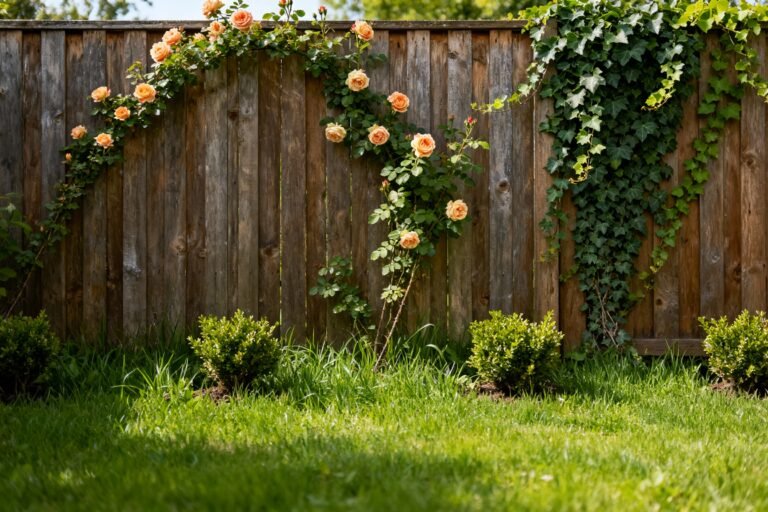
- Classic cottage: Boxwood balls + lavender + pink salvia + climbing roses on the porch.
- Low-water chill: Agave or yucca + purple ice plant + blue fescue + rosemary.
- Shade friendly: Hosta + Japanese forest grass + hellebore + ferns.
Lawn: Keep It Small, Keep It Healthy
Yes, a ribbon of lawn looks nice. No, you don’t need an airport runway of it. Shrink the lawn to the areas you actually use and maintain. Easy lawn wins:
- Edge the lawn with a clean, continuous curve—crisp edges instantly elevate the look.
- Topdress with compost once a year and mow high to crowd out weeds.
- Swap awkward strips for groundcover or gravel to ditch fussy maintenance zones.
No-Lawn Options (Zero Judgment)
Try a gravel courtyard with large pavers, a native meadow mix, or a tapestry of low groundcovers.
It can still look polished if you keep paths defined and mulches consistent.
Watering, Soil, and Other Not-Boring Essentials
You can’t fake healthy soil. Plants know. Your neighbors might not, but your plants will call you out.
- Soil test: Cheap, fast, and it tells you what to fix.
Add compost, not mystery “garden magic.”
- Irrigation: Drip > sprinklers for beds. Use smart controllers or simple timers. Water deeply and less often.
- Mulch: 2–3 inches around plants, but leave a donut around stems and trunks.
No mulch volcanoes, please.
- Maintenance rhythm: 15 minutes weekly: deadhead, spot-weed, refill mulch where thin. Little and often beats weekend marathons.
Planting Like a Pro
Dig wide, not deep. Loosen roots.
Mix in compost with native soil, not pure potting mix. Water the hole before planting, then again after. Stake only if wind requires it.
Simple, right?
Style That Fits Your House
Match your landscape’s tone to your architecture. Not perfectly, but…you know…coherent.
- Modern: Clean lines, repeated grasses, monochrome plants, concrete or steel planters.
- Traditional: Symmetry, boxwood hedges, brick paths, hydrangeas. Classic never complains.
- Craftsman/Cottage: Layered perennials, soft curves, painted arbor, quirky containers.
- Mid-century: Low silhouettes, gravel, succulents, breeze-block accents, bold house numbers.
Color Coordination
Pick a house trim color and echo it in foliage or flowers.
Cool house colors (grays, blues) vibe with purples and whites. Warm tones (brick, tan) love oranges, yellows, and deep greens. Keep the neon experiments in containers first—less regret, IMO.
Budget-Friendly Upgrades That Deliver
You don’t need a full renovation to get curb appeal.
Focus on high-impact moves.
- Define edges: Steel edging or a sharp spade line cleans everything up.
- Upgrade the path: Add stepping stones to widen, or create a secondary “service path” to the side gate.
- Container moments: Two big pots by the door beat six small ones scattered like confetti.
- Lighting refresh: Solar path lights have leveled up. Place them thoughtfully, not every 12 inches like runway lights.
- Paint + hardware: Front door, numbers, mailbox, and a new doormat. Cheap.
Huge impact.
FAQ
How do I pick plants that won’t die on me?
Choose plants native or well-adapted to your zone, match them to your sun exposure, and prioritize drought tolerance. Read the tag, then double-check online. If a plant demands daily coddling, pass.
Build your backbone with evergreen shrubs and grasses, then layer bloomers you love.
What’s the easiest way to design a front yard on a budget?
Phase it. Install hardscape and edging first, then plant in waves. Buy fewer, larger shrubs for structure, and fill the rest with divisions or fast-spreading perennials.
Mulch generously. Add lighting and containers later as funds allow.
How can I make a small front yard feel bigger?
Use broad, simple shapes and fewer plant varieties. Curve beds inward to create depth, and keep the lawn or gravel area uninterrupted.
Low, uniform groundcovers and repeating plants stretch space visually. Also, keep the front porch uncluttered—oxygen for the eyes.
What should I do about a steep slope in my front yard?
Terrace it with low retaining walls, or create a switchback path with landings. Plant deep-rooted shrubs and groundcovers to anchor soil—juniper, cotoneaster, creeping rosemary.
Add a dry creek bed to guide runoff and look intentional. Functional can look fancy.
Do I need irrigation, or can I hand-water?
You can hand-water while things establish, but drip irrigation saves time and water long-term. A simple hose bib timer costs little and works great.
Water in the early morning and aim for deep, infrequent soaks so roots dive down instead of living at the surface.
What’s the best front yard tree?
Pick one that fits your space at maturity—canopy width matters. Great options: serviceberry, Japanese maple, crepe myrtle (in warm zones), or a small ornamental pear (non-invasive varieties only, please). Plant off-center to frame the house, not block it.
Conclusion
Front yard landscaping doesn’t require a degree or a landscaping crew—just a clear plan, a few solid plants, and consistency.
Start with structure, keep the palette tight, and let your front door steal the show. Make changes in phases, learn what thrives, and tweak as you go. Before long, your curb appeal will greet guests—and your future self—with a smug little grin.