Swiss Cheese Plant Care Guide: How to Grow Monstera Adansonii Indoors
Everyone calls it the Swiss cheese plant, but spoiler: it doesn’t make cheese. It does, however, punch holes in its leaves like it’s auditioning for a polka-dot party. If you want a plant that delivers big jungle vibes with minimal drama, this one’s your ride.
Let’s talk Monstera deliciosa—how to keep it thriving, what those holes mean, and why yours might be stubbornly… hole-less.
Meet the Swiss Cheese Star (aka Monstera deliciosa)
You’ll spot this plant in stylish apartments, cozy cafés, and basically anywhere that needs instant “cool.” Those iconic holes and splits are called fenestrations, and yes, they make the plant look like it’s perpetually mid-hair flip. Why the holes? Theories say they help the plant catch dappled light on the jungle floor or let wind pass without ripping leaves.
Either way, those dramatic splits show up as the plant matures—so don’t stress if your baby leaves come out solid.
Light: The Secret to Fenestrations
Bright, indirect light = happy Monstera. Think east-facing window or a few feet back from a sunny one. Direct hot sun can crisp the leaves, but low light equals slow growth and fewer holes.
Light setup that actually works
- Place near a bright window with sheer curtains.
- Rotate the pot every 1–2 weeks to avoid lopsided growth.
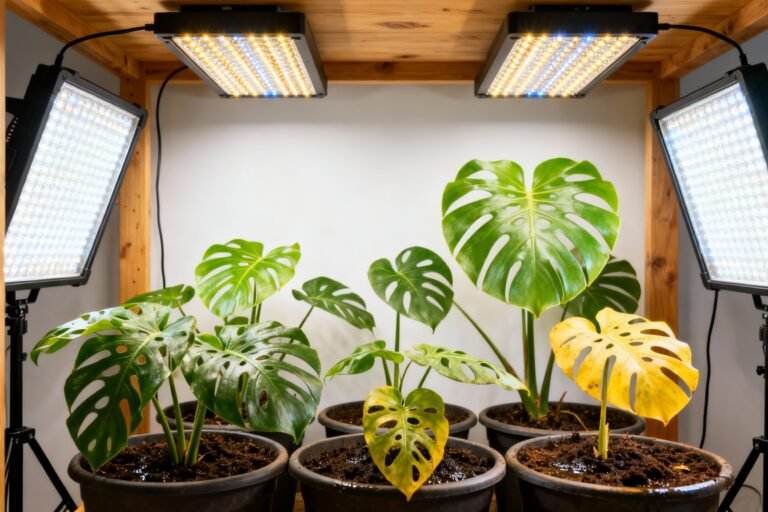
- Use a grow light 12–18 inches above the plant if your room is dim.
FYI, if your Monstera keeps spitting out small, solid leaves, it probably wants more light or support.
We’ll get to the support part soon.
Watering: Don’t Love It to Death
Monsteras hate soggy roots, but they also hate drought theatrics. You want the in-between sweet spot. Water when the top 2 inches of soil feel dry. That usually means every 7–10 days in warm months and every 2–3 weeks in winter.
But your home’s humidity and light will change that—so use your fingers, not your calendar.
Watering cheat sheet
- Check moisture with your finger or a moisture meter.
- Water thoroughly until it drains from the bottom.
- Empty the saucer—no root soup.
IMO, consistent watering beats “oops, I forgot for 3 weeks” every time. Your plant agrees.
Soil and Potting: Give Those Roots Room
Monsteras grow big, and their roots breathe. So don’t smother them in dense soil. Use a chunky, well-draining mix.
A simple recipe:
- 1 part high-quality potting soil
- 1 part perlite or pumice
- 1 part orchid bark or coco chips
Choose a pot with drainage holes (I cannot stress this enough). Repot every 1–2 years or when roots circle the pot and the plant says, “I can’t feel my toes.”
Repotting tips
- Go up 1–2 inches in pot diameter—no giant jumps.
- Gently loosen roots and trim dead ones.
- Stake at repot time if you plan to add a pole.
Support and Structure: Make It Climb
Monsteras are natural climbers. If you want bigger leaves and more dramatic splits, give it something to hug. Add a moss pole, coco pole, or trellis.
Tie the stems loosely as they grow upward. This signals the plant to mature.
How to train your Monstera
- Install a pole near the main stem.
- Use soft plant ties (or cut-up pantyhose—classy).
- Mist the pole occasionally so aerial roots can latch on.
No support = more sprawling. That’s a vibe too, but it eats floor space fast.
Humidity, Temperature, and Fertilizer: Keep It Comfy
Monsteras handle most indoor climates like champs, but a few tweaks boost growth.
- Humidity: 50–60% is ideal, but they tolerate less.
Group plants, use a pebble tray, or run a humidifier if your air feels dry.
- Temperature: 65–85°F is perfect. Keep away from cold drafts and blasting heat vents.
- Fertilizer: Feed monthly in spring/summer with a balanced liquid fertilizer at half strength. Skip winter or feed lightly.
IMO, a little fertilizer goes a long way.
Overfeeding causes crispy margins and salt buildup—hard pass.
Pruning, Propagation, and Styling
Want a fuller plant or a second Monstera baby? Easy. Pruning: Snip leggy stems just above a leaf node to encourage branching. Remove yellow or damaged leaves to tidy the look. Propagation: Take a cutting with at least one node (the knobby bump where roots form).
Leaf-only cuttings won’t root—sad but true.
How to propagate like a pro
- Cut below a node with a clean, sharp tool.
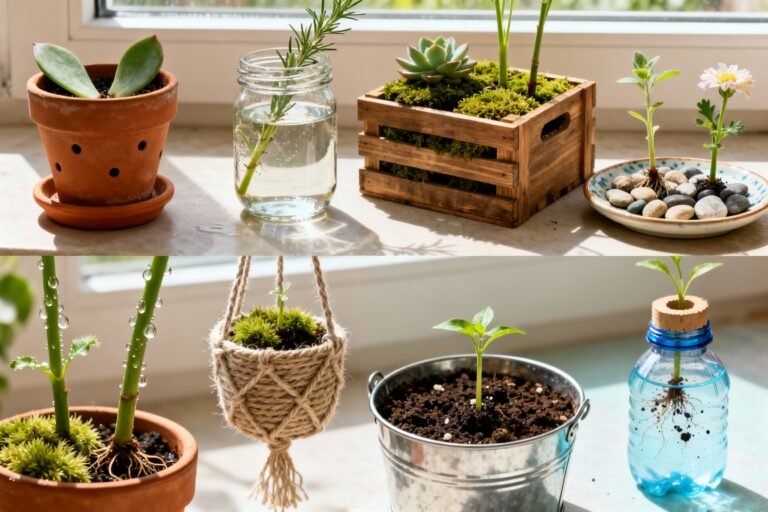
- Root in water or moist perlite/soil. Keep warm and bright.
- Pot up once roots are a few inches long and robust.
Styling tips:
- Let it climb for tall, elegant drama.
- Or let it trail off a shelf for jungle chaos (the good kind).
- Pair with simple pots to let the leaves shine.
Common Problems (and Chill Fixes)
Plants misbehave sometimes. No need for panic spirals.
- Yellow leaves? Usually overwatering.
Check soil and drainage. Older bottom leaves yellow occasionally—that’s normal.
- Brown crispy edges? Low humidity or underwatering. Increase humidity and water more consistently.
- No fenestrations? The plant is young, lacks light, or needs a support pole.
Address those and wait.
- Droopy leaves? Thirst, recent repot, or low temps. Check soil moisture first.
- Pests? Spider mites and thrips love a Monstera buffet. Wipe leaves, use insecticidal soap or neem, and improve airflow.
Monstera Varieties and Lookalikes
Not all “Swiss cheese” plants are the same.
And yes, plant names can be chaos.
- Monstera deliciosa: The classic big-leaf beauty we’re discussing.
- Monstera adansonii: Smaller leaves with lots of holes; vining habit; often sold in hanging baskets.
- Monstera deliciosa ‘Thai Constellation’ or ‘Albo’: Variegated forms with cream/white patches. Gorgeous, pricier, slightly pickier about light.
- Rhaphidophora tetrasperma: Often mislabeled as “mini Monstera.” Different genus, similar vibe, faster grower.
If you’re chasing variegated types, give them extra bright light (but still indirect) to keep that color popping.
FAQ
Is the Swiss cheese plant toxic to pets?
Yes. Monsteras contain calcium oxalate crystals that can irritate mouths and stomachs.
Keep them out of reach of nibblers. If your pet chews a leaf, call your vet—usually it’s mild but uncomfortable.
How big will my Monstera get indoors?
With support and good light, expect 6–8 feet tall and wide. In a corner with meh light, it stays smaller.
You control size with pruning and pot choice.
Why are my Monstera’s leaves turning black at the base?
That screams overwatering and possible root rot. Unpot it, trim mushy roots, repot in fresh chunky mix, and ease up on watering. Also check that your pot drains well.
Can I grow it in water long term?
You can root cuttings in water, but long-term hydro needs specific nutrients and frequent changes.
Soil is more forgiving for most people, IMO.
Do Monsteras need to be misted?
Misting boosts vibes more than humidity. It helps clean leaves, but it won’t raise room humidity for long. Use a humidifier if you need a real boost, and wipe leaves with a damp cloth to keep them shiny and dust-free.
How do I get bigger leaves?
Bright indirect light, a sturdy pole, regular feeding in the growing season, and consistent watering.
Younger plants need time—fenestrations increase as the plant matures.
Conclusion
The Swiss cheese plant looks dramatic, but it doesn’t demand drama from you. Give it bright light, water when it asks, and let it climb. In return, you get bold, glossy leaves and that “I live in a tasteful jungle” energy.
Low effort, high reward—honestly, the best kind of houseplant relationship.