Rock Garden Landscaping Designs to Boost Curb Appeal
Rock gardens look effortless, like nature just shrugged and made a masterpiece. Spoiler: you can do the same in your yard without selling a kidney or watering twice a day. If you love sculptural plants, rugged textures, and low maintenance vibes, you’re in the right place.
Let’s build a rock garden that feels serene, intentional, and a little wild—in the best way.
Why Rock Gardens Just Work
Rock gardens combine structure and spontaneity. The rocks anchor everything, while plants soften edges and add color. You get a landscape that looks great all year—no constant pruning, no needy flowers.
And because you focus on drought-tolerant plants, you’ll use less water and spend more Saturdays lounging instead of weeding. Quick wins:
- Low maintenance: Less mowing, less watering, fewer pests.
- All-season interest: Rocks and evergreens keep it attractive in winter.
- Small or large spaces: Works in a corner or across a slope.
- Eco-friendly: Great for native plants and pollinators.
Start With the Site: Sun, Slope, and Soil
You can’t force a rock garden into every spot. You’ll win if you pick an area with sun and good drainage. South or west-facing slopes shine because water runs off, which rocks and alpine plants love.
Sunlight and Microclimates
Watch how the light moves.
Full sun gives you the widest plant options, but bright shade works with woodland-style rock gardens. Got a hot wall or a reflective patio? That’s a microclimate—use it for heat-loving succulents.
Drainage Matters (A Lot)
Rock gardens demand fast-draining soil.
If water puddles for hours, add grit. Mix in coarse sand, pea gravel, or small crushed stone. Aim for a crumbly, gritty texture that feels like beach sand and soil had a baby.
Design Basics You’ll Actually Use
You don’t need a landscape degree.
You just need a few rules of thumb—and yes, you can break them later.
- Pick a style: Naturalistic (like a mountain slope), minimalist (few rocks, bold shapes), or Japanese-inspired (calm, asymmetry, moss).
- Use rocks with one “geology” story: Stick to one type—granite, limestone, sandstone—so it looks cohesive.
- Vary sizes: Mix boulders, cobbles, and gravel for layers and texture.
- Plant in drifts: Repeat plants in groups of 3–5 so it doesn’t look spotty.
- Show the rocks: Don’t hide them. Expose at least one-third of each stone.
Focal Points and Flow
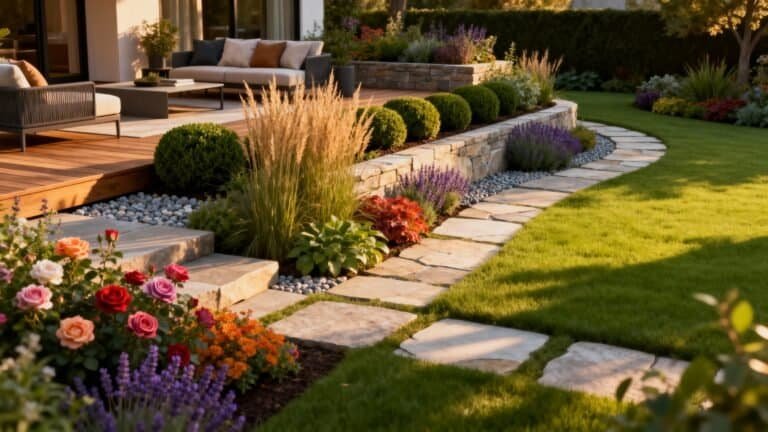
Place one or two larger boulders off-center to guide the eye. Create a “path” with stepping stones or a sweep of gravel.
Leave negative space—open ground makes the whole thing feel calm and intentional.
How to Place Rocks Like You Mean It
Rock placement can make or break the look. You want your stones to feel embedded, not dropped from a crane yesterday.
- Set the biggest rocks first. Angle them so they lean slightly back into the slope.
- Bury them deep. Sink about one-third of each rock below grade for a natural look.
- Follow imaginary layers. Tilt rock faces in the same direction to mimic geology. FYI, chaos looks fake.
- Add medium stones next. Tuck them near big rocks like they broke off over time.
- Finish with gravel. Use matching gravel as both mulch and visual glue.
Pro Tip: Create Pockets
As you place rocks, leave planting crevices between them.
Fill those pockets with gritty soil. Crevice-loving plants root deeply and stay happier there. IMO, this is the secret sauce.
Plant Choices That Thrive (and Look Amazing)
Rock garden plants like sun, excellent drainage, and minimal babying.
Mix ground-huggers with spiky or mounded forms for contrast. Great picks by category:
- Groundcovers: Creeping thyme (Thymus serpyllum), sedum, Irish moss (Sagina), blue star creeper.
- Alpines and perennials: Dianthus, aubrieta, saxifrage, armeria, campanula, sempervivum (hens-and-chicks).
- Grasses and texture: Blue fescue, carex varieties, Mexican feather grass (where non-invasive).
- Shrubs and structure: Dwarf conifers (mugo pine, dwarf spruce), lavender, hebe (mild climates).
- Succulents (warm, dry areas): Echeveria, agave, delosperma (ice plant).
- Natives: Choose regional species to support pollinators and reduce fuss.
Color and Seasonal Interest
Go for a limited palette and repeat it. Blues and silvers feel cool and calm; warm golds and pinks pop against gray stone. Add evergreen structure so winter still looks intentional.
The Soil Mix and Mulch Combo
Plants fail in rock gardens mainly because of soggy soil.
Fix the base, and everything else behaves.
- Base layer: 3–6 inches of compacted gravel for drainage if you’re on clay.
- Planting mix: 50–70% mineral (grit, crushed stone, coarse sand) + 30–50% topsoil/compost.
- Mulch: Skip bark. Use pea gravel or decomposed granite to keep crowns dry and roots happy.
Watering and Feeding
Water deeply to establish, then taper off. Most rock garden plants hate soggy feet and constant fertilizer.
A light spring feed with a slow-release, low-nitrogen fertilizer works. After that, let them tough it out—within reason.
Maintenance You Can Actually Keep Up With
This isn’t a zero-maintenance setup, but it comes close.
- Weed control: Weed early, and use gravel mulch to block seedlings.
- Trim and tidy: Shear spent flowers on thyme and dianthus to keep tidy mats.
- Check rocks yearly: Frost heave happens. Re-set anything that shifts.
- Divide plants: Split congested clumps every few years for vigor and freebies.
- Irrigation: Drip lines under the gravel keep it clean and efficient.
Optional, but clutch in hot climates.
Fun Add-Ons for Extra Personality
Want a little flair? Go for it without turning the place into a theme park.
- Dry creek bed: Direct runoff and add drama with a meandering ribbon of cobbles.
- Simple water bowl: Reflects light and draws birds—low effort, high zen.
- Lighting: Soft, warm uplights on a boulder or dwarf pine = instant evening magic.
- Found objects: A weathered log or rusted steel accent can play nice with stone.
Common Mistakes (and How to Dodge Them)
We’ve all been there. Learn from the collective facepalms.
- Random rock scatter: Group stones and sink them.
Avoid the “gravel dump” look.
- Too many species: Pick fewer plants and repeat them. Chaos reads messy.
- Poor drainage: If plants melt in winter, rebuild the base with more grit.
- Wrong scale: Use at least one bigger boulder so the composition doesn’t feel flimsy.
- Bark mulch: It floats, rots, and smothers crowns. Gravel only, IMO.
FAQ
Do I need a slope to build a rock garden?
Nope.
A slope helps with drainage, but you can create raised berms with gravel and soil to mimic one. Even a flat yard can look dynamic if you mound the base and place stones with intention.
How big should the rocks be?
Use a range. Include at least one or two anchor stones the size of a small armchair, plus medium pieces and fist-sized accents.
That mix gives depth and makes your garden feel grounded, not like a bag-of-rocks project.
What plants survive winter in a rock garden?
Choose hardy alpines and dwarf conifers for your zone. Hens-and-chicks, creeping thyme, armeria, and many saxifrages handle cold well when the soil drains fast. The key is dry crowns in winter—gravel mulch helps a lot.
Can I build a rock garden over clay soil?
Yes, but add a drainage layer.
Excavate 6–10 inches, lay compacted gravel, then backfill with a gritty mix. Without that, clay can trap water and turn your plants into soup. Not ideal.
How much maintenance will I actually do?
Expect light weeding, occasional trimming, and a yearly once-over.
Water new plants regularly their first season, then cut back. Compared to a lawn or high-flower beds, this is breezy.
Will a rock garden attract pests?
You’ll see fewer plant-eating pests because drought-tolerant species stay tougher. You might invite helpful critters like lizards and pollinators.
If you live with snakes, keep plants tidy and avoid dense, hidden gaps where they might camp out. FYI, tidy spaces = fewer surprises.
Conclusion
Rock gardens give you big impact with low effort. Start with good drainage, choose rocks that look related, and repeat a handful of tough plants.
Embrace negative space, add gravel mulch, and let the design breathe. Do that, and you’ll build a serene, sculptural landscape that looks amazing year-round—without babysitting it.