Boxwood Landscaping Guide: Shapes, Styles & Low-Maintenance Tips
Boxwoods are the little black dress of landscaping: classic, versatile, and always a good idea. They tidy up front walks, frame flower beds, and make your home look instantly more polished. Want modern minimalism?
Boxwoods can do it. Going for cottage-chic? They’ll behave.
Let’s talk about how to use them like a pro without turning your yard into a stiff green chessboard.
Why Boxwoods Win (and When They Don’t)
Boxwoods shine because they stay green year-round and tolerate pruning like champs. You can shape them into balls, hedges, topiary—whatever your heart and hedge trimmers desire. They play well with other plants and elevate everything around them.
But let’s be honest: they aren’t perfect. Some varieties sulk in scorching sun, others hate deep shade, and boxwood blight exists. Choose the right cultivar and site, and you’ll avoid most drama. Smart selection beats constant nursing, every time.
Choosing the Right Boxwood for Your Yard
Not all boxwoods behave the same.
Think of them like dog breeds—same family, wildly different personalities.
- English boxwood (Buxus sempervirens ‘Suffruticosa’): Dense and formal, but fussy in hot climates. Great for low edging.
- American boxwood (B. sempervirens): Larger, classic hedge material. Can reach 15+ feet if you let it (please don’t).
- Green Velvet / Green Gem / Green Mountain: Cold-hardy hybrids with reliable color. ‘Green Mountain’ grows upright—perfect for cones.
- Winter Gem / Wintergreen (B. microphylla): Heat-tolerant, compact, and easygoing.Solid option for most suburban yards.
- Korean boxwood (B. sinica var. insularis): Good cold tolerance and slightly looser habit—nice for softer designs.
Pro tip: Buy from a reputable nursery and check foliage for spots or dieback. If a plant looks sketchy at the store, it won’t improve at home. IMO, plant smaller, healthy boxwoods over big, stressed ones.
Sun, Soil, and Space
Boxwoods like morning sun and afternoon shade.
They handle full sun in cooler regions, but in hot zones, they’ll appreciate a little break. Plant them in well-drained soil—wet feet equals root rot.
- Soil: Slightly acidic to neutral (pH 6.5–7.2).
- Drainage: Critical. Use raised beds or amend heavy clay with compost and pine fines.
- Spacing: For hedges, plant 12–18 inches apart for dwarf types, 24–36 inches for larger ones.
Design Ideas That Don’t Look Like a Hedge Maze
You don’t need Versailles-level commitment to use boxwoods well.
Mix structure with softness and let the boxwoods be the frame, not the whole picture.
Front Entry Glow-Up
Line your walkway with small boxwood balls, then interplant with seasonal color. Try tulips in spring, salvia in summer, and ornamental kale in fall. Symmetry at the door? Two ‘Green Mountain’ cones in matching planters = instant curb appeal.
Evergreen Backbone for Flower Beds
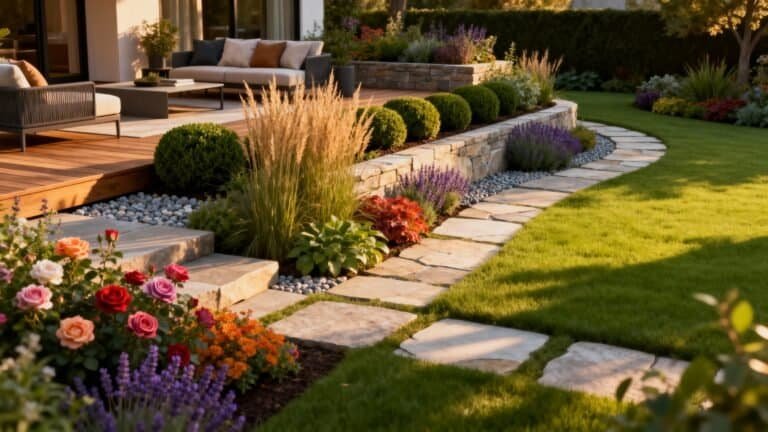
Use a low boxwood hedge as edging around a mixed border of hydrangeas, roses, and perennials. It tidies the chaos and looks great even when the flowers take a nap in winter.
Modern Minimalist Patio
Cluster 3–5 boxwoods in oversized, matching containers and keep the shapes consistent—spheres or cubes.
Add gravel mulch and a single ornamental grass for texture. Simple, sharp, done.
Formal Garden, But Make It Friendly
Create small parterres with low hedging, then fill with herbs or pollinator favorites. You get classic lines without the maintenance nightmare.
FYI: crushed gravel paths add the vibe without breaking the bank.
Planting: Do It Once, Do It Right
Planting boxwoods isn’t complicated, but details matter.
- Timing: Early spring or early fall. Avoid mid-summer scorch fest.
- Hole size: Twice as wide as the root ball, same depth. Don’t bury the crown.
- Root prep: Tease circling roots.If pot-bound, slice the root ball vertically in 3–4 spots.
- Backfill: Use native soil with compost mixed in. No heavy fertilizers at planting.
- Water in: Deeply, then mulch 2–3 inches—keep mulch off the stems.
First-year care: Water deeply once a week, more in high heat. Aim the hose at the base—wet foliage can invite problems.
Shaping, Pruning, and Not Butchering Your Boxwood
Pruning scares people, but boxwoods forgive a lot.
You just need a plan and clean tools.
- Timing: Light shaping in late spring after new growth flushes. Heavier pruning in late winter.
- Technique: Trim lightly and often for tight shapes. Keep hedges slightly wider at the base so sunlight reaches the bottom.
- Tools: Sharp shears for hedges, hand pruners for thinning.Wipe blades with alcohol between plants. Yes, really.
Topiary Without Tears
Start with varieties that hold shape (‘Green Mountain’ for cones, ‘Green Velvet’ for balls). Use a template or your eyeballs—either works.
Remove small amounts at a time; it’s a haircut, not a buzzcut.
Common Problems (and Chill Solutions)
Boxwoods don’t need constant attention, but a few issues pop up. Here’s the cheat sheet.
- Boxwood blight: Leaf spots, defoliation, dieback. Prevent with good airflow, drip irrigation, and cleaning tools.Choose blight-tolerant cultivars if it’s in your area.
- Volutella blight: Tan leaves with black streaks on stems. Prune out affected parts and improve air circulation.
- Leaf miner: Blistered leaves that look puffy. Choose resistant varieties or treat at the right life stage.Bag up infested clippings.
- Winter bronzing: Foliage turns orange or brownish in cold wind and sun. Water in late fall and use burlap screens in exposed sites.
- Root rot: Yellowing, dieback, sad vibes. Fix drainage and stop overwatering.
Reality check: Healthy, well-sited plants resist most nonsense.
Good airflow, clean tools, and smart watering go a long way.
Companion Plants That Make Boxwoods Pop
Contrast matters. Boxwoods bring structure; let other plants bring drama.
- For texture: Japanese forest grass, heuchera, lamb’s ear.
- For color: Hydrangeas, salvia, alliums, catmint.
- For shade: Hosta, ferns, astilbe.
- For containers: Ivy spillers, pansies, dwarf conifers.
Seasonal Switch-Ups
– Spring: Tulips and daffodils poke through a boxwood border—chef’s kiss. – Summer: Lavender or nepeta softens edges and attracts pollinators. – Fall: Ornamental cabbage and asters keep color going. – Winter: Add birch branches, pinecones, and lights to containers for cozy curb appeal.
Low-Maintenance Care Routine
If you want low effort, boxwoods get you. They don’t ask for much.
- Water: Deep, infrequent watering—especially year one.Established plants need less.
- Mulch: 2–3 inches to moderate soil temps and conserve moisture.
- Fertilizer: Light feeding in early spring with a balanced, slow-release formula. Don’t overdo it.
- Clean-up: Rake out old leaves from the center in spring to improve airflow. Yes, it’s weirdly satisfying.
IMO: Skip the monthly spray-and-pray.
Focus on soil, water, and airflow. Plants thrive when you nail the basics.
FAQ
Are boxwoods safe for pets?
Boxwoods are mildly toxic if ingested. Most pets ignore them, but don’t let pets chew branches like they’re salad.
If you have curious nibblers, place boxwoods where they can’t snack easily.
Can I grow boxwoods in containers long-term?
Yes, with the right pot size and drainage. Use a high-quality potting mix, water consistently, and root prune every few years when you refresh soil. Winter protection helps in cold climates—move pots to a sheltered spot.
How fast do boxwoods grow?
Slow to moderate.
Expect 3–6 inches a year depending on variety and conditions. If you want instant hedges, buy larger plants—or exercise patience and save money.
What’s the best shape for beginners?
Go for spheres. They’re forgiving and look good even when imperfect.
Start bigger and refine with small trims over time rather than trying to sculpt your masterpiece in one go.
How do I prevent boxwood blight?
Space plants for airflow, water at the base, clean your tools, and avoid overhead irrigation. Remove fallen leaves, and choose tolerant cultivars if blight shows up locally. Buy from nurseries that certify clean stock.
FYI: prevention beats treatment.
Can I mix boxwoods with native plants?
Absolutely. Use boxwoods for structure and pair with native perennials and shrubs for ecological benefits. Think echinacea, asters, viburnum, and inkberry holly for a low-key, wildlife-friendly design.
Conclusion
Boxwood landscaping gives you year-round structure without turning your garden into a museum.
Pick the right varieties, plant them well, and keep care simple. Mix them with seasonal color and playful textures and you’ll get a landscape that feels polished, not fussy. Want timeless curb appeal with minimal drama?
Boxwoods are your MVPs.