How to Design a Desert Landscape: Tips for Beginners
The desert doesn’t ask for permission. It just shows up with blazing sun, crunchy gravel, and plants that look like they bench-press cacti for fun. If you live in a dry climate, you can fight it (and lose), or you can design a yard that actually loves the heat.
That’s desert landscaping—practical, bold, and stunning when you do it right.
Why Desert Landscaping Rocks (Literally)
You get curb appeal without babysitting your yard. Desert landscapes use plants that thrive on neglect and grit. Less watering, less mowing, fewer pests—more time to binge whatever you want on the weekend.
Plus, it feels different. You aren’t just copying the classic lawn-and-hedge playbook—you’re creating texture, form, and dramatic silhouettes. And FYI, a well-planned desert yard can save serious water and money.
Start With the Bones: Shape the Space First
Before you buy a single cactus, design the structure.
Think spaces, not just plants. Where will you walk? Sit?
Stare into the distance like you’re in a spaghetti western?
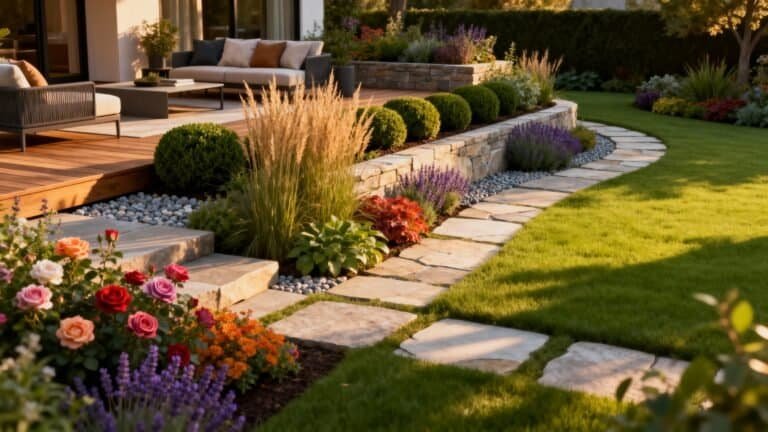
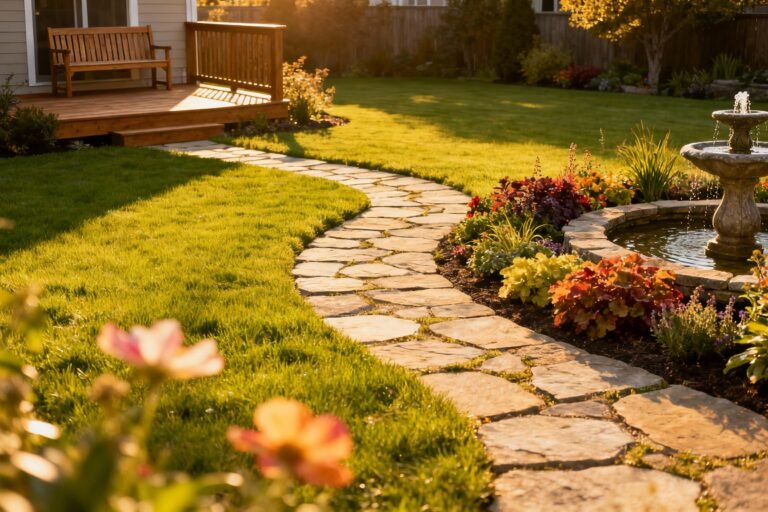
- Define paths and patios: Use decomposed granite, flagstone, or stabilized gravel. Curved paths look organic; straight lines feel modern.
- Build contours: Mound soil to create gentle berms and swales. Elevation shifts add drama and help with drainage.
- Anchor with boulders: Use a few large rocks rather than a million pebbles.
Half-bury them so they look like they belong.
Pro Tip: Pick a Palette
Choose a color story for rock and hardscape—warm tans and rusts feel natural; cool grays read more modern. Then echo that palette with plant foliage and bloom colors. Your yard will look intentional, not random.
Water-Wise Planting That Doesn’t Look Stingy
Desert landscaping isn’t just “stick a cactus in some gravel and call it a day.” The best yards layer plants with different heights and textures.
- Structural heroes: Agave, yucca, desert spoon, ocotillo.
These do the heavy visual lifting.
- Soft fillers: Mexican feather grass (where it’s not invasive), deer grass, hesperaloe (red yucca), globe mallow.
- Groundcovers: Trailing rosemary (in Mediterranean-like climates), lantana, verbena, creeping germander.
- Shade givers: Palo verde, desert willow, mesquite—light canopy, dappled shade, happy plants underneath.
Plant in Drifts, Not Dots
Plant three to five of the same species together. Your eye reads clusters as intentional design. Random singles look like leftovers from a clearance rack, IMO.
Soil, Mulch, and Gravel: The Holy Trinity
Desert plants hate soggy feet.
You need excellent drainage. If your soil acts like a sponge, fix it.
- Amend smartly: For native desert plants, don’t over-amend. Loosen soil, add mineral grit if needed, and break up compaction.
- Mulch matters: Use rock mulch or gravel—organic mulch can rot plants in hot, arid climates.
Keep mulch a few inches off plant crowns.
- Choose the right size: 3/8″ to 1/2″ gravel locks together nicely for paths and keeps dust down.
Drainage 101
Slope soil gently away from structures. Use swales to direct runoff to trees and larger shrubs. If water pools, add a dry creek bed—functional and pretty?
Yes, please.
Irrigation That Actually Works
You can’t just “hope for the best” with water in the desert. Set up drip irrigation and sleep peacefully.
- Drip is king: Use emitters at the plant’s drip line, not at the trunk. Increase the radius as plants grow.
- Water deep, not often: Train roots to go down by soaking thoroughly, then letting soil dry.
- Group by thirst: Keep high-water plants together and far from low-water zones.
Your controller will thank you.
Controller Settings
Program seasonal schedules: longer intervals in cooler months, more frequent in extreme heat. Install a moisture sensor if you want to feel fancy (and smart).
Design Moves That Elevate the Look
Small switches make the difference between “nice yard” and “whoa, who designed this?”
- Contrast textures: Pair spiky agave with soft grasses. Use smooth boulders next to craggy ones.
- Repeat elements: Repeat a plant, rock type, or color to create rhythm.
- Frame the view: Place a tall accent plant or sculpture where sightlines converge.
- Night lighting: Uplight a palo verde, backlight an agave, and throw a few path lights in for ambience.
Color That Pops
You don’t need an explosion of flowers.
A few strategic bloomers—like penstemon, desert marigold, or salvia greggii—create seasonal fireworks without turning your yard into a botanical free-for-all.
Low Maintenance Doesn’t Mean No Maintenance
You’ll do less yard work, but not zero. Plants still need care, just not the weekly lawn drama.
- Prune with restraint: Keep natural shapes; avoid the meatball look. Desert plants grow slow—don’t scalp them.
- Weed early and often: Pre-emergent herbicide and a good gravel layer help.
Hand-pull invaders ASAP.
- Refresh gravel: Top off thin spots every couple of years to keep things crisp.
- Check irrigation: Clogged emitters happen. Walk the system monthly.
Seasonal Care
Spring and fall = prime planting times. Summer = survival mode.
Winter = light pruning and cleanup. And if a freak freeze shows up, cover tender stuff and pretend you totally expected that.
Wildlife, Shade, and Microclimates
You can design for birds, bees, and butterflies without turning your yard into a buffet for rabbits. Choose plants with nectar and seeds, but protect young plants with cages until they establish.
- Pollinator magnets: Fairy duster, chuparosa, penstemon, milkweed (regional matches only).
- Microclimates: West walls radiate heat, north sides stay cooler, and under trees you get filtered light.
Match plants to each zone.
- Shade strategy: Plant trees on the west and southwest to cut afternoon scorch and cool the house.
Containers in the Desert
Yes, you can do pots—just use big ones. Glazed ceramic holds moisture better than raw clay. Water containers more often and elevate them for air flow.
Budget-Friendly Desert Makeover
You don’t need a pro crew and a forklift (though forklifts are fun).
Start small.
- Kill the lawn (strategically): Sheet mulch or remove sod. Reclaim space for gravel and beds.
- Lay paths: Install weed barrier only under paths, not planting beds—roots need soil access.
- Plant anchors: Add a few statement plants. Fill in later as budget allows.
- Add one flourish: A boulder cluster, a steel edging curve, or a low wall can transform the vibe, IMO.
FAQs
Do I need to use native plants only?
Nope.
Natives often perform best and support wildlife, but many Mediterranean and arid-adapted plants thrive too. Just match their water needs and heat tolerance to your site.
How do I prevent my yard from looking like a parking lot?
Layer plants, vary gravel size and color slightly, and use boulders or raised planters for height. Curved beds, drifts of grasses, and a few bloomers soften the rock and add movement.
Can I have a lawn in a desert landscape?
You can, but synthetic turf or a small native grass patch makes more sense.
If you want real grass, keep it tiny and irrigate efficiently. Or replace “lawn” with a decomposed granite patio and a shade tree—lower water, same hangout energy.
How much water will I actually save?
A well-designed desert yard can cut outdoor water use by 50–80% compared to a traditional lawn. Deep, infrequent irrigation and smart plant choices make the biggest difference.
Your bill and the planet both approve, FYI.
Are cacti dangerous for kids and pets?
Some are spiky and unforgiving (looking at you, cholla). Choose smoother agaves, sotols, and soft grasses near play areas. If you love cacti, place them in raised beds or behind boulders to create buffer zones.
What about extreme heat waves?
Mulch well, water deeply in the early morning, and provide temporary shade cloth for new plants.
Established desert species handle heat like champs; newly planted ones need a little TLC during the first summer.
Conclusion
Desert landscaping isn’t a compromise—it’s a flex. You work with the climate, not against it, and end up with a yard that looks sharp year-round and sips water politely. Start with structure, pick tough plants, dial in drip, and add a few bold moves.
Do that, and your outdoor space will feel effortless—because it basically is.