Top Modern Landscaping Designs for a Sleek, Stylish Yard
Your yard can work harder than a pretty backdrop. It can cool your home, feed pollinators, harvest rain, and still look like a magazine cover. Modern landscaping blends style with smarts, and yes—your Saturday mornings will thank you.
What “Modern” Really Means in the Yard
Modern landscaping isn’t just concrete slabs and succulents.
It’s a mindset: intentional design plus low-maintenance function. Clean lines, simplified plant palettes, and materials that last. It favors calm spaces that look good year-round.
Do you need a giant budget? Nope. You need a plan and a few smart moves that punch above their weight.
Start With the Bones: Layout and Flow
Think like a designer for five minutes.
Where do you walk, sit, grill, or stare into the distance pretending you’re on vacation? Map those spots first.
- Zones: Create areas for dining, lounging, and play. Use pavers, gravel, or deck boards to define each zone.
- Lines: Keep edges straight or softly curved—just pick a lane and commit.
Mixed geometry confuses the eye.
- Sightlines: Frame a view with a tree, a sculpture, or a vertical trellis. Your brain loves a focal point.
Pro Tip: Design Backwards
Start with where you want to sit at sunset. Build the space so that moment feels amazing.
Everything else supports that experience.
Planting Like a Minimalist (But Not Boring)
Modern landscapes lean on fewer types of plants in bigger groups. It looks intentional and saves you from a high-maintenance jungle.
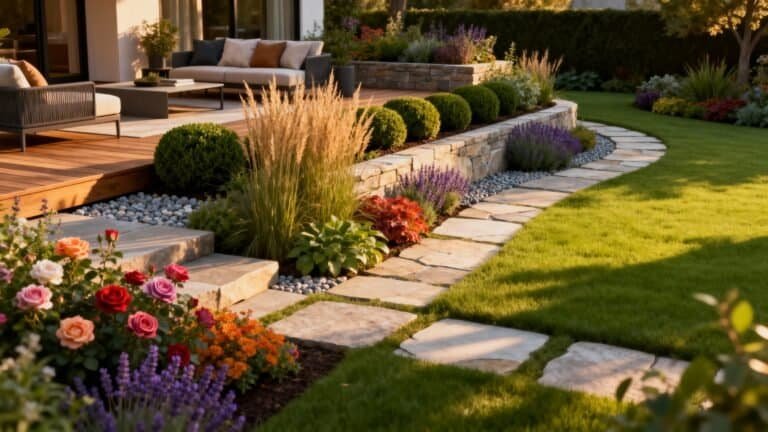
- Pick a palette: 3-5 hero species, repeated. Think grasses + one statement shrub + seasonal color.
- Go architectural: Agaves, yuccas, boxwood balls, columnar junipers—strong shapes carry the design.
- Layer the heights: Tall at the back, medium in the middle, groundcovers at the front.
Classic for a reason.
- Evergreen backbone: Keep structure year-round so the space never looks bare in winter.
Native and Climate-Smart Choices
Native or climate-adapted plants thrive with less water and drama. FYI, local pollinators throw a tiny party every time you choose native. Check regional guides or visit a local nursery that actually knows your climate, not just your Pinterest board.
Water-Wise Is the New Sexy
Let’s be real: the lawn obsession belongs to last century.
Modern landscapes save water without looking like a cactus farm (unless you want that).
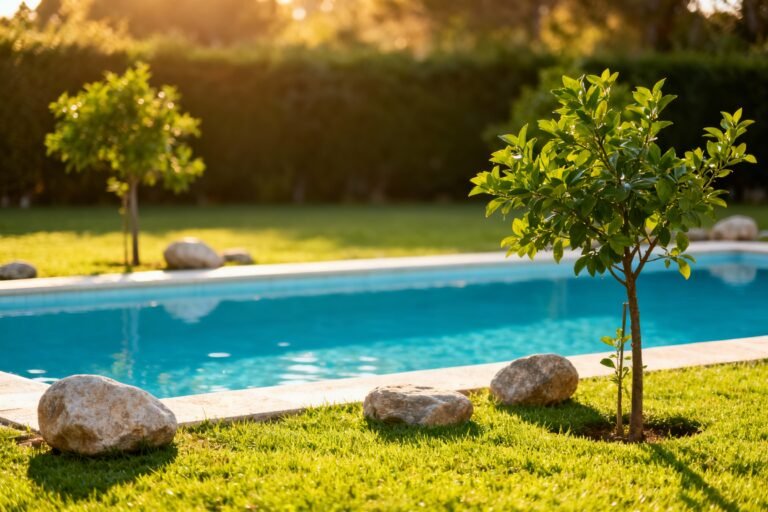
- Smaller lawn areas: Use grass as an accent, not the whole yard. Or switch to no-mow fescues or groundcovers.
- Drip irrigation: Delivers water to roots, not your sidewalk. Add a smart controller to adjust for weather.
- Mulch everything: Mulch keeps soil cool and reduces watering.
It also makes plants pop visually.
Rain as a Resource
Capture rain in swales or a rain garden. Use permeable pavers so water soaks in, not floods your neighbor. Bonus: it protects your foundation and looks modern and intentional.
Materials That Do the Heavy Lifting
Modern gardens love contrast and texture.
You don’t need marble; you need coherence.
- Paving: Large-format concrete, porcelain pavers, or compacted gravel look clean and contemporary.
- Metal accents: Corten steel planters or edging add warmth and a sculptural vibe.
- Wood tones: Cedar or composite decking softens all that stone. Keep lines horizontal for a modern feel.
- Color strategy: Stick to two base tones (e.g., gray + warm wood) and one accent (black or white). Less noise, more impact.
Lighting: Your Nighttime Superpower
A simple, modern lighting plan transforms everything.
- Path lights for safety and glow.
- Uplights to highlight trees or a feature wall.
- String lights over dining for that instant “we host nice things” vibe.
Aim for subtle.
If your yard looks like a sports stadium, dial it back.
Low Maintenance, High Vibes
Modern landscaping should free up your weekends. It’s the whole point, IMO.
- Choose slow growers so you prune less.
- Group plants by water needs to avoid over/under-watering chaos.
- Keep edges crisp with steel or concrete borders. Clean edges make everything look “designed.”
- Container strategy: A few oversized pots beat a dozen small ones.
Less watering, more wow.
Maintenance Rhythm That Actually Works
– Spring: Refresh mulch, feed soil with compost, check irrigation. – Summer: Light pruning, deep watering, enjoy your life. – Fall: Cut back perennials, plant bulbs for spring surprise. – Winter: Plan changes while drinking something warm and smug.
Small Yards, Big Impact
No acreage? Perfect. Constraints force creativity.
- Vertical layers: Trellises, espaliered fruit trees, or bamboo screens.
Privacy without the fortress feel.
- Multi-use furniture: Benches with storage, folding dining sets, slim-profile loungers.
- Mirrors and light: Outdoor-safe mirrors bounce light and visually enlarge narrow spaces.
- Repetition: Repeat the same plant or paver to create rhythm and make small spaces feel intentional.
Balcony or Patio Micro-Garden
Stick to three containers: one tall feature, one medium textural plant, one trailing spiller. Add a herb box if you cook. That’s it.
Clean, edible, delightful.
Nature-Friendly Without the Lecture
You can go modern and still support wildlife. No crunchy manifesto required.
- Pollinator pit stops: Plant lavender, salvia, coneflower, or milkweed depending on your region.
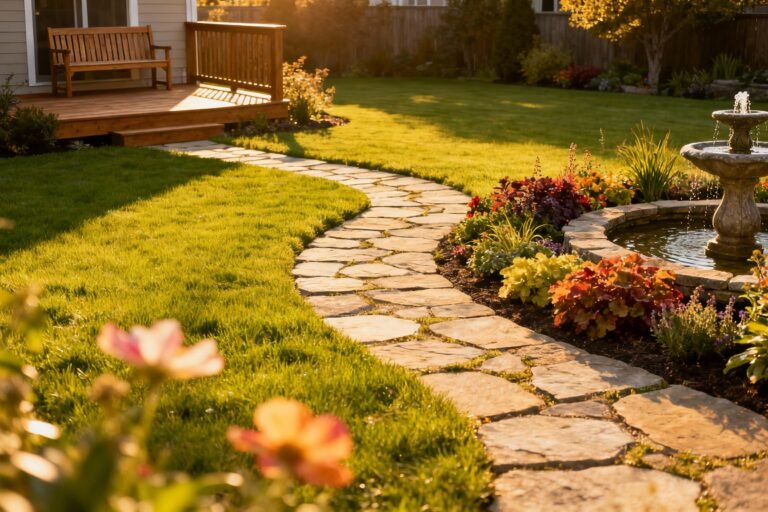
- Water source: A shallow birdbath or a small bubbler fountain = instant life.
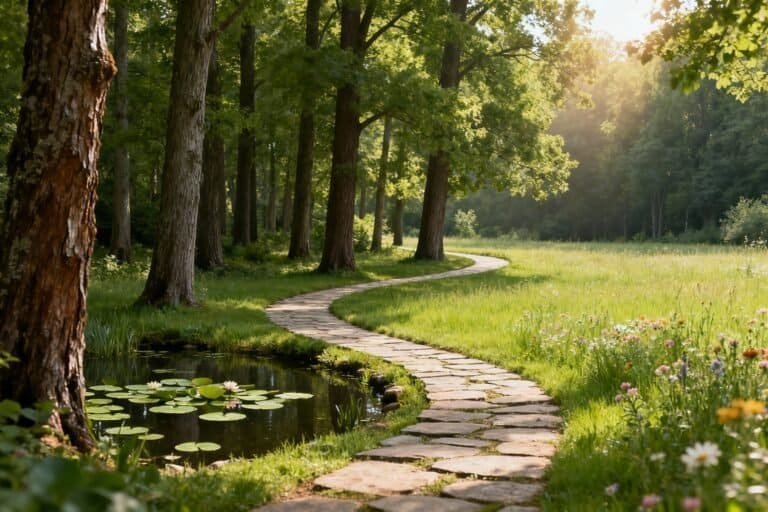
- Leaf litter corners: Keep one discreet area a bit wild for beneficial insects. Hidden chaos, visible order.
Soil: The Real MVP
Healthy soil equals healthy plants.
Mix compost into beds, avoid over-tilling, and let mulch break down naturally. It’s like a gym membership for your garden—slow results, huge payoff.
Tech That Makes It Easier
A little tech goes a long way, FYI.
- Smart irrigation adjusts to weather and saves water automatically.
- Wireless outdoor lights with timers or apps keep things simple.
- Battery tools (quiet mowers, trimmers) keep the peace with your neighbors and your ears.
FAQ
How do I make my yard look modern without starting over?
Edit first. Remove fussy plants, define clean edges, and simplify your palette.
Add two or three large planters, swap busy pavers for larger formats where you can, and introduce warm wood or Corten accents. A few strong moves beat a dozen small tweaks.
Is a modern landscape expensive to maintain?
Not if you design it for low maintenance from the start. Choose drought-tolerant plants, install drip irrigation, and use mulch to control weeds.
The upfront setup may cost a bit more, but the long-term savings—in water, time, and sanity—make up for it.
Can I keep a lawn and still be “modern”?
Absolutely. Keep it small and intentional, like a framed rectangle near a patio. Choose a low-water grass or a no-mow mix, and edge it crisply.
The shape and scale make it feel modern, not the size.
What plants scream “modern” without looking cold?
Mix structure with softness. Pair architectural plants (agave, yucca, boxwood, columnar evergreens) with wispy grasses (panicum, pennisetum, carex) and seasonal flowers. The contrast keeps it inviting, not sterile.
How do I light a modern garden?
Use fewer, better fixtures.
Warm white LEDs, path lights where you walk, and a couple of uplights for trees or a feature wall. Add bistro lights over dining if you want cozy vibes. Avoid over-lighting—mystery matters.
What if my yard has terrible soil?
Build it up.
Layer compost every season, use raised beds for edibles, and mulch heavily. Consider hardy, soil-tolerant plants at first, then diversify as the soil improves. It’s a journey, not a sprint, IMO.
Conclusion
Modern landscaping blends style with purpose: clean lines, climate-smart plants, efficient water use, and low-maintenance materials.
Start with how you want to live outside, then design everything around that feeling. Keep it simple, repeat your best ideas, and let the details do the heavy lifting. Your yard won’t just look good—it’ll work for you, season after season.