Landscaping With Rocks: Creative Ideas to Transform Your Yard
Rocks don’t ask for fertilizer. They don’t wilt in heatwaves. They don’t judge you if you forget to water them for… months.
If you want a landscape that looks sharp year-round and won’t eat your weekends, rocks might be your MVP. Let’s talk about how to use them like a pro without turning your yard into a gravel parking lot.
Why Rocks Rock (Yes, I Went There)
Rocks bring structure, texture, and drama. Plants soften edges; stones define them.
Together, they create contrast your eyes crave. They also save time and money. You’ll use less water, weed less, and replace fewer plants.
Plus, rocks handle tough spots: slopes, shady corners, sandy soil—no problem. Bonus: Rocks age beautifully. They get character while mulch fades and blows away. IMO, that’s a win.
Choosing the Right Rock for the Job
Not all rocks belong everywhere.
Pick with purpose, not just vibes.
Common Types and Where They Shine
- Pea Gravel: Tiny and smooth. Great for paths, around fire pits, and in-between stepping stones. Comfortable to walk on; not so great for steep slopes.
- Crushed Granite/Decomposed Granite (DG): Packs down nicely for patios and walkways.
Modern look, excellent drainage.
- River Rock: Rounded and varied. Perfect for dry stream beds and around ponds. Avoid on slopes—they slide.
- Lava Rock: Lightweight, dramatic color.
Good for mulching xeriscapes. Can blow around—use in low-wind areas.
- Flagstone: Flat slabs for paths, steps, and patio surfaces. Choose thicker pieces for stability.
- Boulders: The scene-stealers.
Use for focal points, seating, and retaining edges.
Color and Texture Tips
- Match your house: Echo tones from your siding, roof, or brickwork for cohesion.
- Vary sizes: Combine boulders, cobbles, and gravel for natural flow. One-size rock reads “new driveway.”
- Go local if you can: Local stone usually looks “right” in your region and costs less.
Design Moves That Just Work
Landscaping with rocks doesn’t mean tossing pebbles and praying. Use a plan.
Create a Dry Creek Bed
Mimic a natural stream to manage runoff and add serious curb appeal.
- Map the path where water already flows (or where you want it to).
- Dig a shallow trench with gentle curves.
- Line with landscape fabric (more on that later).
- Place larger river rocks at the edges, smaller ones in the center.
- Add boulders as “eddies” and tuck plants along the banks.
Pro tip: Keep it asymmetrical.
Nature hates perfect symmetry.
Build a Rock Garden That Isn’t Cheesy
Rock gardens shine on slopes and sunny spots.
- Set boulders first, partially buried so they look “grown in.”
- Use gritty, well-drained soil between rocks.
- Plant drought-tolerant stars: sedums, thyme, yarrow, lavender, agave, or small conifers.
FYI: Less is more. Give each plant space to spread.
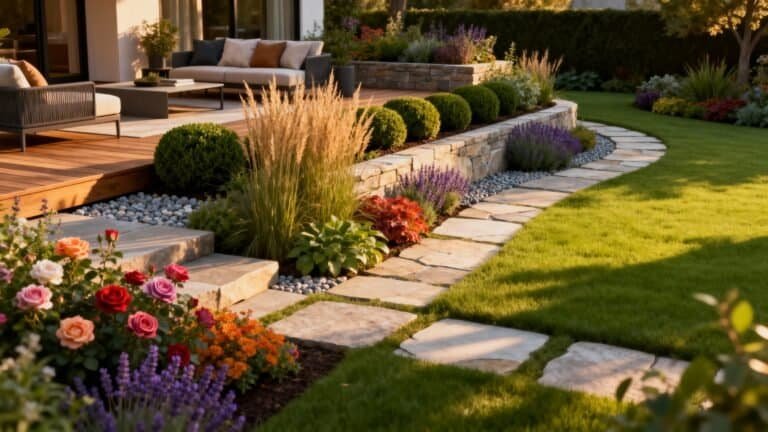
Frame Beds and Paths
Use stones to define edges without plastic borders that crack in a year.
- Use cobbles or flat stones as a natural edging.
- Tuck pea gravel or DG inside to reduce weeds and mud.
- Repeat stone types for cohesion across your yard.
Installation Basics (So It Doesn’t All Slide Away)
Great rock work starts beneath the surface. Boring?
A little. Necessary? Absolutely.
Prep the Base
- Clear and grade: Remove weeds and roots.
Shape subtle slopes away from structures.
- Compacted base matters: For paths and patios, lay 3–4 inches of compacted crushed base before top material.
- Landscape fabric: Use under gravel paths and dry creek beds to limit weeds and mixing with soil. Don’t use fabric under planting beds—roots hate it and soil biology suffers.
Set Stones Like You Mean It
- Bury boulders: Sink 25–30% of a boulder for a natural look and stability.
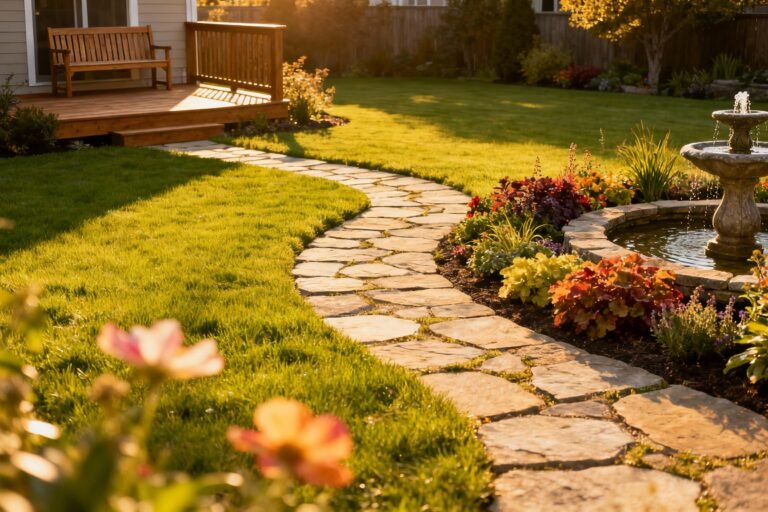
- Stagger joints: When laying flagstone, avoid long straight seams.
- Lock it in: Sweep decomposed granite or screenings into gaps to stabilize stepping stones.
Drainage: The Unsexy Hero
Water will find a way. Guide it.
- Slope hardscape 1–2% away from buildings.
- Use French drains or dry wells where water collects.
- Line creek beds with fabric and use mixed rock sizes to prevent washouts.
Pairing Rocks With Plants (The Dream Team)
Rocks make plants pop.
Plants soften rocks. Balance both.
Plant Picks That Love Rocky Company
- Sun lovers: Russian sage, ornamental grasses, yucca, agave, rosemary, black-eyed Susan, blanket flower.
- Groundcovers: Creeping thyme, blue star creeper, sedum, ice plant, ajuga (light shade).
- Shade friends: Ferns, heuchera, hosta, astilbe—combine with cool-toned stones.
- Native plants: They sip water and shrug off pests. Always a smart move, IMO.
Composing With Contrast
- Pair fine textures (grasses) with chunky stones for balance.
- Use dark rocks to make silver foliage glow; use pale gravel to brighten shady corners.
- Repeat plant and rock types in clusters—visual rhythm beats randomness.
Maintenance Without Tears
Rock landscapes don’t need much, but they do need something.
- Weed defense: Pull early.
Top off thin gravel annually to smother sprouts.
- Blower + rake combo: Blow off leaves, then rake to refresh the surface. Don’t power-wash fine gravel—it scatters.
- Spot-fix sags: Add and compact more base where traffic settles.
- Watch the edges: Install discreet metal edging if your gravel migrates.
Budgeting and Sourcing Smarts
Rocks are heavy. Heavy things cost money to move.
Plan accordingly.
- Buy in bulk: Order by the cubic yard or ton from a landscape yard. Bags cost way more.
- Measure honestly: Calculate area and depth, then add 10% for settling and “whoops.”
- Delivery vs. DIY hauling: Delivery fees often beat 12 trips in a hatchback.
Your suspension says thanks.
- Tool rentals: Plate compactor, dolly, or rock sling rentals pay for themselves in saved backs.
Common Mistakes to Avoid
Let’s dodge the classic “what happened here?” moments.
- Overusing one size: Monotonous and fake-looking. Mix sizes.
- Floating boulders: If it sits on top like a marshmallow, bury it.
- Ignoring drainage: Standing water plus rock equals mossy slip-n-slide.
- Using fabric everywhere: Keep it to paths and creek beds, not plant-heavy areas.
- Random placement: Group rocks in odd numbers and relate them to each other, like a family—the good kind.
FAQs
How deep should my gravel layer be?
For walkways, aim for 2–3 inches of gravel over 3–4 inches of compacted base. Decorative areas can use 1.5–2 inches.
If you go deeper, gravel shifts underfoot and eats shoes for breakfast.
Do I need landscape fabric under rocks?
Use fabric under paths and dry creek beds to keep gravel clean and separated from soil. Skip it in planting areas—roots, microbes, and future-you trying to move plants will all thank you. Mulch with gravel instead.
What size boulders should I get?
Bigger than you think.
A 24–30 inch boulder reads as a true focal point in most yards. Mix in a couple of “companions” half that size to make the grouping feel intentional and natural.
Can I put rocks on a slope?
Yes, but stabilize them. Bury a third of each stone, use larger rock toward the bottom, and add check steps or mini terraces.
Crushed rock locks better than smooth river rock on slopes.
Will rocks make my yard hotter?
In full sun, light-colored gravel reflects heat while dark stone absorbs it. Plant strategically—add shrubs, grasses, or a small tree to cool things down. Also, avoid black lava rock against south-facing walls unless you enjoy frying eggs outdoors.
How do I keep weeds out long-term?
Start with a clean, weed-free base, compact well, and maintain a consistent layer depth.
Spot-spray or hand-pull early. Topping off gravel each year closes gaps that weed seeds exploit.
Conclusion
Landscaping with rocks gives you structure, style, and way less maintenance—all while looking sharp twelve months a year. Start with the right stone, plan for drainage, and blend sizes and plants for that “I woke up like this” natural vibe.
Play with textures, repeat materials, and don’t be afraid of a bold boulder moment. Your future self, lounging instead of mowing, will say thanks—IMO, that’s the real goal.