Plant Stand Ideas: Stylish Ways to Display Your Indoor Plants
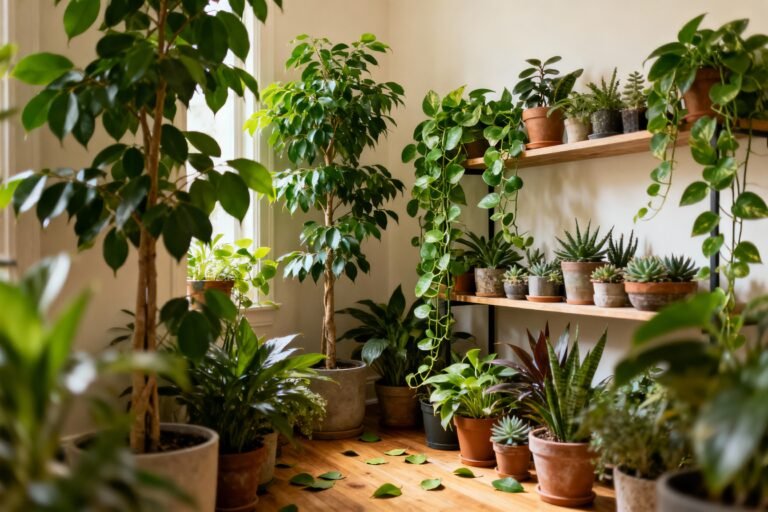
Plant stands do more than hold greenery—they turn a random corner into a mini jungle and make your plants look like they actually pay rent. The right stand adds height, balance, and drama. And honestly, it helps you stop cramming every pot on the windowsill like a botanical traffic jam.
Let’s level up your plant game—literally.
Why Plant Stands Matter (More Than You Think)
Plant stands solve three problems at once: style, sunlight, and space. You elevate plants so leaves catch more light, you create visual balance, and you free up floor or table real estate. That’s a triple win.
They also help airflow. When plants sit directly on the floor, moisture lingers and fungus gnats RSVP yes. Raise them up and you keep things cleaner.
Plus, stands protect delicate floors from moisture rings and spilled soil. FYI: your landlord will thank you.
Types of Plant Stands (And Which One You Need)
Not all stands fit every plant or every vibe. Consider your space, your plant size, and the mood.
Single-Pot Pedestals
These are the classic mid-century ones with a pot perched on a wooden base.
They look minimal, they show off statement plants, and they make any corner feel intentional. Use them for rubber trees, ZZ plants, or anything with height.
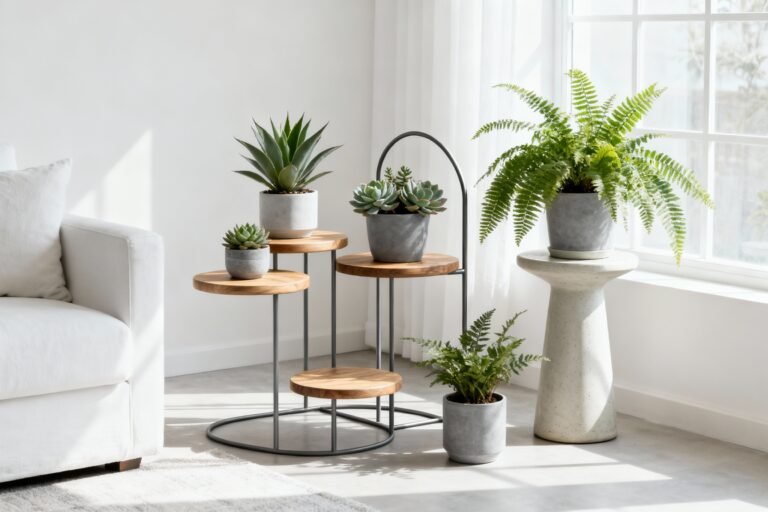
Tiers and Ladders
Want a mini plant city? Tiered stands give you levels for small-to-medium plants.
They work great for herbs, trailing vines, and lighter pots. Avoid loading them with giant ceramic monsters unless you like fixing wobbly disasters.
Wall-Mounted and Floating Shelves
Perfect for tight spaces. Just anchor them well—drywall can betray you.
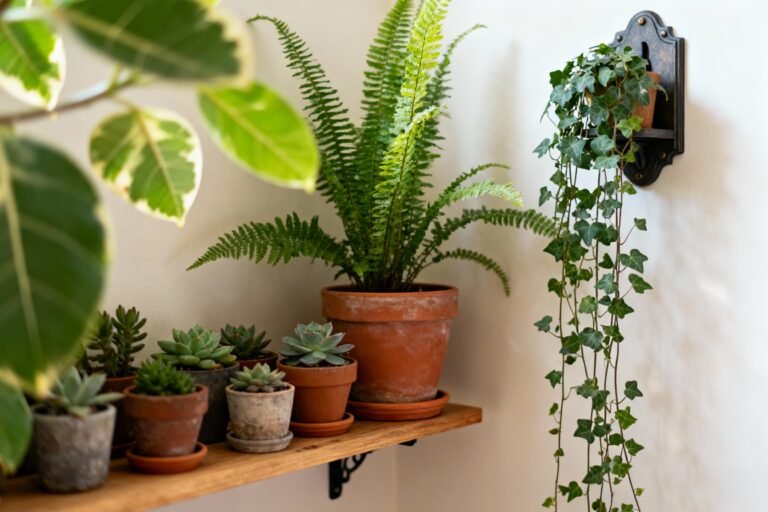
Use for trailing plants like pothos, string of pearls, or ivy. Bonus: keeps curious pets from snacking on leaves.
Rolling Caddies
Heavy pot? Put it on wheels and glide like a plant magician.
These are lifesavers for big fiddle leaf figs or monstera. Also helpful for chasing sun across the room, no gym membership required.
Hanging Stands and Hoop Frames
If you want drama, go vertical. Hanging stands or metal hoops create a sculptural vibe and spotlight trailing plants.
They also save floor space and look way more expensive than they usually are.
Materials: What Works Where
The stand’s material matters for both style and durability. Choose based on where the plant lives and how much water you splash around.
- Wood: Warm, timeless, and goes with everything. Choose teak, acacia, or bamboo for moisture resistance.
Keep wood off wet patios unless it’s sealed.
- Metal: Sleek and strong. Powder-coated steel resists rust. Great for modern spaces.
Check welds and weight limits.
- Ceramic: Pretty but heavy. Usually part of a planter-stand combo. Not for moving day.
- Rattan/Wicker: Cozy boho vibes.
Keep indoors and away from frequent splashes.
- Concrete: Minimalist and sturdy, but it will dent your floor if you drop it. Use felt pads. Seriously.
Choosing the Right Height (Without Guessing)
Aim for a layered look rather than a matchy-matchy row of soldiers.
Vary heights so your plants create a soft, cascading silhouette.
The Layering Rule
– Floor plants (like monstera) anchor the space. – Mid-height stands bring medium plants to eye level. – Small stands or shelves elevate compact plants so they don’t disappear.
Light Matters
Put sun-loving plants higher and closer to windows. Shade-tolerant friends can hang lower or further back. If your snake plant looks like it’s on a hunger strike, move it up a level.
Design Tips That Make Your Space Look Pulled Together
Want your plant display to look curated, not chaotic?
A few easy wins:
- Cluster in odd numbers: Groups of three or five feel balanced, IMO.
- Mix shapes, not chaos: Combine one tall plant, one bushy plant, and one trailing plant on different heights.
- Repeat materials: Two wood stands and a wood frame shelf tie things together without being matchy.
- Mind the pot-to-stand ratio: Big pot on skinny stand = anxiety. Balance the visual weight.
- Leave breathing room: Give leaves space to unfurl. Don’t smush plants right against the wall.
Color Coordination
– White pots on black metal stands = clean and modern. – Terracotta on wood = warm and earthy. – Colorful pots on neutral stands = playful without chaos.
Choose one “accent” plant or pot to keep the eye moving.
Practical Stuff: Stability, Drainage, and Maintenance
This is the unsexy part, but it keeps your plants alive and your floors intact.
Stability Checks
– Test the wobble. If the stand wobbles empty, it will wobble worse loaded. – Check the weight rating. Your concrete pot doesn’t care about optimism. – Use felt pads or rubber feet for grip and floor protection.
Drainage Strategy
– Always use pots with drainage holes.
Always. – Add a saucer that fits the stand. Or use a cachepot: nursery pot inside a decorative pot. – Wipe spills immediately to avoid rust or water stains.
Cleaning and Care
– Dust the stand as often as the leaves. Dust blocks light and looks sad. – Treat wood with oil or wax every few months if it dries out. – Check for rust on metal; touch up with paint if needed.
DIY vs.
Store-Bought: What’s Worth It?
DIY stands can look great if you enjoy building or you like saving cash. A simple wooden cross-leg stand requires minimal tools and a weekend afternoon. You also get custom size and stain—nice.
Store-bought stands save time and often come sturdier, especially for heavy pots. Mid-range options from reputable brands last years. Mix both if you like: splurge on one statement stand, DIY a couple fillers, and call it a day.
Quick DIY Ideas
– Cut and stack concrete pavers for a minimal stand. – Flip a sturdy basket or stool upside down.
Instant height. – Use vintage stools—cozy, strong, and easy to find at thrift shops.
Pet- and Kid-Proofing Your Setup
If your cat thinks the trailing pothos is a toy, prepare accordingly. Choose heavier stands or ones with wide bases. Avoid tall, narrow stands in high-traffic zones.
Use plant-safe anchors or museum gel on wobbly surfaces. Place toxic plants (like pothos and philodendron) up high or behind barriers. FYI: a falling plant creates chaos and a very messy vacuuming session.
FAQs
What size stand should I get for my pot?
Measure the pot diameter and choose a stand slightly wider or with a stable cross base.
Aim for the pot to sit fully supported with no overhang. If you use a cachepot, factor in the extra width and the saucer.
How do I stop water from ruining my stand?
Use a saucer, always. Add cork or silicone feet under the saucer if condensation forms.
For wood stands, seal the surface with a water-resistant finish and wipe spills immediately. Metal stands do best with powder coating and regular drying.
Can plant stands help with leggy plants?
Indirectly, yes. Stands help you position plants closer to the light source without crowding windowsills.
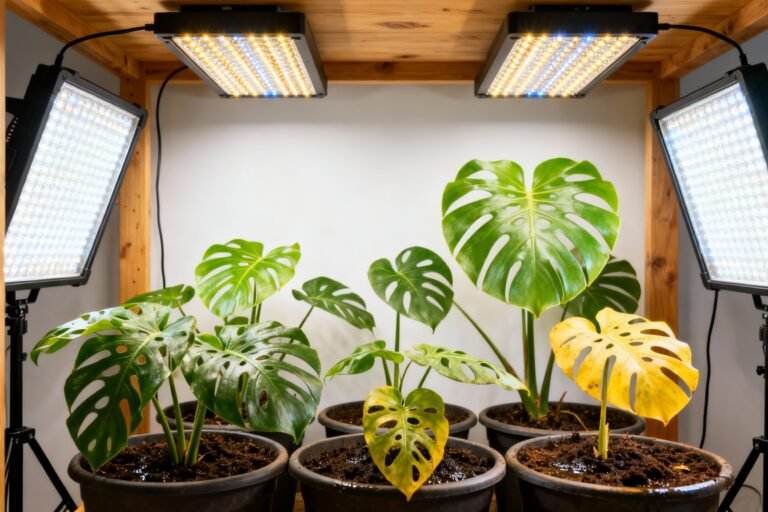
Combine a stand with a grow light during darker months to prevent stretching. Rotate plants weekly for even growth.
What’s the best stand for a very heavy plant?
Go for a low, wide-base metal or solid wood stand, or a rolling caddy rated for the weight. Check weight limits (they matter).
Avoid tall, narrow designs—those tip. Concrete or thick steel frames handle big ceramic pots like champs.
Are tiered stands good for beginners?
Yes, as long as you keep the weight reasonable and manage drainage. They’re great for small plants and herbs, and they make watering easier when everything lives in one spot.
Just don’t overload the top tier with a heavy pot—gravity wins every time.
Can I use outdoor plant stands inside (and vice versa)?
Usually. Outdoor-rated stands handle moisture better, so they’re safe indoors. Indoor-only stands might struggle outside because of rain and sun.
If you move stands between spaces, watch for rust, swelling wood, or fading finishes.
Conclusion
Plant stands do the most with the least. They elevate light levels, style, and sanity—while keeping floors happier and plants healthier. Start with one great stand, layer heights, and match materials to your space.
Then step back, admire your tiny forest, and pretend you always had your life this together, IMO.