Small Balcony Garden Ideas: Stylish Tips for Limited Spaces
Your balcony may be tiny, but it can still flex big garden energy. You don’t need acres, a shed, or a wheelbarrow—just a plan, a few containers, and the willingness to get a little dirt under your nails. Ready to turn that underused ledge into a leafy little paradise?
Let’s grow something you’ll actually brag about.
First, meet your balcony: light, wind, and space
Before you buy plants (or an aesthetic watering can), figure out what your balcony gives you.
- Sunlight: Watch your space for a day. Full sun = 6+ hours. Partial sun = 3–5 hours.
Shade = less than 3. No guessing—plants will tell on you.
- Wind: High floors get gusty. If your napkin flies, your basil will too.
Add windbreaks: bamboo screens, railing planters tucked low, or tall plants as buffers.
- Weight & rules: Check building rules and weight limits. Wet soil gets heavy. Also, some buildings ban railing planters (sigh).
Quick layout tip
Use vertical space.
Hang planters, add shelves, and lean a ladder rack against a wall. Keep walkways clear so you don’t body-check your tomatoes every morning.
Containers that don’t sabotage your plants
Containers matter more than you think. Roots breathe.
Water drains. Your pot choice decides both.
- Drainage holes only. No holes = swampy roots. If you fall in love with a hole-less pot, use it as a cachepot with a plastic nursery pot inside.
- Size matters. Herbs do great in 8–10” pots.
Peppers and dwarf tomatoes want 3–5 gallons. Small pot, small plant. It’s not mean, it’s physics.
- Materials: Terracotta breathes (dries faster), plastic holds moisture (for forgetful waterers), fabric grow bags encourage fat, happy roots.
- Self-watering: Great for hot balconies and busy schedules.
Just don’t forget to fill the reservoir, obviously.
Soil: the good stuff
Use potting mix, not garden soil. Look for mixes with peat or coco coir, perlite, and compost. Want an easy upgrade?
Mix in 10–20% worm castings. Plants love it like we love snacks.
What to grow (that won’t ghost you)
Grow what you’ll eat, smell, or stare at lovingly. Prioritize compact, heat-tolerant, and balcony-friendly varieties.
- Herbs (starter pack): Basil, mint, chives, parsley, thyme.
FYI, mint spreads—give it its own pot or it will stage a coup.
- Balcony veg: Dwarf cherry tomatoes, peppers (shishito, jalapeño), bush beans, cucumbers on a trellis, salad greens in window boxes.
- Cutie fruits: Strawberries in hanging baskets. Dwarf citrus if you’ve got strong sun and patience.
- Flower power: Marigolds, nasturtiums, petunias, and calibrachoa. They attract pollinators and your neighbor’s envy.
- Shade champs: Lettuce, spinach, arugula, mint, ferns, begonias.
Shade doesn’t mean “no fun.”
Smart plant combos
Try mixed containers for both pretty and practical results:
- Caprese pot: Cherry tomato + basil + marigold (pest helper). Stake the tomato and you’re golden.
- Tea time: Mint + lemon balm + chamomile. Morning zen in a pot.
- Salad bar: Cut-and-come-again lettuces with radishes around the edge.
Watering without chaos
Most balcony plants die from overwatering, not neglect.
Shocking, I know.
- Finger test: Stick your finger 1–2 inches into the soil. Dry? Water.
Moist? Wait. Simple beats gadgets (usually).
- Morning is best: Plants drink, leaves dry, and you avoid fungal drama.
- Deep, not sips: Water until it drains from the bottom.
Roots grow deeper and stronger.
- Wicking or drip: For vacations or lazy days, run a simple drip line or use self-watering containers. IMO, game-changer.
Fertilizer: your balcony’s secret sauce
Containers drain nutrients fast. Feed lightly but regularly.
- Slow-release granules: Mix into soil when planting.
Low effort, steady results.
- Liquid feed: Every 2–3 weeks during the growing season. Fish emulsion or seaweed = stinky but effective.
- Read labels: More is not better. Overfeeding fries roots.
Don’t be that person.
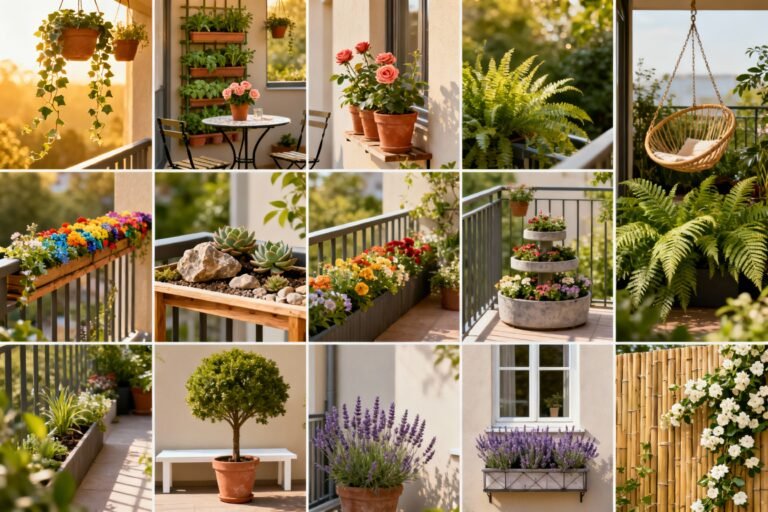
Vertical tricks that double your space
When floor space feels scarce, go up.
- Trellises: Train cucumbers, peas, or pole beans. Zip ties are your best friend.
- Railing planters: Herbs and trailing flowers love them. Check brackets for safety.
- Stacked shelves or ladders: Put sun-lovers up top and shade-lovers below.
Instant microclimate.
- Hanging baskets: Strawberries, trailing tomatoes, or pothos for vibes.
Wind and privacy combo
Use tall, sturdy plants like bamboo (clumping only) or ornamental grasses as a natural screen. Add a lightweight reed or bamboo fence behind them for extra wind control. Your plants and your morning coffee ritual will thank you.
Pest control without harsh chemicals
Balcony pests love easy targets, but you can outsmart them.
- Aphids/spider mites: Blast leaves with water, then apply insecticidal soap or neem oil weekly until gone.
- Fungus gnats: Let soil dry a bit more, use sticky traps, and top pots with a thin layer of sand.
- Slugs (ground-floor folks): Copper tape or beer traps.
Yes, they party and then… don’t.
- Prevention: Don’t overcrowd, prune for airflow, and remove dead leaves fast.
Pruning without fear
– Pinch basil from the top to keep it bushy. – Remove tomato suckers on indeterminate varieties for better airflow and fruit. – Deadhead flowers to keep blooms coming. It’s oddly satisfying.
Design that sparks joy (and shade)
Make it pretty because you’ll spend more time out there if you love the look.
- Color story: Pick 2–3 colors for pots and flowers. Cohesion = instant “I know what I’m doing.”
- Texture mix: Pair glossy leaves (peppers) with lacy (dill) and bold (coleus).
Visual interest without effort.
- Night vibes: Add solar string lights or a small lantern. White or pale flowers pop at dusk—hello, evening garden.
- Seating first: Leave room for a chair. Otherwise it’s a plant closet, not a balcony.
Seasonal rhythm so things don’t crash
– Spring: Start cool-season greens, peas, and herbs.
Harden off any seedlings before moving them outside. – Summer: Tomatoes, peppers, cucumbers, basil. Mulch pots with shredded bark or coco to keep moisture in. – Fall: Swap to kale, arugula, and pansies. Sow another round of radishes. – Winter: If it freezes, bring in tender plants or wrap pots.
Grow herbs under a cheap grow light indoors. FYI, rosemary hates wet cold—keep it on the drier side.
FAQs
Can I grow tomatoes on a small balcony?
Yes—choose dwarf or patio varieties like Tiny Tim, Micro Tom, or Tumbling Tom. Use a 3–5 gallon pot, full sun if possible, and a sturdy stake or cage.
Fertilize regularly and don’t let them dry out between deep waterings.
How often should I water balcony plants?
Water when the top inch or two of soil feels dry. In hot weather, you may water daily—especially terracotta pots. In cooler or shady conditions, every few days works.
The finger test beats every schedule app, IMO.
What’s the easiest herb to start with?
Mint wins for pure stubbornness. Chives and parsley follow closely. Basil grows fast but needs consistent water and warmth.
Keep mint in its own pot unless you like chaos.
Do I need fertilizer if I used good potting mix?
Yes. Potting mix feeds plants for a short time, then nutrients wash out with watering. Add a slow-release fertilizer at planting and supplement with a liquid feed every few weeks for steady growth.
How do I stop my balcony from looking cluttered?
Group plants by type and height, repeat the same pot style or color, and use shelves to stack vertically.
Leave a clear seating zone. Hide tools and soil in a small storage bench or a lidded tote. Instant calm.
Is it worth trying if I only get 2–3 hours of sun?
Absolutely.
Focus on leafy greens, herbs like mint and parsley, and shade-friendly flowers. You won’t grow prize-winning tomatoes, but you’ll harvest salads and enjoy a lush, cool vibe.
Conclusion
A small balcony garden doesn’t need perfection or a plant degree. Start with good pots, the right plants for your light, and a reasonable watering routine.
Add a trellis, a comfy chair, and a few flowers for flair. Then sit back, sip something, and admire your tiny jungle. Your future self—snacking on balcony-grown strawberries—will be very pleased.