Cottage Garden Inspiration: Classic Designs for a Charming Yard
The cottage garden doesn’t whisper; it sings. Flowers spill over paths, bees throw tiny raves, and nothing lines up perfectly—and that’s the point. If you crave a garden that feels like a charming, controlled chaos instead of a geometry lesson, you’re in the right place.
Let’s build a space that looks like nature did the styling, and you just nudged it along with a mug of tea in hand.
What Actually Makes a Garden “Cottage”?
The cottage garden grew from practicality. People packed edible, medicinal, and beautiful plants together because space was tight and life was busy. Today, we keep the vibe—dense planting, layered textures, and an unfussy layout—even if we sneak in a few statement roses.
You don’t chase perfection here. You chase abundance. Think blooms across seasons, self-seeding annuals, and plants that feel like friends rather than high-maintenance divas.
The Look: Layered, Lush, and a Little Reckless
You want variety.
Big flowers, tiny flowers, scented herbs, bold foliage, delicate grasses—it all plays together. The trick? Mix heights and textures in tight layers so your garden looks full, not chaotic.
- Back row (tallies): foxgloves, hollyhocks, delphiniums, fennel
- Middle row: roses, peonies, salvias, phlox
- Front row/edges: catmint, lamb’s ear, thyme, violas, lady’s mantle
- Weavers: nigella, cosmos, verbena bonariensis (these float through the gaps)
Color Without Chaos
Yes, you can throw every color at the borders—and it can work. But if you’d like a bit of calm, choose a palette. Stick to 2-3 main shades (say, soft pinks and blues) and add contrasts (like pops of apricot or deep purple) to keep it lively.
Plant Like a Painter, Not a Surveyor
Grids?
Nope. You plant in groups and drifts. Odd numbers (3, 5, 7) look more natural than twins marching in a row. Let plants mingle.
If they touch, they’re friends now.
- Repeat plants to create rhythm. If you love catmint, tuck it in three spots.
- Use self-seeders (like calendula or nigella) for effortless “oh hey, surprise” moments.
- Blend edibles—chives, kale, strawberries—right into the borders. It’s a cottage garden, not a monoculture.
Soil, Site, and a Reality Check
Want blooms?
Plants need decent soil. Work in compost generously and mulch yearly. Full sun gives you the classic look, but you can do cottage style in light shade too—swap in foxgloves, astilbes, hellebores, and ferns.
A Few Rock-Solid Plant Combos (IMO)
These combos hit the cottage vibe without feeling messy:
- Soft Pastel Classic: pale pink roses + catmint + lady’s mantle + foxglove
- Bold Bees’ Buffet: salvia ‘Caradonna’ + yarrow + coneflower + verbena bonariensis
- Moody Cottage: deep purple delphinium + burgundy snapdragon + silver lamb’s ear
- Edible-Pretty Mix: chives + calendula + kale (ornamental or lacinato) + thyme
Low-Fuss Stars
If you want “plant it and chill” options, try:
- Catmint (Nepeta): long bloom, bees adore it, tolerant of neglect
- Sedum (Stonecrop): late-season interest, drought-tough
- Hardy geraniums: great ground cover, tons of color
- Yarrow: flat-topped blooms, looks wild but behaves
Paths, Fences, and All the Cozy Details
A cottage garden needs bones. Not a gym membership—structure.
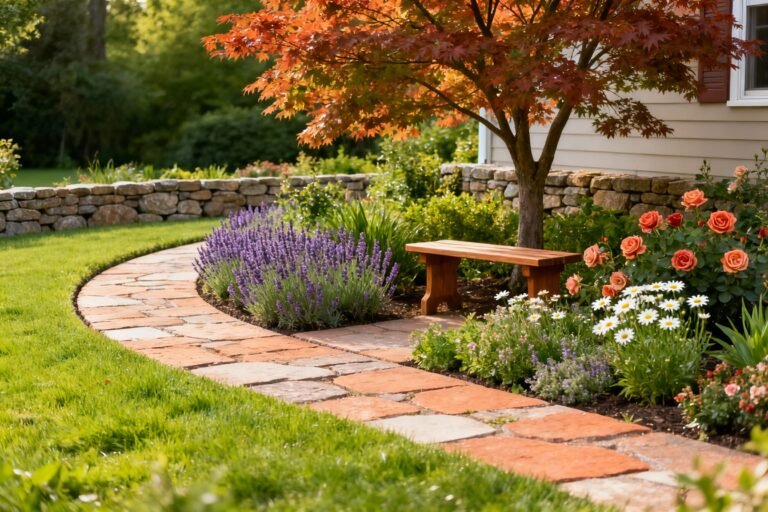
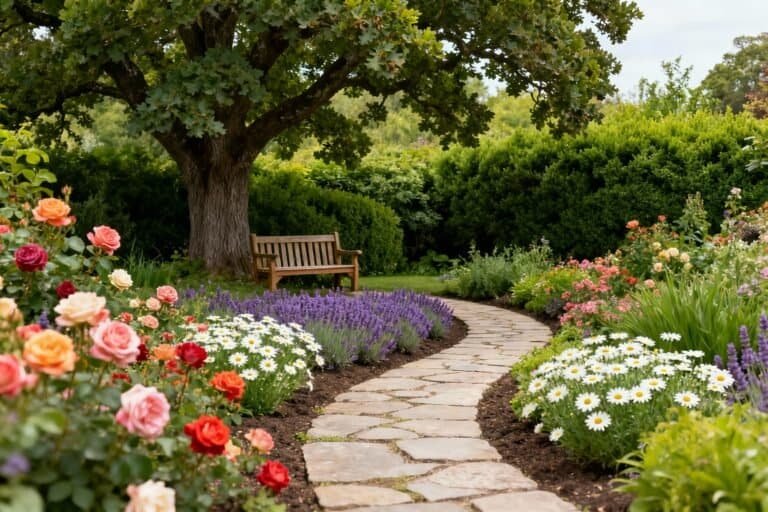
Think narrow winding paths, a weathered fence, and a simple arbor or obelisk for climbers.
- Materials: gravel, brick, reclaimed stone—imperfection looks right here.
- Climbers: sweet peas, clematis, climbing roses. Let them frame gates and windows.
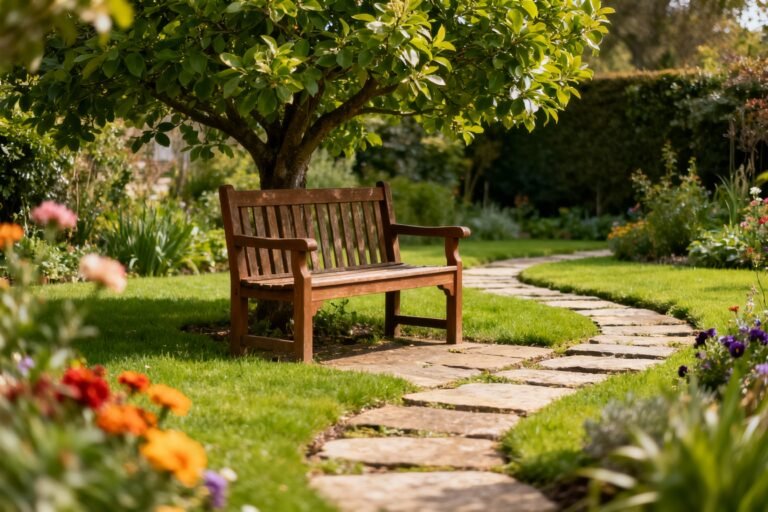
- Benches and pots: tuck a seat in the shade; add terracotta full of herbs near a door.
Wildlife Wins
Invite the good crowd and your garden will thrive.
- Pollinator magnets: lavender, scabiosa, echinacea, cosmos
- Water source: a shallow dish with stones for bees and butterflies
- Messy corner: a tiny brush pile for beneficial insects—yes, it’s on purpose
Maintenance (That Doesn’t Eat Your Weekend)
This style looks relaxed, but you still steer the ship. FYI: a few small habits beat one giant cleanup.
- Deadhead spent blooms to extend flowering—unless you want self-seeding.
- Chop-and-drop light trimmings to feed the soil.
- Mulch yearly to keep moisture in and weeds out.
- Staking: hide simple stakes in spring for tall plants (delphiniums, hollyhocks).
- Divide overgrown perennials every 3-4 years to keep vigor and share plants (free garden, yes please).
Watering Without Drama
Deep, infrequent watering beats daily sprinkles. Soaker hoses or drip make life easier and keep foliage dry, which helps prevent mildew.
Morning watering wins—your plants perk up before noon and you get bragging rights.
Seasonal Flow: From First Buds to Frost
A good cottage garden changes the channel every month. Plan for a parade, not a one-hit wonder.
- Spring: tulips, daffs, wallflowers, forget-me-nots, aquilegia
- Early summer: foxgloves, roses, peonies, catmint
- Midsummer: echinacea, phlox, salvias, daylilies
- Late summer–fall: asters, sedum, rudbeckia, Japanese anemones
- Winter interest: seed heads, ornamental grasses, rose hips, evergreen herbs
Bulbs and Self-Seeders = Secret Sauce
Tuck bulbs under perennials for surprise spring color. Let self-seeders wander but edit them lightly.
You’re the curator of the chaos.
Common Mistakes (And Easy Fixes)
We’ve all done at least one of these. Probably three.
- Planting too tight, too soon: leave space for growth; fill gaps with annuals the first year.
- Forgetting foliage: blooms come and go; varied leaves keep the show running.
- Zero structure: add a trellis, path, or clipped shrub to anchor the fluff.
- Ignoring the soil: compost fixes many sins. Mulch helps the rest.
- One-season wonder: choose plants that overlap bloom times so something always shines.
FAQ
Do I need a big yard to pull off a cottage garden?
Nope.
You can create the vibe in a small border, a courtyard, or even a few large containers. Focus on layering, repetition, and texture. A narrow strip with roses, catmint, and a climber on a trellis can look peak cottage.
Can I do a cottage garden in shade?
Yes, with tweaks.
Use foxgloves, hellebores, ferns, astilbes, brunnera, and hardy geraniums. You’ll get more mood and foliage interest than floribunda fireworks, but IMO it still slaps.
How do I stop it from looking messy?
Give it a backbone. Add a defined edge (brick or steel), a path, and repeat a few key plants.
Then edit once a month—pull out the overachievers and let everyone else breathe.
What roses work best for a cottage garden?
Look for disease-resistant, repeat-flowering shrub or climbing roses. English-style roses, rugosas, and modern shrubs hold up well. Pair them with lavender or catmint so they don’t look like lonely prom queens.
Is a cottage garden high maintenance?
It’s medium.
You’ll do regular light work—deadheading, staking, a little watering—rather than major overhauls. If you mulch annually and choose tough plants, you’ll spend more time sniffing flowers than cursing weeds. Usually.
Can I keep it organic?
Absolutely.
Start with healthy soil, plant densely to shade out weeds, and attract beneficial insects. If pests show up, try hand-picking, water blasts, or mild soap sprays. Nature balances out when you give it a chance.
Conclusion
A cottage garden invites you to loosen up.
Plant generously, embrace layers, and let some chaos sneak in. With a few bones for structure and a little editing, you’ll get a garden that buzzes with life and beauty—without feeling fussy. Grow what you love, repeat your favorites, and enjoy the joyful mess.
FYI: the bees will thank you, and so will your soul.