Shadow Garden Landscaping Tips for Cool, Calm Outdoor Retreats
You notice it the second you step outside: that moody stretch of yard where sun refuses to hang out. Plants sulk there, pots glare at you, and grass taps out. That’s the shadow garden—gloomy, yes, but definitely not hopeless.
In fact, a well-planned shade bed can look lush, dramatic, and low maintenance. Ready to turn your dark corner into the coolest spot on the block?
What Exactly Is a Shadow Garden?
A shadow garden is any planting area with limited direct sunlight. Think north-facing yards, spaces under big trees, and the alley side of the house.
Instead of forcing sun-lovers to survive there (spoiler: they won’t), you curate plants and design elements that thrive in dappled light or full shade. Quick shade cheat sheet:
- Full shade: Less than 2 hours of direct sun daily
- Partial shade: 2–4 hours of direct sun (usually morning)
- Dappled shade: Light filtered through leaves, shifting through the day
Why Shade Gardens Are Secretly Awesome
Shade gardens feel calm and cool—literally. They save water, need less mowing, and usually fight fewer weeds. Also, the textures and leaf shapes you can play with?
Unreal. Benefits you’ll notice fast:
- Lower maintenance: Fewer crispy leaves and less watering
- Longer seasons of interest: Foliage-driven design looks good all year
- Wildlife friendly: Birds, pollinators, and toads love the shelter
- Microclimate magic: Cooler spaces for summer lounging
Know Your Shade: Light, Soil, and Moisture
You can’t pick plants until you diagnose your exact flavor of shade. Not all shadow is created equal, and your soil might be a bigger deal than the light.
Light Mapping (DIY and free)
Walk the area three times: morning, noon, late afternoon. Snap pics or jot notes.
If you get a bright hour or two early, you’ve got partial shade. If sun peeks through leaves all day, that’s dappled.
Soil Reality Check
Under trees? Expect dry shade—roots hog moisture.
Along foundations? Often compacted or rocky. In a low spot?
Potentially soggy shade. Scoop a handful: if it clumps like dough, you have clay; if it dribbles like sugar, it’s sandy. Easy enough. Fixes that pay off:
- Dry shade: Add compost, mulch thickly, choose tough plants
- Wet shade: Elevate beds, use moisture-loving species
- Compacted soil: Broadfork or aerate, then amend
Plant Picks That Actually Thrive in Shadow
No drama queens here—just reliable, gorgeous shade companions.
Mix textures and heights, and let foliage do the heavy lifting.
Foliage All-Stars
- Hosta: Big leaves, tons of colors; loves consistent moisture
- Heuchera (Coral Bells): Purple, caramel, silver—great edges and containers
- Ferns: Japanese painted, lady fern, autumn fern—instant woodland vibe
- Brunnera: Heart-shaped, silver-dusted leaves; tiny blue spring flowers
- Liriope: Grass-like clumps with purple flower spikes; super tough
Flower Power (Yes, in Shade!)
- Astilbe: Feathery plumes, loves moisture; adds height and color
- Hydrangea (Panicle or Oakleaf): Big blooms, architectural form
- Hellebores: Late winter flowers; deer-resistant, long-lived
- Foxglove (in partial shade): Cottage style, tall spires
- Impatiens & Begonia: Annuals for easy color pops
Groundcovers That Keep Weeds Out
- Pachysandra and Vinca minor: Classic, evergreen carpets
- Sweet woodruff: Fragrant, delicate leaves, spring stars
- Ajuga: Bronze foliage, blue flowers; spreads fast (you’ve been warned)
FYI: Pick plants for your growing zone first, then your shade level. Not the other way around.
Design Moves That Make Shade Look Intentional
Shade gardens shine when you lean into texture, contrast, and structure. Think moody drama, not sad corner.
Play With Contrast
Pair big-leaf hostas with fine-textured ferns.
Mix dark foliage with variegated leaves to brighten the scene. Silver and chartreuse varieties cheat the light and pop in darker spaces.
Add Layers Like a Pro
- Back row: Hydrangeas, large hostas, tall ferns
- Middle: Heucheras, brunnera, astilbe
- Front edge: Groundcovers and small annuals
Angles matter. Curve the bed, stagger heights, and leave a visual path for the eye.
Hardscape: Your Best Friend
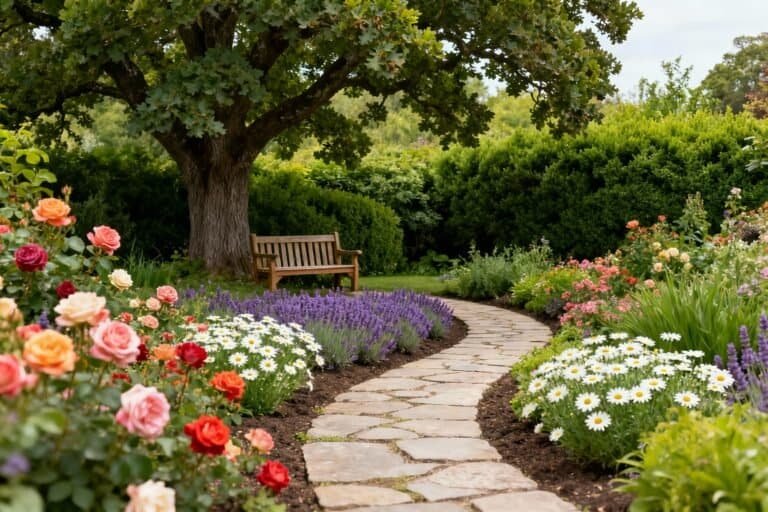
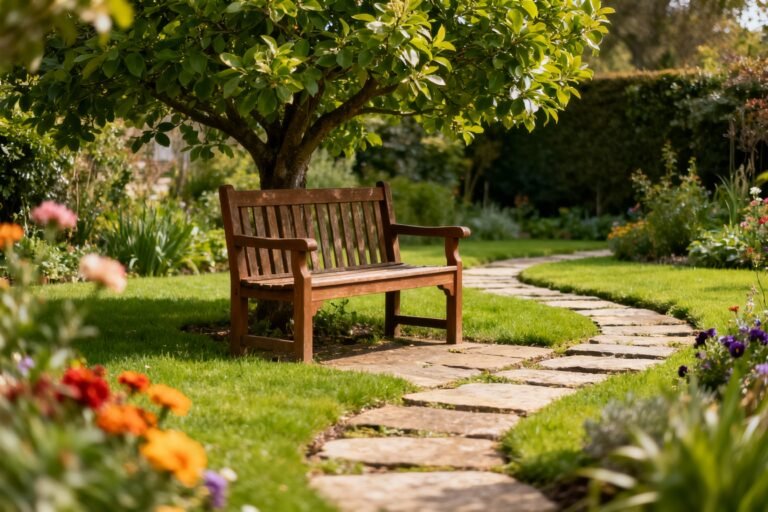
A weathered bench, stone path, or matte black pots anchor the space.
Add a birdbath or lantern for focal points. Shadow gardens love texture—gravel, bark mulch, and reclaimed wood all look at home.
Working With Trees (Not Against Them)
Trees hog water and cast deep shade. You can still win if you strategize. Best practices:
- Avoid deep digging near trunks—use shallow-rooted plants
- Mulch 2–3 inches to conserve moisture and protect roots
- Drip irrigation or soaker hoses beat spray sprinklers under canopies
- Containers tucked under branches sidestep root competition
Tree-Friendly Picks
Epimedium, lamium, hakonechloa (Japanese forest grass), and hellebores handle rooty, dry shade like champs.
Lighting and Color Tricks (When You Want a Glow-Up)
You can’t move the sun, but you can fake it.
Use warm landscape lighting at dusk to highlight foliage textures. Uplight a multi-stem shrub, edge a path with soft spots, and boom—instant evening magic. Color hacks:
- Chartreuse and silver brighten shadowy beds
- Deep purples and blues add depth and mood
- White blooms read at night like little lanterns
Maintenance Without the Meltdown
Shade gardens won’t beg for constant attention, but they appreciate a little love.
- Water deeply the first season; then less often, more thoroughly
- Mulch annually to lock in moisture and keep soil springy
- Divide clumps every few years to keep vigor and get free plants
- Watch slugs (hosta fans know); use traps, barriers, or resistant varieties
- Prune lightly in late winter to reset structure
Low-Effort, High-Reward Routine
Weekly 5-minute walk-through: pluck weeds, deadhead obvious spent blooms, and check moisture. Monthly 20-minute tidy: refresh mulch where thin, trim floppers, and reset edges.
That’s it. Promise.
Common Mistakes (And How to Dodge Them)
We’ve all been there—buying sun-lovers for full shade because the flowers looked cute. Let’s skip the heartbreak.
- Forcing full-sun plants: Read the tag.
If it says 6+ hours of sun, it’s not a shade buddy.
- Ignoring soil: Shade + clay + no amendments = sad plants. Add compost.
- Planting too tight: Shade slows growth, but overcrowding breeds mildew. Space them.
- Zero focal points: Give the eye something to land on—a bench, boulder, or sculpture.
FAQ
Can I grow vegetables in a shadow garden?
You can grow leafy greens like lettuce, spinach, arugula, and some herbs (mint, parsley) in partial shade.
Root crops like beets and radishes tolerate light shade. Tomatoes and peppers? They’ll sulk—save those for the sunniest spot, IMO.
How do I brighten a very dark corner without repainting my fence?
Use plants with variegated or light foliage (brunnera, variegated hosta), white-flowering accents (astilbe, impatiens), and add reflective elements like pale gravel or a light-toned birdbath.
A discreet warm LED uplight under a fern creates instant pop, FYI.
What’s the easiest beginner combo for shade?
Try this trio: a medium hosta for structure, Japanese painted fern for texture and color, and heuchera for contrast. Edge with sweet woodruff or lamium. It looks layered with almost zero effort.
Do I need special fertilizer for shade plants?
Not really.
Most shade plants prefer rich, organic soil over heavy feeding. Mix compost in spring and top up mulch. If something looks pale or sluggish midseason, a balanced slow-release fertilizer once is enough.
How do I handle slugs humanely?
Copper tape around prized pots, iron phosphate pellets (pet-safe), and beer traps work well.
You can also choose tougher-leaf varieties or hostas labeled slug-resistant. Nighttime hand-picking with a flashlight? Weirdly effective, IMO.
Will a shadow garden look good in winter?
Yes, if you plan for it.
Add evergreens (boxwood, yew, hellebores), structural grasses like carex, and interesting bark or stems. A stone feature or bench keeps the design grounded even when leaves bail.
Conclusion
You don’t need blazing sun to grow a beautiful garden. Embrace the mood, lean into texture, and let foliage do the heavy lifting.
With the right plants and a few smart design moves, your shadow garden can feel lush, cool, and effortlessly intentional. Honestly? Once you see how low-maintenance it runs, you might start wishing more of your yard lived in the shade.