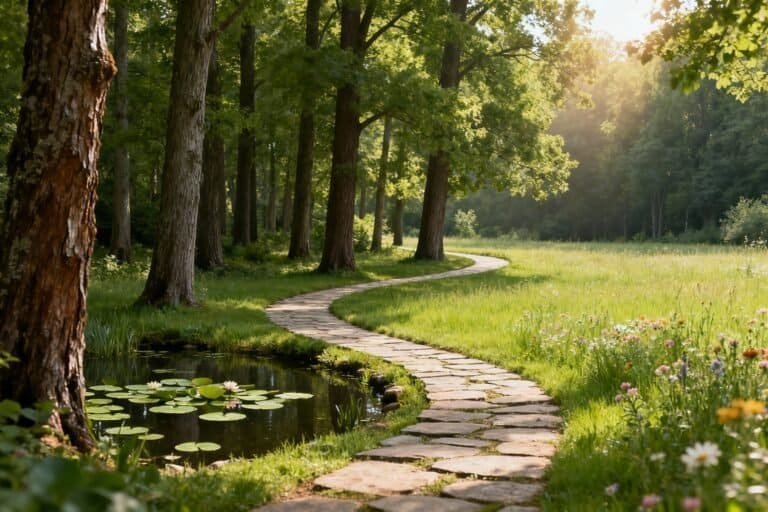
Front Yard Makeover: Simple Changes That Transform Your HomeFront Yard
Your front yard works like a handshake. It tells people who you are before you ever open the door. Cozy cottage vibes?
Sleek modern lines? Low-key jungle? You can choose your own adventure.
And the best part: you don’t need a huge budget or a team of landscapers to make it happen.
Why Your Front Yard Matters (More Than You Think)
Your front yard sets the tone for your home. You don’t need a magazine-perfect lawn, but you should aim for intentional and welcoming. Think of it like curb appeal that also boosts daily mood.
Also, a good front yard does actual work. It channels water, cools your home, guides guests, and adds privacy. Style and function can be best friends—who knew?
Start With a Plan (And a Walk to the Curb)
Walk to the street and look back at your house.
What stands out? What feels messy or empty? Snap a few photos and mark up what you like and what you don’t.
IMO, this five-minute reality check beats any Pinterest binge. Focus on three things first:
- Path: Clear, safe, and obvious. Guests shouldn’t guess how to get to your door.
- Proportions: Plants and features should fit your house size. No tiny shrubs under a tall porch, no giant tree in a tiny yard.
- Layers: Put taller plants near the house, medium in the middle, low near the streets or walkways.
Quick Site Checklist
- Sun exposure: full sun, part shade, or shade?
- Soil type: clay, loam, or sand? (Squeeze test works great.)
- Drainage: puddles after rain = fix grade or add drains.
- Utilities: mark sprinklers, cables, and lines before digging.
FYI, call before you dig.
Design Moves That Always Work
You don’t need a design degree. You just need a few reliable moves that never look dated.
Define the Entry
Frame the front door with plants, pots, or a small tree. Add a contrasting door color and a simple house number.
You want an obvious “start here.”
Curves vs. Straight Lines
Curved beds feel relaxed and friendly. Straight lines feel crisp and modern.
Match your house style—bungalow loves curves, mid-century loves clean lines. Both can look great when done deliberately.
Repeat, Repeat, Repeat
Repetition creates rhythm. Choose 3–5 plant varieties and repeat them. A dozen random plants create chaos.
A few repeated plants look intentional and calm.
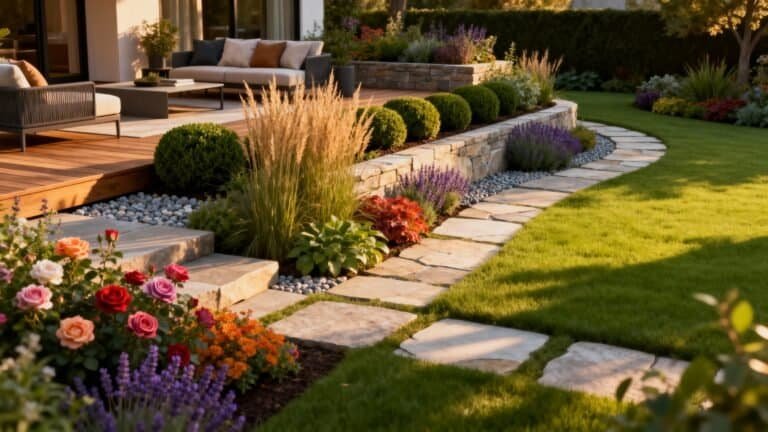
Use Layers Like a Pro
- Back layer: 4–8 feet tall—ornamental grasses, hydrangeas, small evergreens.
- Middle: 2–3 feet—lavender, boxwood, spirea, salvia.
- Front edge: 6–18 inches—thyme, liriope, heuchera, groundcovers.
Planting: Pick Winners, Not Divas
No one wants a plant that needs weekly pep talks. Choose tough, climate-appropriate plants and you’ll win the maintenance game.
Native and Adaptive Plants
Native plants handle local weather, support pollinators, and usually need less water. Adaptive plants (non-native, non-invasive) can also perform well.
Aim for a mix that looks good year-round.
Four Foolproof Combos
- Sunny, low water: Lavender + Russian sage + feather reed grass + creeping thyme.
- Part shade elegance: Hosta + Japanese forest grass + hellebore + ferns.
- Evergreen backbone: Boxwood or inkberry + hydrangea + heuchera edge.
- Wildlife-friendly: Coneflower + black-eyed Susan + milkweed + switchgrass.
Planting Tips You’ll Actually Use
- Dig a hole twice as wide, same depth as the root ball.
- Loosen roots before planting—don’t skip this.
- Water deeply after planting and mulch 2–3 inches (keep mulch off stems).
- Group plants by water needs. Your hose will thank you.
Lawn, No Lawn, or Something in Between?
You have options, and not all involve endless mowing.
If You Keep Lawn
Keep it small and strategic. Use lawn as a path or a “carpet” that sets off planting beds. Feed lightly, mow high, and overseed in fall.
Consider blends with clover—less water, greener look, more pollinators.
If You Ditch Lawn
Try a tapestry of groundcovers, gravel with steppingstones, or a meadow vibe. Add boulders, a bench, and a few shrubs for structure. Your weekends just freed up.
Water-Wise Upgrades
- Drip irrigation instead of sprinklers.
- Mulch everywhere you can.
- Rain garden near downspouts to catch runoff.
Hardscape: The Frame Around Your Art
Hardscape = paths, steps, edging, walls.
These set the stage for everything else.
Paths That Feel Great
A good path has rhythm. Use 3–4 foot width so two people can walk side by side. Materials to consider:
- Pavers: Clean look, easy to repair.
- Gravel: Budget-friendly, great drainage (use edging).
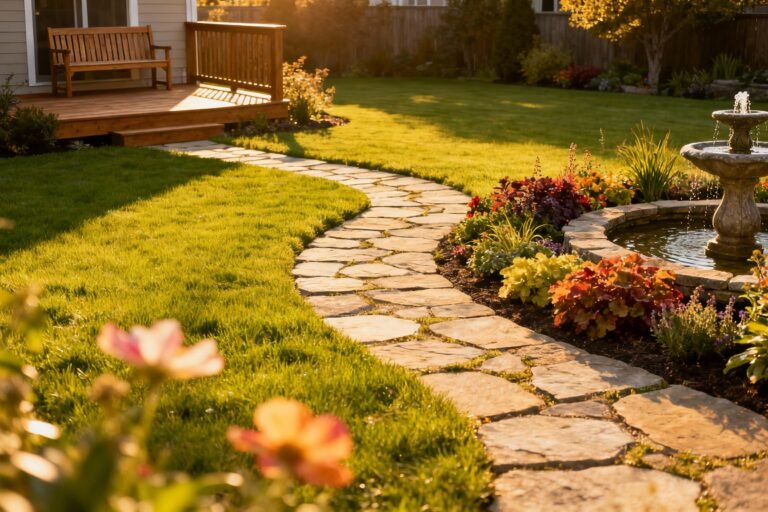
- Steppingstones + groundcover: Charming, low-maintenance.
Front Porch Glow-Up
Swap the light fixture, update house numbers, and add a big planter on each side of the door.
Boom—instant upgrade. Paint the door a color that contrasts the siding for a quick win.
Edging and Borders
Edging keeps beds tidy and lawn in its lane. Try steel edging for sleek lines, stone for rustic, or brick for classic.
Your weeding time drops immediately, FYI.
Lighting: Secret Sauce After Dark
Great lighting turns a nice yard into a “wow” yard at night.
- Path lights: Low, shielded, spaced 6–8 feet apart.
- Uplights: Aim at a tree or architectural detail.
- Downlights: Soft “moonlight” from a branch or eave.
- Warm color temperature: 2700–3000K for cozy vibes.
Use timers or smart plugs so you never think about it again. Motion sensors near the driveway earn bonus points.
Seasonal Strategy (So It Never Looks Bare)
The trick? Mix evergreen structure with seasonal highlights.
- Winter: Evergreens, red twig dogwood, grasses with frosty plumes.
- Spring: Bulbs like tulips, daffodils, and alliums tucked among shrubs.
- Summer: Roses, coneflowers, daylilies, salvias—color party.
- Fall: Asters, sedum, mums, and foliage color from maples and oakleaf hydrangea.
Container Magic
Containers at the entry pull everything together.
Use the thriller-filler-spiller formula:
- Thriller: Upright plant (small grass or dwarf conifer).
- Filler: Medium plants like petunias or coleus.
- Spiller: Trailing ivy, sweet potato vine, or bacopa.
Budget-Friendly Wins
You can upgrade without draining your savings. Promise.
- Edge and mulch beds: Massive impact, minimal cost.
- Divide perennials: Free plants from friends or your own yard.
- Stagger projects: Do the path this year, lighting next year, shrubs the year after.
- Buy small plants: They catch up fast and save cash.
Weekend Project Ideas
- Install a new mailbox with a mini bed and drought-tolerant plants.
- Build a simple gravel path with steel edging.
- Paint the front door and swap the hardware.
- Add a bench under a tree with a crushed granite pad.
FAQ
How do I pick a front yard style that fits my house?
Match the architecture first, then layer your personality. Craftsman loves warm wood and lush, layered plantings.
Modern likes clean lines, sculptural shrubs, and restrained color. Start with your house style, then add one or two bold choices that feel like you.
What’s the easiest way to reduce maintenance?
Shrink the lawn, install drip irrigation, and plant in masses. Choose drought-tolerant, disease-resistant plants.
Mulch 2–3 inches and edge beds so grass can’t invade. Those four moves slash weekend chores, IMO.
How many different plants should I use?
Keep it tight. Five to eight types across the whole front yard look curated, not chaotic.
Repeat them in groups of three or five. Your design will feel cohesive immediately.
Do I need professional help?
Not always. You can DIY design basics, paths, and planting.
Hire pros for big trees, walls, irrigation, or anything involving heavy equipment or permits. Hybrid approach = best value.
What plants are safe under power lines?
Choose trees that mature under 20 feet, like serviceberry, redbud, or crape myrtle (dwarf varieties). Shrubs and ornamental grasses also work.
Always check local utility guidelines before planting—future you will be grateful.
How do I make it welcoming without clutter?
Pick a focal point (your door), keep the path clear, and limit decor. One statement planter, a good light, and neat beds beat a yard full of trinkets. Negative space counts as design, FYI.
Conclusion
Your front yard doesn’t need perfection—it needs intention.
Define the path, repeat a few great plants, and give your door some love. Layer in lighting and seasonal interest, and you’ve got a space that makes you smile every time you pull up. Start small, stay consistent, and watch the compliments roll in.