6 Creative Air Plant Display Ideas For Every Room
Air plants look like little aliens that wandered in from a cooler, greener dimension. They don’t need soil, they fit in tiny spaces, and they tolerate your forgetful watering schedule. Translation: you get maximum plant vibes with minimum drama.
So let’s put these weirdos to work in every room—and make them look amazing while we’re at it.
Why Air Plants Make Decorating Ridiculously Easy
You don’t need a green thumb or a bag of potting mix. Air plants (tillandsias) absorb moisture and nutrients through their leaves. That means fewer messes and more freedom to style. Quick basics you’ll actually use:
- Light: Bright, indirect light.
A sunny window nearby works. Avoid harsh midday beams.
- Water: Soak 20–30 minutes once a week (more in dry homes), then shake them dry.
- Airflow: Good circulation keeps them happy. No closed terrariums, please.
- Mounting: Skip copper or treated wood.
Go with natural materials.
1) Floating Frames for the Living Room
Turn your plants into wall art. Grab a simple wood frame with no backing, stretch some fishing line or thin wire across it, and tuck air plants into the grids. You get a floating effect that feels modern and light. Why it works: You create a focal point without cluttering surfaces.
It’s basically a plant gallery, minus the pretension.
Pro tips for layout
- Mix sizes: tuck a few chunky xerographicas beside smaller ionanthas for texture.
- Keep spacing uneven for a natural look—no rigid grid vibes.
- Hang it near bright light, but not in direct afternoon sun.
2) Kitchen Magnet Garden (Yes, on the Fridge)
Your fridge front = prime vertical real estate. Attach small magnets to lightweight holders—think cork bark chips, mini driftwood pieces, or tiny ceramic pods. Pop a tillandsia in each, and boom: instant kitchen jungle. Why it works: You see them every day, so you won’t forget to water.
Also, your recipe fails feel less tragic when the view looks green and intentional.
Make it practical
- Use strong neodymium magnets so plants don’t slide when you open the door.
- Mist lightly in the sink, or pull them off to soak weekly.
- Keep them away from the heat of the stove and direct vent blasts.
3) Spa Vibes in the Bathroom with Hanging Orbs
Bathrooms can be tricky for plants, but air plants love humidity. Hang glass or acrylic orbs with openings (key detail!) near a window or under a skylight. Place one plant per orb for balance. Why it works: Steam helps with moisture, and the setup looks spa-level fancy for almost no effort.
IMO, it’s the easiest glow-up you can give a bathroom.
Avoid the terrarium trap
- Choose orbs with large openings to keep airflow strong.
- Add a layer of pebbles or sand for aesthetics, but don’t bury the plant.
- Take plants out to soak weekly; dry them fully before returning to the orb.
4) Nightstand Companions: Minimalist Stands for the Bedroom
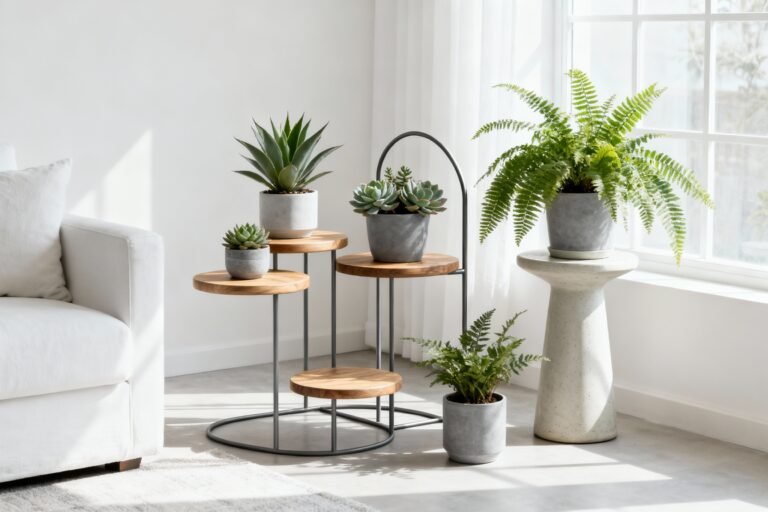
Keep it calm and uncluttered with a simple stand—think a metal ring, wooden pedestal, or tiny ceramic dish. Set one sculptural air plant on top, and let it be the star. Why it works: The clean lines don’t fight your bedroom decor, and the plant softens the space. Also, no soil to spill when you reach for water at 2 a.m.
FYI, your future self thanks you.
Plants that shine in low-drama displays
- Xerographica: Big, curly, and photogenic.
- Caput-medusae: Tentacle energy, but cute.
- Ionantha: Compact and occasionally blushes pink when happy.
5) Entryway Statement: Driftwood Sculptures
If you want a “wow” moment right when you walk in, mount air plants on a piece of driftwood. Use non-toxic glue or clear fishing line to secure them, and lean the piece on a console or hang it on the wall. Why it works: The organic shape of the wood complements the plants, and the whole thing looks like you picked it up at a design fair. For once, people will ask about your “installation” without irony.
Composition ideas
- Cluster small plants in odd numbers for a natural feel.
- Mix silver-leaved varieties (drought-tolerant) with greener types for contrast.
- Leave negative space—let the wood breathe.
6) Desk-Friendly Test Tubes and Wall Rails
Working from home?
Mount a set of glass test tubes in a wooden rack or a magnetic rail above your desk. Slip one air plant per tube, or rotate in cut flowers when you feel fancy. Why it works: You get greenery without sacrificing desk space. It’s tidy, modular, and easy to rearrange when your vibe changes (again).
Keep it thriving while you work
- Rotate the rack weekly so each plant gets even light.
- Move the plants to a bowl for soaking—don’t dunk the rack.
- Avoid direct blasts from heating/cooling vents that dry leaves fast.
Bonus: Seasonal Centerpieces You Can Actually Reuse
Create a low centerpiece with a shallow tray, some stones or moss, and 3–5 air plants.
Change the accents seasonally: tiny pumpkins in fall, ornaments in winter, seashells in summer. Zero shedding, zero crumbling leaves on your table. Why it works: It’s fast, it’s flexible, and you don’t commit to a single look. Plus, you can move the whole thing to the sink to water in one go.
Efficient? Yes. Lazy?
Also yes, but in a good way.
Care Cheatsheet You’ll Refer To Later
Because life gets busy, and plants do not text reminders.
- Weekly soak: 20–30 minutes in room-temp water. Increase to twice a week in dry winters.
- Drying: Shake off excess, then place upside down on a towel for an hour to prevent rot.
- Light: Bright, indirect. East or west windows work great.
Sheer curtains tame hot sun.
- Fertilizer (optional): Bromeliad or air plant fertilizer at 1/4 strength monthly.
- Red flags: Crispy tips = too dry. Mushy base = too wet. Adjust accordingly.
FAQ
Do air plants need soil at all?
Nope.
They belong to the bromeliad family and pull moisture and nutrients through their leaves. Give them a surface to sit on and decent airflow, and they’ll live their best, dirt-free life.
How often should I water air plants?
Soak them for 20–30 minutes once a week. In very dry or heated homes, bump that to twice weekly.
Always shake off water and let them dry fully within 2–3 hours to avoid rot.
Can I keep air plants in the bathroom?
Yes, if you have some natural light. The humidity helps, but they still need brightness. If your bathroom lacks windows, rotate plants out weekly for a sunbath elsewhere.
IMO, this tiny routine keeps them perky.
What kind of containers or materials are safe?
Use glass, ceramic, untreated wood, cork, and stainless or powder-coated metals. Avoid copper and pressure-treated wood, which can leach chemicals that harm plants. If you’re unsure, place a thin barrier (like a bit of bark) between the plant and the surface.
Why is my air plant turning brown at the tips?
Usually low humidity or infrequent watering.
Increase soaking frequency and mist in between if your home feels desert-dry. Trim browned tips with clean scissors and follow the natural leaf shape for a tidy look.
Will my air plant bloom or make pups?
With good light and regular care, yes. Many tillandsias bloom once, then produce baby plants (pups) at the base.
Let pups reach about one-third the size of the parent before gently separating—if you want more displays, this is the fun part.
Wrap-Up: Tiny Plants, Big Style
Air plants make it painless to style every room without turning your home into a potting shed. Try a floating frame in the living room, magnets in the kitchen, orbs in the bathroom, a minimalist stand by the bed, driftwood in the entry, and a sleek rail by your desk. Mix, match, and rearrange whenever the mood strikes.
Your space stays fresh, your plants stay happy, and you look like you know what you’re doing—because now, you do.