11 Fascinating Facts About Monstera Lechleriana Every Plant Lover Should Know
Everyone talks about Monstera deliciosa, but its quieter cousin, Monstera lechleriana, steals hearts without trying. It gives you that jungle vibe with far less drama. If you’ve been eyeing those sleek leaves with peekaboo holes, you’re in the right place.
Let’s nerd out (casually) about this under-hyped star with 11 facts you’ll want to drop in your next plant chat.
1) It’s a true climbing Monstera with a thing for height
Monstera lechleriana loves to climb. Give it a moss pole, a plank, or even a textured wall, and it’ll sprint upward like it has places to be. No support?
You’ll get a sprawling, slightly chaotic plant that still looks cute, just less “architectural moment.”
Why you should stake it early
– Bigger leaves faster: Vertical support encourages mature leaves and fenestrations. – Neater silhouette: Hello, sculptural vibes. – Happier roots: Aerial roots latch onto moist moss poles and hydrate the plant.
2) It fenestrates differently than your classic Swiss cheese
You’ll see elongated holes that form from the midrib out, often in uneven patterns. Early leaves may have zero holes, then the magic starts as it matures. FYI: poor light = fewer holes.
Nature loves a spotlight.
Fenestrations are not just decoration
Some theories suggest those holes help leaves handle wind, filter dappled light, and shed water efficiently. Whether or not you buy the science, more light and proper support usually equals better fenestrations. IMO, that alone earns it premium shelf space.
3) It’s not adansonii—here’s how to tell
Plant ID can get messy, and lechleriana often gets mislabeled.
But you can spot differences if you know where to look.
- Leaf shape: Lechleriana leaves run more oval and elongated, with a thicker, leathery texture.
- Fenestration pattern: Holes tend to be fewer and longer, usually more orderly than adansonii’s chaotic lace look.
- Growth habit: Lechleriana climbs with conviction; adansonii trails more willingly when young.
4) Light needs: bright, indirect—and it’ll thank you
Think “bright room, no sunburn.” East windows rock; a few hours of gentle morning sun works wonders. West sun? Filter it unless you like crispy leaves.
Quick light checklist
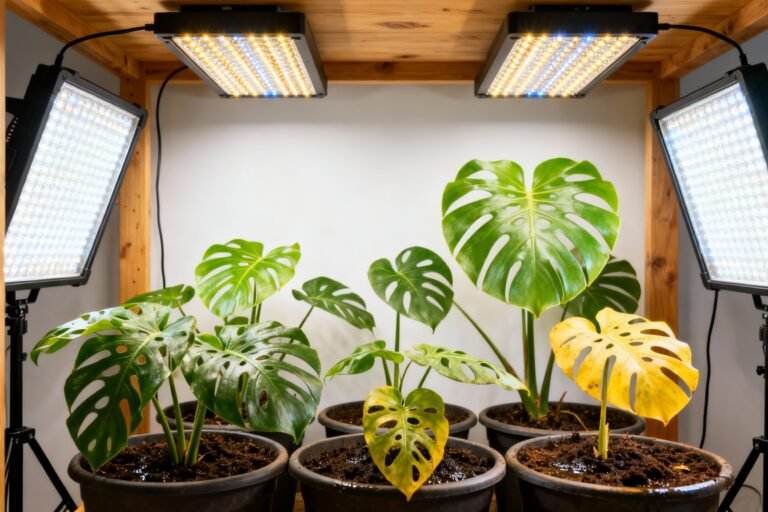
– Good: Bright, indirect light most of the day. – Better: A grow light 12–16 inches above for 10–12 hours. – Nope: Dark corners.
Expect slow growth and shy fenestrations.
5) It drinks, but not like a fish
Lechleriana enjoys evenly moist soil, not wet feet. Water when the top 1–2 inches feel dry. During winter, it sips rather than gulps—dial back accordingly.
- Soil mix: Chunky aroid mix—orchid bark, perlite, coco coir, and a pinch of charcoal.
- Pot: Drainage holes are non-negotiable.
- Humidity: 50–70% is the sweet spot.
Normal homes work; a humidifier turns it into a show-off.
6) It wants to show off those aerial roots
Those little nubs aren’t just for drama. Aerial roots stabilize the plant and absorb moisture. If you switch to a moss pole or a moisture-retentive plank, you’ll notice faster growth and bigger leaves.
How to train aerial roots like a pro
– Mist the pole or keep moss lightly moist. – Tie new vines using soft plant tape. – Tuck roots into the pole gently—no wrestling.
7) Propagation is laughably easy
Snip a stem cutting with at least one node and a leaf, and you’re 80% there.
Root in water, perlite, or sphagnum. Water looks pretty, but sphagnum often gets you thicker roots faster.
- Timing: Spring and summer rule.
- Root boosters: Warmth and humidity work better than expensive powders.
- Potting up: Move to soil when roots hit 2–3 inches.
8) It stays classy indoors—no giant leaf takeover
You’ll see leaves around 6–12 inches indoors, sometimes larger with great light and a tall support. Outdoors in the tropics, it can get massive.
Indoors, it’s chill and compact-ish, which makes it perfect for apartments and sanity.
9) Pests rarely party here (but keep an eye out)
Lechleriana doesn’t beg for pests, but spider mites, thrips, and mealybugs still crash occasionally. Catch them early and you’ll hardly break a sweat.
Easy prevention routine
– Wipe leaves monthly with a damp cloth and a splash of gentle soap. – Inspect new plants before introducing them—quarantine if you can. – If pests appear, neem or insecticidal soap + consistency = done.
10) It loves a gentle feed, not a buffet
Fertilize lightly during active growth. A balanced liquid fertilizer at half strength every 4–6 weeks is plenty.
Overdo it and you’ll see salt crust and cranky leaves—no thanks.
- Signs you nailed it: Rich green leaves, steady new growth, clean edges.
- Signs you didn’t: Yellowing, burnt tips, stalled growth. Flush the soil and reset.
11) It’s a vibe: modern, minimalist, and a little mysterious
This plant brings clean lines, subtle drama, and that “I know things about aroids” energy. It blends with minimal decor and still satisfies the jungle-core crowd.
If you’re over common Monsteras (relatable), lechleriana feels fresh without being fussy. IMO, it’s one of the best gateway plants into rarer Monsteras.
FAQ
Is Monstera lechleriana rare?
It used to be harder to find, but availability has improved a lot. Specialty nurseries and online shops often stock it.
Prices have cooled down too, which is always nice.
Why aren’t my leaves getting holes?
Usually light, support, or maturity. Boost light (but avoid harsh direct sun), add a moss pole, and give it time. New growth should fenestrate as the plant climbs and matures.
Can I grow it without a moss pole?
Yes.
It’ll still grow and look lush, just more viney and less upright. If you want bigger, holey leaves, a pole or plank makes a big difference.
How often should I repot?
Every 12–18 months, or when roots circle the pot and water runs straight through. Size up by 1–2 inches only—huge pots hold too much moisture and risk rot.
Is it safe around pets?
Like most aroids, it contains calcium oxalates and can irritate mouths and tummies if chewed.
Keep it out of nibbling range and call your vet if your pet snacks on it.
What’s the ideal temperature range?
Aim for 65–85°F (18–29°C). Avoid cold drafts and temps below 55°F (13°C). Warm and steady wins the race.
Conclusion
Monstera lechleriana doesn’t need to shout to impress.
Give it bright light, a decent pole, and a chunky mix, and it’ll reward you with sleek, fenestrated leaves that look museum-worthy. If you want a Monstera that feels sophisticated without demanding a horticulture degree, this is your plant. Ready to give it the climb of its life?