12 Tips For Growing Monstera In Water Successfully At Home
You’ve seen those dreamy jars of Monstera cuttings swirling their roots in glass like plant mermaids, right? Good news: you can absolutely grow Monstera in water at home—and it’s easier than most people think. With the right setup and a few simple habits, those fenestrated leaves will thrive without a speck of soil.
Let’s get into the juicy tips so your water-grown Monstera looks lush, not limp.
Pick the Right Cutting (Start Strong)
Choose a healthy Monstera stem with at least one node—the little bump where roots grow—and, ideally, an aerial root. Leaves matter too. You want a cutting with 1–3 leaves so it can photosynthesize without exhausting itself.
- Cut just below a node with clean scissors or pruners.
- Remove the lower leaf so it doesn’t sit in water and rot.
- Optional: Let it callus for 1–2 hours before submerging to reduce rot risk.
Use the Right Vessel (Form Meets Function)
You don’t need a designer vase—just something clean and tall enough to support the cutting.
Clear glass lets you monitor root growth and water clarity, which is both helpful and strangely satisfying.
- Support matters: Narrow-neck bottles stabilize tall cuttings.
- Size matters too: Larger vessels dilute waste and keep water cleaner longer.
- Rinse new containers to remove dust or residue before use.
Water Quality: Keep It Clean and Simple
Monstera can root in tap water, but you’ll get better, cleaner growth if you start with decent water. Think fewer minerals, fewer problems.
- Best options: filtered, distilled, or rainwater.
- Tap water works if chlorine isn’t intense; let it sit 24 hours to off-gas, FYI.
- Fill to cover the node and any aerial root, but keep leaves out of the water.
Should You Add Nutrients?
Once roots form (2–6 weeks), you can add a dilute hydroponic fertilizer monthly. Start at 1/8–1/4 strength.
If leaves yellow despite clean water and good light, play with nutrients. If the water gets stinky after feeding, you went too hard—back off.
Light: Bright, Not Blazing
Monsteras love light, but they don’t love scorching rays on bare roots. Aim for bright, indirect light—think a bright room near a window, not pressed against the glass like a plant sunbather.
- Ideal: East window or a few feet back from a south/west window.
- Avoid: harsh afternoon sun on glass vases; it can cook roots.
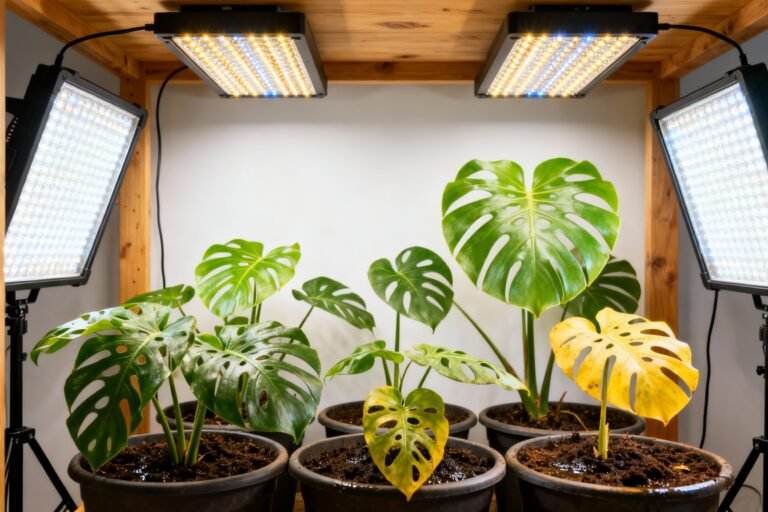
- Grow lights work great—10–12 hours daily, not too close.
Change Water Like You Mean It
Stagnant water equals funky vibes for roots.
Fresh water brings oxygen and prevents slime.
- Change water weekly or sooner if it looks cloudy or smells off.
- Rinse the vessel and roots gently to remove biofilm.
- Top up between changes so the node stays submerged.
Bonus: Oxygen Matters
Roots love oxygen. Swapping water often keeps oxygen high. If you want to geek out, you can add an air stone to a big jar—IMO, overkill for most people, but fun.
Stabilize the Cutting (No Wobbly Divas)
Shaky cuttings struggle to root.
Keep the node submerged and the plant upright.
- Use a support: a chopstick, stake, or narrow-neck bottle.
- Try pebbles or LECA at the bottom to hold stems steady (don’t bury the node).
- Keep leaves dry to prevent rot and water spots.
Temperature and Humidity: Cozy, Not Tropical Sauna
Monsteras stay unfussy, but they root faster when conditions feel like a warm spring day.
- Temp sweet spot: 68–78°F (20–26°C).
- Humidity: 40–60% is plenty. Avoid cold drafts.
- Winter tip: keep cuttings away from heaters and cold windows.
Root Health: White, Firm, Happy
Healthy water roots look white to cream and feel firm. If you see brown, mushy bits, don’t panic—just prune.
- Trim rot immediately with clean scissors.
- Add fresh water and move to brighter indirect light.
- Optional: 1–2 drops of 3% hydrogen peroxide per cup water after trimming to sanitize.
Don’t overdo it.
Algae: Annoying but Harmless
A little green on the glass won’t kill your Monstera. It just looks messy. Scrub the jar, rinse the roots, and reset with clean water.
If algae parties too hard, switch to an opaque container or move it slightly away from intense light.
Fertilizing: Light Touch, Big Results
Water has zero nutrients. Once you have roots 2–3 inches long and a new leaf forming, start feeding lightly.
- Use hydroponic nutrients at 1/8–1/4 strength monthly.
- Flush with plain water between feedings to prevent buildup.
- Watch leaves: pale leaves may mean they want a tiny bit more.
Prune for Shape and Growth
Yes, you can prune a plant in water. In fact, it keeps things tidy and encourages branching.
- Remove yellow leaves to redirect energy.
- Snip leggy growth above a node to encourage side shoots.
- Propagate the trimmings in their own jars.
Infinite plant army.
Commit to Water or Transition to Soil
You can keep Monstera in water long-term if you stay consistent. If you want a bigger plant with giant split leaves, soil usually wins.
Staying Hydro
– Give it a larger vessel as roots fill the jar. – Feed lightly and consistently. – Refresh water often and clean the container monthly.
Moving to Soil
– Wait for robust roots (3–5 inches, branching tips). – Use airy soil with chunky bark and perlite. – Keep soil lightly moist for the first 2–3 weeks to help water roots adapt. – Expect a short pause in growth while it switches root types—normal, don’t freak out.
Common Mistakes to Avoid
- Submerging leaves (rot city).
- Skipping water changes (stagnant water = sad roots).
- Too little light (slow roots, yellow leaves).
- Over-fertilizing (salt stress and slime).
- Using a wobbly jar (poor contact with water at the node).
FAQ
How long does it take for Monstera to root in water?
Usually 2–6 weeks. Warmer temps and bright, indirect light speed things up.
If nothing happens after 6–8 weeks, refresh the cut, make sure the node sits underwater, and move it to brighter light.
Why are my Monstera leaves yellowing in water?
Likely low light, old water, or not enough nutrients after rooting. Increase light, change water weekly, and start a very diluted hydroponic feed once you see established roots. Also check for leaves sitting in water—trim them off.
Can I keep Monstera in water forever?
Yes, with regular care.
Plenty of folks keep Monsteras in water long-term, IMO. Just use a larger vessel as it grows, feed lightly, and keep the water clean. Growth may be slower than in soil, but it can look stunning.
Do I need rooting hormone?
Not necessary, but it can speed things up.
If you use it, pick a water-safe gel or powder and tap off the excess before placing the cutting in water to avoid cloudy residue.
What’s the best fertilizer for water-grown Monstera?
A balanced hydroponic nutrient solution (something near 2-2-2 or 3-3-3) at 1/8–1/4 strength. Feed monthly and flush with plain water between feedings. Less is more—overfeeding invites slime.
Why do my roots look brown?
If they’re firm and tan, that’s normal aging.
If they’re mushy and smelly, that’s rot. Trim the mush, rinse everything, refresh water, and move to brighter light. You can add a tiny splash of hydrogen peroxide, FYI.
Conclusion
Growing Monstera in water feels like cheating—in a good way.
Start with a solid cutting, give it bright light and clean water, and don’t overthink the fertilizer. With a little routine and a cute jar (purely optional but highly recommended), you’ll have glossy leaves and photogenic roots in no time. IMO, it’s the most low-maintenance plant flex you can put on a shelf.