10 Budget Rain Garden Ideas For Beginners
Rain gardens pull double duty: they soak up stormwater and look gorgeous doing it. You don’t need a landscape architect or a trust fund to build one, either. With a shovel, some native plants, and a plan that won’t wreck your weekend, you can create a mini oasis that helps your yard and your local watershed.
Ready to turn puddles into petals?
Why a Rain Garden Is a Smart DIY Project
You capture runoff, reduce erosion, and help recharge groundwater. You also turn that awkward soggy spot into something that actually looks intentional. Plus, you attract pollinators and cut down on mowing.
That last one deserves a slow clap, IMO.
Start Small: The 10-Foot Test Garden
A modest 6×10-foot rain garden gives you practice without overwhelm. You’ll learn how water flows in your yard, which plants thrive, and how deep to make the basin. Think of it as your pilot episode—renewals optional but likely.
- Pick a spot that’s at least 10 feet from your house and downhill from your downspout.
- Test drainage: Dig a 12-inch hole, fill with water, and time how long it takes to drain.
Under 24 hours? You’re golden.
- Depth: Aim for a shallow basin, about 6 inches deep, with gently sloped sides.
Quick Layout Trick
Lay a hose in a teardrop shape to outline the bed. Adjust until it looks right from the house and the street.
Trace with flour or sand, then start digging.
Budget-Friendly Sourcing That Doesn’t Look Cheap
You don’t need pricey plants and fancy edging. You just need the right materials at the right time. Be patient, stalk sales (peacefully), and accept hand-me-downs.
- Native plant swaps: Join a local garden group and swap divisions in spring/fall.
Free is a good price.
- Municipal rain garden programs: Many cities offer rebates, plants, or rain barrels. FYI, these disappear fast—sign up early.
- Mulch by the yard: Bulk mulch costs way less than bags. Split a delivery with neighbors.
- Edge with found objects: Reclaimed brick, logs, or flat stones beat plastic edging every time.
Where to Splurge (Just a Little)
Buy a few larger “anchor” plants for instant structure—think switchgrass or winterberry.
Then fill the rest with smaller starts or divisions. The anchors make everything look intentional while the budget plants catch up.
Water Flow: Simple, Cheap, Effective
You don’t need a backhoe and a civil engineer. You just need a path for water to move gently from your downspout to the basin without eroding your lawn.
- Downspout extender: Use a flexible extender or a short corrugated pipe to direct flow.
- Rock swale: Dig a shallow trench and line it with river rock.
It slows water and looks good.
- Splash zone: Place a flat stone where water enters the garden to prevent craters.
Pro Tip: Berm It
Use the soil you dig out to build a low berm (a small ridge) on the downhill side. It holds water during heavy storms. Compact it lightly and mulch to prevent erosion.
Plant Picks That Thrive (And Survive Neglect)
Choose native plants that can handle wet feet after storms and dry spells between them.
Translation: tough, pretty, and low-drama.
- Grasses and sedges: Switchgrass, little bluestem, fox sedge. Structure + roots that stabilize soil.
- Flower power: Black-eyed Susan, swamp milkweed, blue flag iris, cardinal flower, Joe Pye weed, coneflower.
- Shrubs (optional): Red osier dogwood, winterberry holly, buttonbush for height and berries.
Layer for Impact
– Front: low sedges, heuchera, creeping phlox along the edges. – Middle: coneflower, bee balm, asters for color. – Back: switchgrass, Joe Pye, shrubs as anchors. Plant in drifts of 3–5 for an intentional, not “Oops I tossed seeds” look.
Soil Prep Without Breaking the Bank
You don’t need to replace your soil unless it’s heavy clay or pure builder’s sand.
Amend strategically and keep costs low.
- Clay soil: Mix in compost and coarse sand or fine gravel (about 2–3 inches of compost across the bed).
- Sandy soil: Add compost to hold moisture.
- Weed barrier: Skip fabric. Instead, smother with overlapping cardboard, then soil and mulch on top.
Depth and Slope
Aim for a 6-inch basin depth with a flat bottom so water spreads out evenly. Keep side slopes gentle (3:1 if you want to sound fancy).
You can eyeball it—no need for geometry class trauma.
10 Budget Rain Garden Ideas For Beginners
- Use a rain barrel + overflow: Capture water first, then direct overflow to the garden. More control, fewer floods.
- Plant plugs, not pots: Small plugs cost less and establish faster. Be patient for one season.
- DIY rock swale: Salvage stones from marketplace freebies or a friend’s remodel.
- Mulch smart: Use shredded hardwood mulch 2–3 inches deep to suppress weeds and slow evaporation.
- Host a dig day: Bribe friends with pizza to help install.
It’s cheaper than a contractor and more fun.
- Edge with logs: Downed limbs make rustic, effective edging that holds mulch in place.
- Seed the back: Use native seed mixes in the less visible areas to cut plant costs.
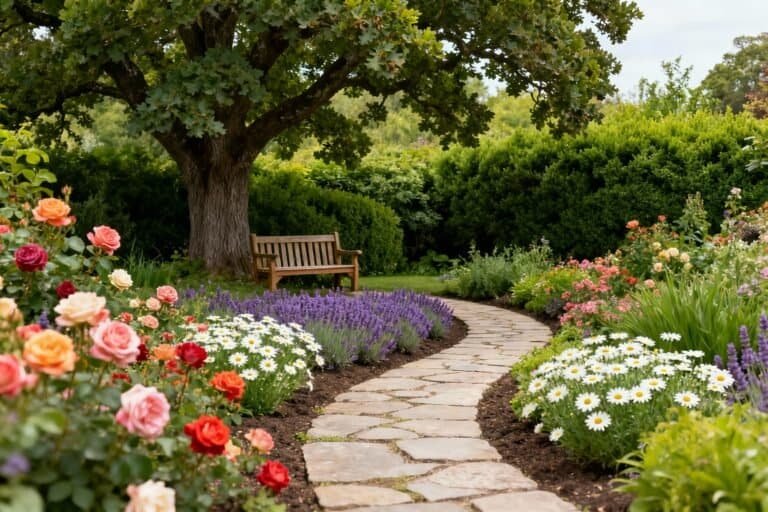
- Add a stepping stone path: A few flat stones let you weed and admire without trampling plants.
- Label plants: Cheap plant tags help you distinguish “future flower” from “evil weed.”
- Light it up: Solar path lights make it look fancy at night for pocket change.
Maintenance: Keep It Cute With Minimal Effort
The first year matters. After that, the garden mostly handles itself. Mostly.
You still need to evict the occasional thug weed.
- Water new plants weekly for the first 6–8 weeks if it doesn’t rain.
- Weed monthly the first season, then quarterly.
- Top up mulch each spring to keep soil covered and weeds sulking.
- Cut back perennials in late winter, not fall, so birds can enjoy the seeds.
Seasonal Tune-Ups
– Spring: Check for sediment buildup at the inlet; rake it out. – Summer: Trim back overachievers. Deadhead for tidier looks (or don’t—IMO the wildlife benefits are worth the mess). – Fall: Add a few bulbs like daffodils along the higher edges for early color.
Design Touches That Elevate the Look
Form meets function, but we still want curb appeal. A few low-cost accents make your rain garden look like a design choice, not a drainage mistake.
- Repeating plants: Use the same grass or flower in 3 spots to create rhythm.
- Contrast textures: Pair spiky grasses with broad-leaf perennials.
- One focal point: A birdbath, a painted rock, or a small shrub gives the eye a place to land.
Color Strategy
Combine long bloomers like coneflower with seasonal stars like cardinal flower.
Aim for spring, summer, and fall interest so the garden never looks “between haircuts.”
FAQ
How big should my rain garden be?
A simple rule: size it to about 10% of the roof area draining to it. If 500 square feet of roof feeds the garden, aim for roughly 50 square feet. Adjust for your soil—go a bit bigger for clay, smaller for sandy soils.
Will a rain garden attract mosquitoes?
No, if you build it right.
The water should drain within 24–48 hours, which is too fast for mosquitoes to complete their life cycle. If you see standing water for days, deepen the basin slightly or improve soil with compost and sand.
Can I put a rain garden near my foundation?
Keep it at least 10 feet away, and direct water downhill toward the garden. Use a splash block or pipe to move water safely.
Do this and your foundation stays happy.
What if my soil is heavy clay?
You can still build one. Loosen the soil 12–18 inches, mix in compost and coarse material, and keep the basin shallow. If drainage still lags, add an underdrain that outlets to a safe area.
Do I need a permit?
Usually not for small residential gardens, but check local rules—especially if you’re near wetlands or in an HOA.
Some municipalities offer rebates, so asking can actually save you money. Win-win.
How much does a basic rain garden cost?
DIY costs vary, but you can build a small one for $150–$400 using plugs, free stone, and bulk mulch. Add a rain barrel or shrubs and you might hit $500–$700.
Still cheaper than a French drain and way prettier.
Conclusion
You don’t need a big budget to build a rain garden—you just need a plan, some tough plants, and the courage to start digging. Capture runoff, add color, and make the neighbors ask, “Wait, how did you do that?” Start small, keep it simple, and let the garden do the heavy lifting. Your yard—and the local bees—will say thanks.
FYI, they tip in pollen.