Bushes in Front of House: Landscaping Ideas to Boost Curb Appeal
You know that weird feeling when you pull up to a house and something just feels… right? Nine times out of ten, the front landscaping did the heavy lifting. Bushes in front of the house frame the architecture, soften hard lines, and whisper, “Yes, someone lives here and they have their life together (mostly).” Let’s talk about choosing and using shrubs so your front yard looks intentional, not like a hedge accidentally wandered by and stayed.
Why Bushes Matter More Than You Think
Bushes set the tone before anyone steps inside.
They shape the first impression, provide privacy, and add texture year-round. They also hide ugly stuff like utility boxes and foundation vents. Win-win.
Plus, shrubs create structure. Flowers come and go, but evergreen bones keep your house looking composed in every season. Think of them as the reliable friend who actually shows up when it’s raining.
Start With the House, Not the Plant
Before you buy anything leafy, stand across the street and study your home.
What needs balancing?
- Scale: Tall, two-story homes need taller shrubs or layered heights. Ranch houses look best with low, horizontal lines.
- Style: Clean-lined modern? Go for sculptural evergreens.
Cottage or craftsman? Mix textures and bloomers.
- Color: Warm brick, cool siding, bold door? Choose foliage and flower tones that complement, not clash.
- Lines and sightlines: Don’t block windows or the path to the front door.
Let the architecture breathe.
Foundation Planting 101
You want to soften the foundation, not smother the house. Keep shrubs 6–12 inches away from the wall and size them so they never block shutters or windows. If you find yourself trimming every two weeks, you chose a plant that wants to be a tree.
IMO, pick plants that max out close to your desired size.
Pick the Right Plants For Your Zone and Sun
Plants ignore vibes and obey climate. Check your USDA Zone and how much sun your front yard actually gets. Then shop smart.
Evergreen MVPs
- Boxwood (Buxus): Classic, tidy, endlessly shapeable.
Great for borders and low hedges.
- Inkberry Holly (Ilex glabra): A native boxwood alternative that handles wet soils better.
- Yew (Taxus): Deep green, shade tolerant, but hates soggy feet.
- Dwarf Spruce or Conifers: Compact forms add year-round structure with minimal fuss.
Flowering Charms
- Hydrangea (panicle or smooth): Big blooms, strong presence, loves morning sun and afternoon shade.
- Azalea/Rhododendron: Spring fireworks; protect from harsh sun and wind.
- Spirea: Reliable, easy, and tidy. Great for low mounds along a walkway.
- Roses (shrub or landscape): Constant color with modern disease-resistant varieties.
Low-Maintenance Favorites
- Nandina (non-fruiting varieties): Airy texture, red winter color.
- Abelia: Glossy leaves, long bloom season, pollinator-friendly.
- Box Honeysuckle (Lonicera nitida): Quick to fill space, easy to shear.
FYI: Always check for invasiveness in your region. Some pretty faces behave badly.
Designing a Front Yard That Actually Flows
Think in layers and groupings, not lonely soldiers spaced like awkward party guests.
You want rhythm.
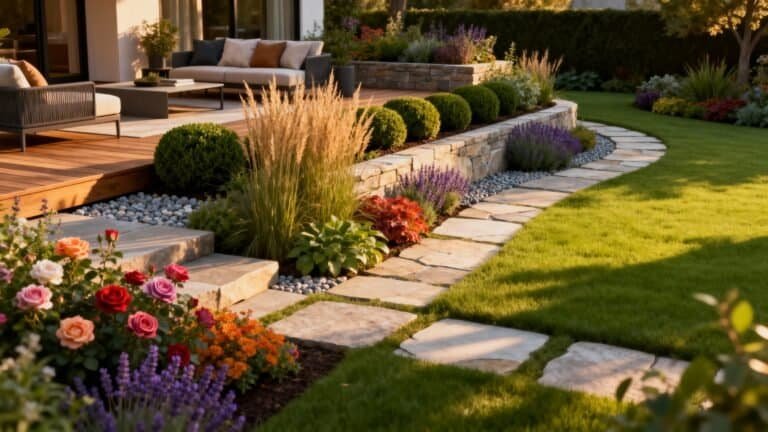
Create Layers
- Back row: Taller evergreens (5–7 feet) for structure and privacy.
- Middle row: Medium shrubs (3–5 feet) with seasonal interest—flowers or foliage color.
- Front row: Low growers (1–2 feet) that edge beds and spill slightly.
Repeat Plants for Cohesion
Pick 3–5 shrub varieties for the entire front and repeat them. Your eye reads repetition as intentional design. Random one-offs = chaos.
Mind the Entry
Frame the front door with matching or complementary shrubs, then step the heights down toward the driveway and sidewalk.
Keep the walkway visible and welcoming. Nobody wants to feel like they’re entering a hedge maze unless you also handed them a map and a snack.
Spacing: The Secret Sauce
Buy small, plant smart, wait for greatness. Overplanting looks lush on day one but turns into a pruning marathon.
- Check mature width and space 60–80% of that apart center-to-center.
Two 4-foot shrubs? Plant 2.5–3 feet apart for a natural fill-in without future turf wars.
- Keep off the house: Leave a maintenance strip to avoid mold and allow air flow.
- Don’t block windows: Measure the bottom of your window height and choose shrubs that mature 6–12 inches below that.
Pro Tip: Stagger, Don’t Line Up
Use a slight zigzag rather than a dead-straight line. It looks fuller faster and feels less formal without going wild.
Care That Doesn’t Eat Your Weekend
You want curb appeal, not a second job.
Build a maintenance plan that’s quick and repeatable.
- Mulch 2–3 inches to conserve moisture and cut weeds. Keep it off the stems—mulch volcanoes are not a thing.
- Water deeply the first year: 1 inch per week, or slow soaks at the root zone. After that, most shrubs can handle normal weather.
- Prune with purpose: Light shape after blooming for flowering shrubs; late winter for evergreens and non-spring bloomers.
- Feed lightly: A spring dose of balanced, slow-release fertilizer or compost usually does the trick.
Common Mistakes (Don’t Be That Neighbor)
- Planting too big.
If it says “fast-growing,” imagine it breaking into your house by year three.
- Ignoring sunlight. Shade lovers in full sun look crispy; sun lovers in shade look mopey.
- Monoculture mania. One pest or disease can wipe the whole thing.
Seasonal Interest: Because Winter Exists
Don’t let your front yard go into witness protection for half the year.
Mix textures and seasons so something always shines.
- Winter: Broadleaf evergreens (boxwood, holly), conifers, and red twig dogwood for color.
- Spring: Azalea, rhododendron, spirea bloomers.
- Summer: Hydrangeas and roses hit their stride.
- Fall: Fothergilla, oakleaf hydrangea, and nandina bring fiery foliage.
Color Pairings That Just Work
- Red brick + blue-green conifers and white hydrangeas
- Gray siding + deep green boxwood and soft pink roses
- Warm stucco + silver foliage (sage, lavender nearby) and cream blooms
Privacy Without the Fortress Vibes
You can screen views without building a wall of evergreen doom.
- Layer heights from tall near corners down to low near walkways.
- Use mixed hedges (holly + abelia + spirea) for texture and resilience.
- Curve the bed lines slightly to widen space and reduce straight-on views.
FAQs
What bushes should I avoid planting right next to my house?
Skip anything that gets huge or has aggressive roots: big junipers, large hollies, and vigorous viburnums can overwhelm small spaces. Also avoid moisture-loving shrubs if your foundation drainage struggles. Pick compact cultivars that mature at or below your desired height.
How do I keep bushes from looking messy?
Choose plants that naturally hold a shape and prune lightly, not drastically.
Establish a consistent bed edge, mulch neatly, and repeat plant varieties for cohesion. A quick monthly tidy—dead stems out, stray shoots clipped—keeps things sharp.
Can I mix evergreens and flowering shrubs?
Absolutely, and you should. Evergreens provide structure while flowering shrubs add seasonal color. Use evergreens as anchors near corners and the entry, then weave bloomers through the middle layer for pops of interest.
How close should bushes be to the sidewalk or driveway?
Give yourself 18–24 inches from the mature edge to any hardscape so you can open car doors and walk without snagging sleeves.
If you love a tidy edge, add a mowing strip or pavers to define the boundary.
Do I need irrigation for front yard shrubs?
Not always. If you water deeply the first year and choose climate-appropriate plants, they’ll handle normal rainfall after establishment. A simple soaker hose under mulch makes summer dry spells painless, IMO.
What’s the best low-maintenance combo for beginners?
Try a trio of dwarf boxwood for structure, panicle hydrangea for summer drama, and abelia for long bloom and pollinators.
Edge with dwarf spirea or heuchera. It looks intentional and won’t eat your weekends.
Conclusion
Bushes in front of your house can transform “fine” into “wow” with a few smart choices. Start with your architecture, pick plants that fit your sun and zone, and layer them like a pro.
Keep spacing generous, maintenance simple, and blooms balanced with evergreens. Do that, and your curb appeal will quietly flex every day—no neon “look at me” sign required.