11 Facts About Led Lights And How They Help Plants Grow
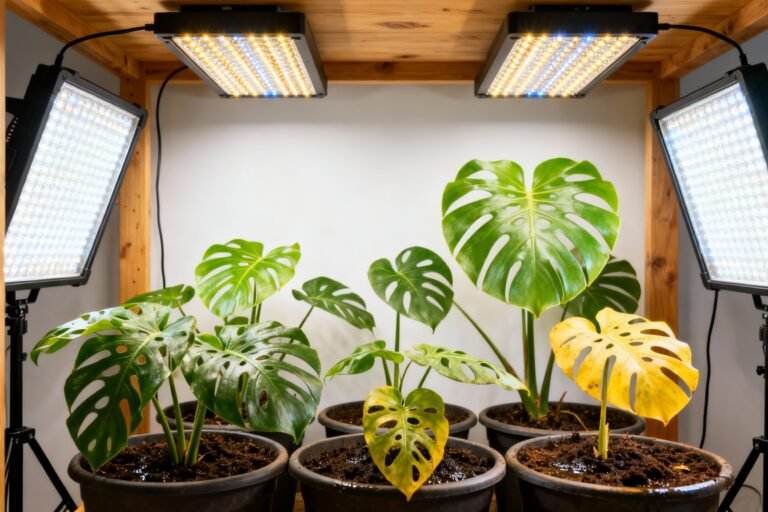
Plants don’t care about trendy bulbs or designer lamps. They just want the right light at the right time, and LEDs deliver like a reliable friend with snacks. If you’ve ever wondered why everyone raves about LED grow lights, stick around.
We’ll unpack the science, the hype, and the gotchas — with real talk and zero fluff.
Why LEDs and Plants Make Such a Good Team
LEDs don’t just light up a room; they let you craft a mini sun. That’s huge for indoor gardeners. With LEDs, you control spectrum, intensity, and timing — basically the big three for plant growth. Bottom line: LEDs turn a corner of your home into a custom climate for lettuce, basil, or that endangered houseplant you named and now feel emotionally attached to.
Fact 1: Plants Don’t Want “White Light,” They Want Specific Colors
Plants use photosynthetically active radiation (PAR), which spans roughly 400–700 nm.
Within that, the stars are:
- Blue (around 450 nm): Drives compact growth, sturdy stems, and healthy leaves.
- Red (around 660 nm): Powers flowering, fruiting, and overall biomass.
- Far-red (around 730 nm): Influences flowering timing and canopy shape via the phytochrome system.
LEDs win because you can tune those wavelengths like a DJ, not just blast generic light and hope for the best.
White LEDs Still Matter
White LEDs (often 3000K–5000K) blend blue-heavy diodes with phosphors. They fill in greens and yellows, which penetrate deeper into the canopy. So yes, your plants “see” that light too — it’s not wasted.
Fact 2: LEDs Crush It on Efficiency
LEDs convert more electricity into usable plant light than HID or fluorescents.
Many quality fixtures hit 2.5–3.5 μmol/J these days. That’s nerd-speak for “more growth per watt.” You’ll also produce less heat. That means fewer fans and less AC, which keeps your grow room and your electric bill calmer than a cat in a sunbeam.
Fact 3: Spectrum Shapes Morphology (AKA How Your Plant Looks)
Want squat, bushy basil?
Nudge the blue. Want fast flowering? Boost red and far-red.
Want tighter internodes and less stretching? Balance blue and keep intensity consistent. LEDs give you knobs to twist instead of crossing your fingers and praying to the chlorophyll gods.
The Emerson Effect, Simplified
Mix red (~660 nm) and far-red (~730 nm) and you can supercharge photosynthesis. It’s real.
It’s cool. Just don’t overdo far-red or you’ll stretch your plants like taffy.
Fact 4: Dimming and Scheduling = Plant Gym
You can mimic sunrise and sunset with dimming. That reduces plant stress and can improve stomatal behavior.
Timers keep your photoperiod consistent, which matters for flowering crops that depend on day length. Pro tip: Start new seedlings at lower intensity and ramp up over a week. Your plants need to “train” for full sun like you train for leg day. Or pretend to.
Fact 5: Heat Goes Somewhere — Manage It
LEDs run cooler than HIDs but not cold.
The diodes still dump heat into heatsinks. Good fixtures use big fins and silent, fanless designs. Cheap fixtures run hot and cook themselves, and your plants suffer. Check this:
- Keep canopy temps around 72–82°F (22–28°C), depending on plant and stage.
- Measure leaf surface temp if possible.
LEDs often allow slightly higher ambient temps because leaf temps run cooler.
Fact 6: PPFD Beats “Wattage” Every Time
Forget marketing wattage. Focus on PPFD (light intensity at the canopy) and DLI (Daily Light Integral). These tell you how much usable light plants actually get.
- Seedlings: ~200–300 μmol/m²/s
- Veg: ~300–600 μmol/m²/s
- Flowering/fruiting: ~600–1000 μmol/m²/s (if CO₂ stays normal)
FYI: If you boost CO₂ to 800–1200 ppm, you can push higher PPFD and get more growth.
If that sounds intense, it is. Start simple.
Fact 7: Uniformity Matters More Than You Think
Plants hate hotspots. Uneven light means uneven growth, and suddenly you’re pruning one side like a bonsai and begging the other to catch up. Look for:
- Even PPFD maps from the manufacturer.
- Fixtures with bar-style layouts for better spread.
- Right hang height to smooth intensity across the canopy.
Fact 8: Full-Spectrum vs.
Targeted Spectrum
Full-spectrum fixtures (usually white with added red) give you a safe, all-purpose option. Targeted-spectrum fixtures lean hard into specific bands for max efficiency. IMO: For most home growers, full-spectrum with added deep red (and maybe a far-red button) hits the sweet spot. Easy to use, great results, and your room won’t look like a nightclub (unless you want it to).
When Targeted Makes Sense
Running a commercial setup?
Need maximum grams per kWh for a single crop? Targeted spectrum can shine. Just verify third-party testing and don’t chase rainbow graphs without data.
Fact 9: LEDs Can Change Flavor and Nutrition
Light spectrum can shift secondary metabolites: terpenes, anthocyanins, vitamins.
Blue and UV-A can boost color and flavor in herbs and berries. Red and far-red can speed fruiting. Translation: Better taste, richer color, and sometimes higher nutrient density. Your tomatoes might flex harder than you do at the gym.
Fact 10: Distance and Angle Affect Growth
Hang too close and you’ll bleach leaves.
Hang too far and plants stretch. Small changes make big differences because intensity drops fast with distance. Guidelines:
- Seedlings: 24–30 inches above canopy (varies by fixture)
- Veg: 18–24 inches
- Flower: 12–18 inches, if uniformity stays good
Always watch the leaves. If they taco or yellow at the top, back off or dim.
Fact 11: LEDs Last, But Not Forever
Quality LEDs hold 90% output (L90) for 30,000–50,000 hours.
Cheap ones fade faster than your New Year’s resolutions. Diodes degrade, drivers fail, and optics yellow. Buy right, cry once: Look for reputable brands, solid warranties, replaceable drivers, and real PAR maps.
Choosing the Right LED for Your Plants
Let’s keep it simple. Match your light to your space and goals.
- Measure your space: Length x width = area.
Multiply by target PPFD to estimate needed output.
- Check efficacy: Aim for 2.5 μmol/J or higher for modern fixtures.
- Look for controls: Dimming knob, timer integration, maybe spectrum switches.
- Mind the build: Aluminum bars, good thermal design, sealed electronics for humid rooms.
- Read real reviews: Not the ones that say “looks bright.” We want PPFD data and grow results.
Starter Kits That Work
– Small herbs/greens on a shelf? A 100–150 W full-spectrum bar with a dimmer works great. – 2×4 ft tent? Look for a 200–300 W bar-style LED with uniform coverage. – Fruiting beasts in a 4×4?
You’ll want 400–500 W with added deep red and solid uniformity.
Common Mistakes (And Easy Fixes)
- Overlighting: Plants stall or bleach. Fix: dim or raise the light, then ramp slowly.
- Underfeeding with higher light: More light = more demand. Fix: adjust nutrients, especially Ca/Mg.
- No airflow: Stagnant air messes with transpiration.
Fix: gentle fans across the canopy.
- Wrong photoperiod: Some plants flower when days shorten. Fix: use timers and keep light leaks out.
- Ignoring humidity: LEDs can reduce leaf temps, shifting VPD. Fix: watch humidity and adjust to keep stomata happy.
FAQ
Do I need special “grow” LEDs, or will any LED bulb work?
You can grow herbs under bright white LEDs, but grow-specific fixtures deliver better spectra and intensity.
Regular bulbs often lack deep red and won’t hit strong PPFD at safe distances. For casual greens, go cheap. For big yields, go purpose-built.
How many hours of light do my plants need?
Leafy greens love 14–18 hours.
Most fruiting plants do 16–18 hours in veg, then 12 hours in flower if they’re photoperiod sensitive. Always keep timing consistent. Your plants track the clock better than you track your steps.
Will LEDs save me money?
Usually yes.
They use less power for the same growth, run cooler, and last longer. Upfront cost can sting, but operating costs drop. Over a year, most growers come out ahead.
FYI: good fixtures also reduce the need for extra cooling.
Do I need UV for better flavor or color?
Maybe, in small doses. UV-A can boost pigments and some aromatic compounds, but too much stresses plants. Many growers get great results without UV.
If you add it, start low and short, like a sprinkle of hot sauce — not a soup.
How close should I hang my LED?
Follow the manufacturer’s PPFD map as a baseline. Then watch your plants. If tops pale or curl, raise or dim.
If they stretch, lower slightly. Adjust weekly as the canopy rises. IMO, a PAR meter pays for itself if you’re serious.
Can I mix LED with sunlight?
Absolutely.
LEDs supplement cloudy days and extend photoperiods. Just remember: sunlight already hits high PPFD, so dim your LEDs to avoid overdoing it. Your plants don’t need sunglasses — they need balance.
Conclusion
LEDs help plants grow faster, stronger, and tastier because they give you surgical control over light.
You tune color, intensity, and timing to match each stage — and you do it efficiently. Start with a solid full-spectrum fixture, watch your PPFD, and tweak slowly. Do that, and your plants will flex so hard your neighbors will ask what you’re feeding them.
Spoiler: it’s light.