English Garden Landscaping: Tips for a Lush, Classic Look
You don’t need a manor house to fall for the English garden. You just need a soft spot for a little wildness, a love for layered plants, and the patience to let nature do some of the work. The English garden blends romance with restraint—organized chaos with tea.
Ready to ditch perfectly edged lines for curves, textures, and blooms that look effortlessly “oh-this-old-thing”? Let’s dig in.
What Makes an English Garden, Well, English?
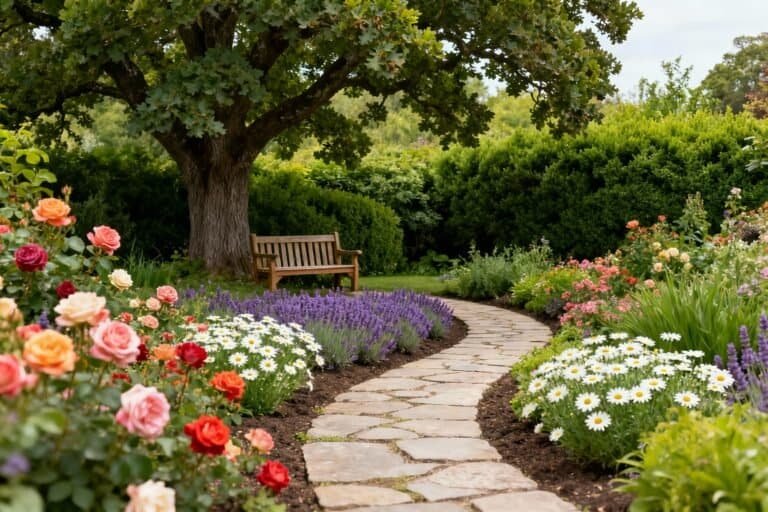
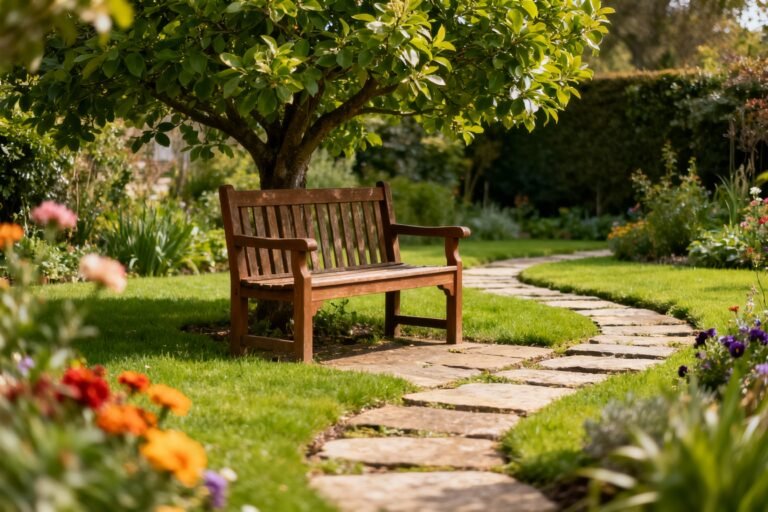
An English garden looks natural, but it follows a plan. It favors curving paths, layered planting, and views that unfold as you wander.
Think controlled abundance rather than messy beds. You’ll see a few signature moves:
- Curved borders that soften edges and make space feel bigger.
- Layered planting—tall shrubs and small trees in back, perennials in the middle, low edging at the front.
- Mixed textures and bloom times for color from spring to frost.
- Charming structure: clipped hedges, arches, obelisks, gates.
It’s not random; it just doesn’t shout rules at you. IMO, that’s the magic.
Classic Plants That Set the Mood
You can pull off the English vibe in many climates, but some plants carry the identity card.
Choose a few from each category and mix them in drifts, not dot-to-dot.
Roses, Obviously
Climbing roses over an arch? Yes please. Shrub roses add structure and repeat blooms.
Look for disease-resistant varieties because BS (black spot) will humble you fast.
- Climbers: ‘New Dawn’, ‘Eden’, ‘Claire Austin’
- Shrubs: David Austin’s ‘Gertrude Jekyll’, ‘Boscobel’, ‘Olivia Rose Austin’
Perennials That Bring the Romance
English gardens layer perennials like a great playlist—no one diva hogs the stage.
- Back row (height + drama): delphinium, foxglove, hollyhock
- Middle (color + texture): peony, phlox, lupine, catmint
- Front (soft edges): geranium (cranesbill), lady’s mantle, heuchera
Green Bones: Hedges and Shrubs
Plants come and go, but structure keeps the garden from looking like a yard sale.
- Hedges: boxwood (or Ilex crenata where box blight lurks), yew, privet
- Flowering shrubs: hydrangea, viburnum, mock orange, lilac
Self-Seeders (The Secret Sauce)
Let a few plants volunteer. They blur edges and make your garden feel lived-in.
- Nigella (love-in-a-mist)
- Aquilegia (columbine)
- Verbena bonariensis
- Forget-me-nots
Design Moves That Instantly Elevate Your Space
You don’t need acres. You just need intention.
Try these tips, and your neighbors might start peeking over the fence.
Curves and Views
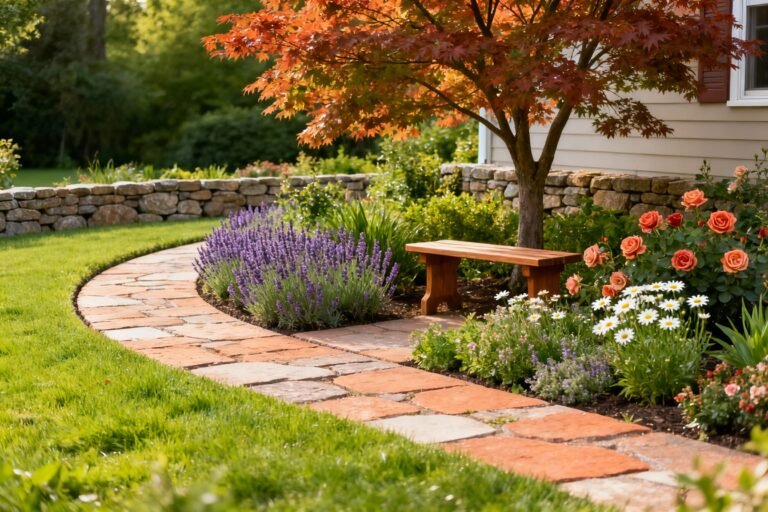
Lay a hose on the ground to sketch out a curving border. Stand in different spots and check the “reveal.” Create small moments: a bench half-hidden, a gate leading to somewhere (even if it’s just the compost bin—no judgment).
Plant in Drifts
Single plants read as clutter. Groups read as design.
Plant in odd numbers: 3, 5, 7. Repeat those groups to create unity. FYI, repeating a purple catmint drift along a border ties everything together like good eyebrows.
Mix Textures, Not Just Colors
Color grabs attention; texture keeps it.
Pair feathery grasses with glossy leaves. Combine big blowsy blooms (peonies) with spires (foxgloves) and frothy fillers (lady’s mantle). Your eye moves, and the garden feels intentional.
Hardscape That Whispers, Not Shouts
English gardens don’t rely on showy hardscape.
Go for simple:
- Materials: gravel paths, brick edging, weathered wood, stone.
- Features: a small fountain, birdbath, or sundial. Classic, not flashy.
Seasonal Rhythm: From First Snowdrops to Final Frost
Plan for waves of interest. Don’t let June carry the whole show.
Spring
Kick off with bulbs and early perennials:
- Bulbs: snowdrops, daffodils, tulips, alliums
- Companions: forget-me-nots under tulips, wallflowers near paths
Spring also reveals gaps.
Note where you need more evergreen or early texture.
Summer
This is peak English drama. Roses, delphiniums, foxgloves, and peonies do their thing. Stake tall plants early so you don’t end up zip-tying a floppy delphinium at 9 p.m. before a storm.
Been there.
Fall
Keep color with asters, Japanese anemones, dahlias, and late roses. Add ornamental grasses for movement and seed heads for birds. Hydrangeas fade gracefully—don’t deadhead too soon.
Winter
Structure matters now.
Hedges, topiary, evergreen domes, and bare-branch silhouettes carry the vibe. Add witch hazel or hellebores for surprise blooms. A mossy bench looks like it knows secrets.
Low-Stress Care (Because You Have a Life)
An English garden can be generous and forgiving.
You just need habits, not heroics.
- Soil first: Add compost yearly. Healthy soil = fewer headaches.
- Mulch: 2–3 inches of organic mulch keeps moisture in and weeds out.
- Prune with purpose: Shape hedges once or twice a season. Deadhead perennials to extend bloom, but leave some seed heads for winter interest.
- Water deeply, not daily: Aim for long, infrequent soaks.
Roots go deeper. Plants toughen up.
- Choose resilient varieties: Modern disease-resistant roses save your sanity.
And yes, weeds happen. A 10-minute weekly sweep beats a miserable Saturday of punishment weeding.
Small Garden?
Balcony? You Can Still Go English
No lawn? No problem.
Miniaturize the principles.
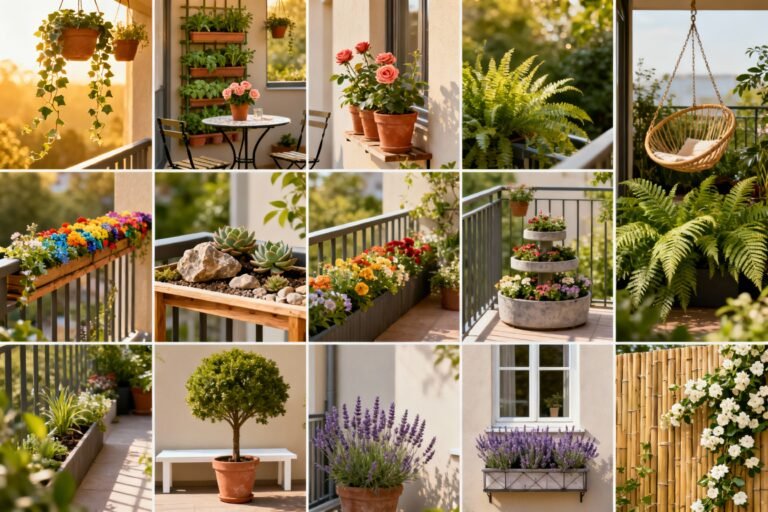
- Container layers: tall (dwarf shrub rose), middle (salvia, geranium), trailing (lobelia, ivy).
- Vertical space: a trellis for a climber—clematis or a compact rose.
- Repeat colors: stick to a simple palette (e.g., pink, purple, white) for cohesion.
- One charming feature: small birdbath, rustic lantern, or an antique pot. Instant personality.
IMO, a well-styled balcony can out-charm a sloppy half-acre any day.
Wildlife-Friendly Without Looking Wild
The English garden aesthetic meshes beautifully with pollinator support. You can feed bees and birds and still keep things tidy.
- Choose nectar-rich plants: foxglove, catmint, lavender, salvia, scabiosa.
- Layer bloom times so something always feeds someone.
- Skip the pesticides and embrace beneficial bugs and birds.
- Water sources: shallow birdbaths with stones for perches.
- Leave some leaves in a corner for overwintering critters.
Just a corner—don’t spiral.
Common Mistakes (And Easy Fixes)
We all mess up. Here are the usual suspects.
- Planting one of everything: looks chaotic. Fix: repeat plants in drifts.
- No structure: beds go mushy.
Fix: add hedges, paths, evergreen shapes.
- Flat color palette: all pink, no contrast. Fix: add blues, whites, and silvers for relief.
- Ignoring height: tall plants block views. Fix: put spires in the back or use transparent ones like Verbena bonariensis.
- Peak-June trap: everything blooms at once, then crickets.
Fix: plan fall bloomers and winter structure.
FAQ
Do I need a lawn for an English garden?
Nope. Many classic English gardens use lawn as a calm centerpiece, but you can swap in gravel courts, groundcovers, or a tapestry of low perennials. Keep paths clear and edges defined, and you’ll still get the vibe.
Can I make an English garden in a hot or dry climate?
Yes, with smart plant swaps.
Use drought-tolerant stand-ins like rosemary, lavender, salvias, gaura, and heat-tough roses. Mulch heavily, water deeply, and lean into silver foliage and grasses. The structure matters more than the exact plant list.
How do I keep it from looking messy?
Give chaos a frame.
Clip hedges, edge borders, and use repeating plants. Add one or two focal features and keep paths wide enough to read as intentional. A tidy backbone lets the flowers party without the neighbors filing a complaint.
What colors work best?
You can’t go wrong with pinks, purples, blues, and whites with a little fresh green.
Add apricot or deep burgundy for drama. If your space feels busy, cut the palette to three main hues and one accent.
Are roses worth the trouble?
If you pick disease-resistant varieties, absolutely. They add scent, repeat bloom, and structure.
Give them sun, air circulation, and a spring feed. In return, they’ll make your garden smell like a period drama in the best way.
How long does it take to “look established”?
Usually 2–3 seasons. The first year, plants sleep; second year, they creep; third year, they leap.
Start with fewer, larger plants in key spots if you want faster impact.
Conclusion
The English garden looks effortless, but it comes from a few smart moves: structure first, layers second, personality always. Curve the borders, repeat plants in drifts, and let a little self-seeding soften the edges. Keep it charming, keep it human, and let nature do some of the heavy lifting.
Brew a cup, take a lap, and enjoy the slow-blooming masterpiece you’re growing—one unruly foxglove at a time.