Fence Landscaping Ideas for Front Yards and Backyards
Your fence probably works harder than anything else in your yard—and gets the least love. It keeps pets in, nosy neighbors out, and yet it often looks like a long, boring line. Let’s fix that.
With smart planting and a few design tweaks, you can turn that fence into a backdrop that makes your whole yard look intentional, cozy, and low-key fancy.
Start with the fence you’ve got
Before you plant a single thing, look at your fence like a designer would. What material are we working with? Wood, vinyl, metal, masonry?
Each plays differently with plants.
- Wood: Warm and classic. Plants love it, but it needs breathing room to avoid rot.
- Vinyl: Clean and low-maintenance. It can feel stark, so soften it with texture.
- Metal: Airy and modern.
Perfect for climbers that weave through it.
- Masonry: Bold and permanent. Go big with statement shrubs or vines.
Pro tip: Snap a pic of your fence at midday. If the whole area bakes, choose sun lovers.
If it stays cool and shady, don’t fight it—plant shade champions instead.
Layer like a pro: the 3-tier planting formula
You want depth, not a flat green wall. Use a simple three-layer approach that always works.
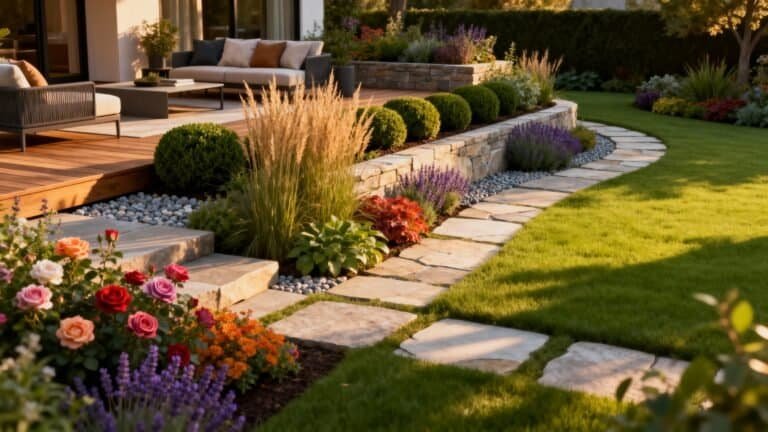
- Back layer (tall): Shrubs or vertical plants to anchor the space—think arborvitae, bamboo (clumping only, unless you enjoy chaos), or tall grasses.
- Middle layer (medium): Flowering perennials or compact shrubs—salvia, hydrangea, spirea, echinacea.
- Front layer (low): Groundcovers or edging—thyme, sedum, heuchera, liriope.
Plant spacing that won’t bite you later
Give plants room to mature. If the tag says 4 feet wide, plant 3–4 feet from the fence and 3–4 feet from neighbors.
You’ll avoid pruning marathons and weird gaps.
Climbers: the fast pass to “wow”
Climbing plants can transform a plain fence into a living wall. But pick the right ones or you’ll regret everything, IMO.
- Clematis: Elegant blooms, loves sun on top and cool roots. Pair with mulch or low perennials.
- Star jasmine: Fragrant, evergreen in warm zones.
Great on trellis panels.
- Honeysuckle: Pollinator magnet. Choose non-invasive types.
- Bougainvillea: Drama for hot, dry climates. Needs support and attitude.
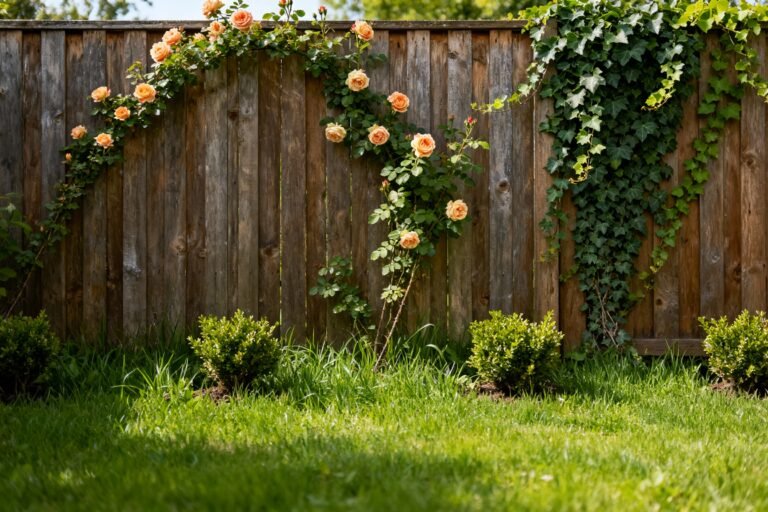
- Boston ivy or Virginia creeper: Fabulous fall color, zero chill—keep off wood unless you like repairs.
Use supports, not the fence
Attach trellis panels or wire grids a few inches off the fence.
Plants climb the support, not the fence itself. Better airflow, easier pruning, happier fence.
Privacy without a fortress vibe
Want privacy but still want light and air? Mix density and texture so it feels lush, not claustrophobic.
- Evergreen backbone: Use 30–40% evergreen shrubs (podocarpus, boxwood, pittosporum) for year-round coverage.
- Seasonal flare: Add deciduous plants for color and movement—lilac, ninebark, Japanese maple.
- Grasses for sway: Miscanthus, switchgrass, or feather reed grass add motion and soften hard lines.
No-room backyard?
Try vertical pockets
Use hanging planters, pocket planters, or slatted rails to grow herbs, strawberries, or succulents right on the fence. Instant kitchen garden. FYI: water slowly and protect the fence with a moisture barrier.
Color, texture, and bloom timing (aka the pretty stuff)
You can dial up drama or keep it zen with a few choices.
- Contrast the fence color: Dark fences make greens pop and flowers glow.
Light fences suit silvery foliage and soft pastels.
- Mix leaf textures: Pair glossy camellias with fuzzy lamb’s ear, delicate ferns with bold hostas. Texture = interest, even out of bloom.
- Plan bloom succession:
- Spring: bulbs, lilac, clematis
- Summer: hydrangea, daylily, salvia
- Fall: aster, sedum, mums
- Winter: hellebore, witch hazel, berries
Quick color combos that never miss
- Modern calm: charcoal fence + white hydrangea + blue salvia + silver artemisia
- Cottage vibe: natural wood + roses + nepeta + foxglove + thyme
- Dry garden: pale fence + lavender + rosemary + gaura + feather grass
Practical stuff: soil, watering, and roots
I know, not glamorous. But if you want plants that live, this matters.
- Soil prep: Loosen 12–18 inches deep, mix in compost, and fix drainage.
If water puddles by your fence, install a French drain or build raised beds.
- Watering: Drip irrigation beats sprinklers for fence lines. Less overspray means less rot and fewer weeds.
- Mulch: 2–3 inches of bark or gravel. Keep it a few inches away from the fence and plant stems.
- Roots and fences: Avoid bullies like running bamboo, poplars, and willows near posts.
Choose clumping bamboo or smaller shrubs instead.
Maintenance rhythm you’ll actually do
- Spring: feed perennials, cut back grasses, check drip lines.
- Summer: light pruning, deadhead for longer bloom, watch for pests.
- Fall: divide crowded perennials, mulch, plant bulbs.
- Winter: minimal cleanup; leave seed heads for birds and vibes.
Design moves beyond plants
Plants do the heavy lifting, but small hardscape tweaks bring the whole look together.
- Fence lighting: Low-voltage uplights on shrubs or downlights on posts make the space feel magical at night.
- Trellis “windows”: Frame a view with an arched trellis or decorative panel—adds structure year-round.
- Built-in benches or shelves: Turn dead space into seating or plant displays.
- Color refresh: A fresh stain or paint can transform your yard for a weekend’s work.
Wildlife-friendly touches
Want butterflies and birds? Add:
- Nectar and host plants: milkweed, salvia, penstemon, fennel.
- Berries and shelter: viburnum, serviceberry, dense evergreens.
- Water: small birdbath or dripper near the fence. Keep it clean weekly—no mosquito nurseries, please.
Small yard, big personality
If your yard is basically a patio with ambition, you still have options.
- Espalier trees: Train apples, pears, or camellias flat against the fence.
Art + fruit = win.
- Container lineup: Stagger tall pots with grasses, medium pots with perennials, and low bowls with herbs.
- Mirror trick: Outdoor-safe mirror panels reflect greenery and make the space feel twice as lush.
Renters’ edition
No digging? No problem.
- Use freestanding trellises with planter boxes.
- Try railing planters and S-hook baskets.
- Roll out outdoor rugs to define the fence line without a single nail.
FAQ
How close should I plant to the fence?
Give plants enough room to grow and enough airflow to keep the fence healthy. Most shrubs do best 2–4 feet away.
For perennials, 12–18 inches works. If in doubt, check the mature width and place the center of the plant at least half that distance from the fence.
What climbers won’t wreck my wooden fence?
Use plants with tendrils or that tie onto a trellis—clematis, star jasmine, honeysuckle. Avoid plants with sticky pads or heavy clinging roots directly on wood (looking at you, ivy).
Mount a trellis an inch or two off the fence so the plant never touches the boards.
Can I landscape along a neighbor’s fence?
Stay on your side, keep roots contained, and check property lines first. Choose plants that won’t push boards or lean over aggressively. Pro move: share a planting plan with your neighbor—it’s easier than apologizing for rogue bamboo later, FYI.
What grows best in a narrow strip?
Go vertical with trellised climbers, columnar evergreens (like sky pencil holly), and tall grasses.
Add low groundcovers in front. Drip irrigation keeps the narrow bed watered evenly without soaking the fence.
How do I keep it low-maintenance?
Pick drought-tolerant plants, install drip, mulch well, and avoid plants that need constant pruning. Evergreen structure + a few long-bloom perennials = color without weekly chores.
IMO, one afternoon of setup saves you a season of hassle.
Wrap-up: make the fence earn its keep
Your fence can do more than mark a line. It can frame your garden, boost privacy, and turn “meh” into “wow” with smart layers, a few climbers, and thoughtful color. Start small, add pieces over time, and let the plants do the flexing.
Backyard upgraded, bragging rights unlocked.