Front Yard Landscaping Design Tips to Boost Curb Appeal
Your front yard sets the tone for your whole home. It whispers “welcome,” “wow,” or occasionally “I haven’t touched this since 2008.” Let’s change that. You don’t need a landscape architect or a lottery win—just a plan, some smart choices, and a bit of personality.
Start With the Big Picture (aka Your Yard’s Story)
Before you buy a single plant, figure out what your front yard needs to say.
Do you want curb appeal that pops? A low-maintenance sanctuary? A pollinator paradise?
You can mix goals, but pick one main theme. Think about your house style, because the yard should complement it. A sleek modern home loves clean lines and bold contrasts.
A cottage-style home thrives on layers and soft, romantic textures. FYI, mismatched vibes feel chaotic fast.
Know Your Constraints
- Sun vs. shade: Track where light hits morning and afternoon. Plants care more about this than you think.
- Soil: Clay, sand, loam—test it or at least squeeze it.
Amend if needed.
- Water: Pick plants that match your climate and your willingness to water. Be honest.
- Budget and time: Design for what you can maintain, not what looks good on Pinterest for five minutes.
Design Like a Pro: Form, Focal Points, Flow
Let’s talk structure, because pretty plants without a plan just look… messy.
- Form: Mix shapes—upright shrubs, rounded mounds, soft grasses. Contrast makes everything pop.
- Focal point: Give eyes a place to land.
Think a statement tree, a bold urn, or a front door that steals the show.
- Flow: Guide movement with curved beds, a welcoming walkway, and repeated plant groupings for rhythm.
Create Layers (Tall to Small)
- Back layer: Taller shrubs or small trees anchor the space.
- Middle layer: Flowering shrubs and perennials bring color and texture.
- Front layer: Low groundcovers and edging plants clean up the border and keep it tidy.
Repeat a few plants throughout to keep it cohesive. Random one-off plants create visual noise. IMO, less variety + bigger groups = instant sophistication.
Pick Plants That Work Hard (and Don’t Need Babysitting)
Choose plants for your zone, your light, and your style.
Then think seasons—because a yard that looks great only in May is a tease.
Four-Season Interest
- Spring: Bulbs (daffodils, tulips), early shrubs (azalea, flowering quince).
- Summer: Perennials (coneflower, salvia), grasses, hydrangeas.
- Fall: Foliage (maples, viburnum), asters, ornamental grasses in full glory.
- Winter: Evergreens, red-twig dogwood, interesting bark (paperbark maple), seed heads left for birds.
Plant the Right Plant in the Right Place
- Hot, sunny spot? Lavender, yarrow, rosemary, Russian sage.
- Shade? Hosta, ferns, heuchera, hellebore.
- Clay soil? Switchgrass, serviceberry, daylily; avoid diva plants that demand perfect drainage.
- Dry climate? Native grasses, penstemon, agastache, manzanita—your water bill will thank you.
Avoid invasive species. They spread faster than neighborhood gossip and cost a fortune to remove.
Walkways, Edging, and Hardscape That Makes Sense
Plants get all the attention, but hardscape decides how your yard actually functions. Start with the front walk.
- Path width: Go at least 3–4 feet so two people can walk side by side.
Narrow paths feel awkward.
- Material: Pavers, gravel, brick, poured concrete—choose one that matches your house style.
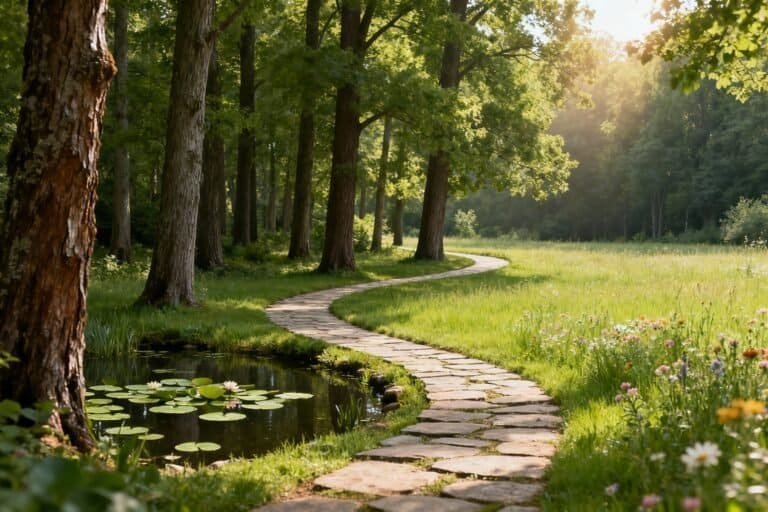
- Shape: Gentle curves feel inviting. Super curvy paths can look contrived unless your lot is huge.
Edging: The Secret Weapon
Crisp edges make everything look intentional. Use steel edging for modern lines, brick for classic charm, or a clean spade-cut edge if you don’t mind seasonal upkeep.
Keep mulch tidy and off the path—no one likes the crunchy step.
Driveway + Entry Enhancements
Flank the driveway with low plantings or ornamental grasses to soften the expanse. Near the entry, use layered containers for seasonal color. If you want extra drama, install a simple trellis or arbor—done right, it screams “welcome” without yelling.
Color, Texture, and Lighting: The Style Multipliers
Color without a plan can get loud fast.
Pick a palette and stick to it.
- Color palette: Cool tones (blue, purple, white) calm things down. Warm tones (red, orange, yellow) add energy. Mix carefully.
- Foliage first: Leaves last longer than blooms.
Use variegated, chartreuse, and burgundy foliage for year-round interest.
- Texture: Pair fine textures (ferns) with bold ones (hosta) for contrast.
Lighting That Glows, Not Glares
Keep it simple:
- Path lights: Low, warm lights spaced evenly (not an airport runway, please).
- Uplights: Highlight a specimen tree or façade texture.
- Step lights: Safety and style in one move.
Use warm LEDs and avoid lighting the neighbor’s bedroom. A soft glow reads high-end. Harsh spots read interrogation room.
Low-Maintenance Moves That Still Look Luxe
Want a front yard that looks fancy but doesn’t eat your weekends?
Game on.
- Right-sized lawn: Keep a clean, manageable patch instead of a football field. Or skip the lawn altogether with groundcovers.
- Drip irrigation: Saves water and targets roots. Your plants will thrive, and you’ll water less.
- Mulch: 2–3 inches to suppress weeds and retain moisture.
Keep it off trunks and stems.
- Plant in groups: Fewer plant types, more impact, less chaos.
- Evergreen backbone: A few well-placed evergreens keep the structure strong year-round.
Maintenance Rhythm
- Spring: Cut back perennials, edge beds, refresh mulch.
- Summer: Deadhead bloomers, check irrigation, spot-weed weekly.
- Fall: Divide perennials, plant bulbs, light pruning.
- Winter: Minimal—enjoy the silhouettes and congratulate yourself.
Front Porch and Entry: The Crown Jewel
Everything should funnel attention to your front door. Make it a moment.
- Color pop: Paint the door a bold color that complements your palette.
- Symmetry (or near-symmetry): Matching containers or matching shrubs calm the composition.
- House numbers + hardware: Modernize with a cohesive finish. Small detail, big payoff.
- Layered containers: Thriller (tall), filler (medium), spiller (trailing).
Classic combo because it works.
IMO, a clean doormat and one great planter beat six cluttered knickknacks every time.
Common Mistakes to Avoid
- Planting too close to the house: Leave room for mature size. Future you will thank present you.
- Ignoring scale: Tiny plants in a big yard look lost. Use larger groupings and bolder forms.
- Too many species: Visual chaos.
Edit ruthlessly.
- Uniform height: Flat equals boring. Layer heights for depth.
- Skipping a plan: Sketch first, buy later. Impulse plants rarely fit.
FAQ
How do I design a front yard on a small budget?
Start with the high-impact basics: edge your beds, mulch, and prune.
Add one focal point—like a statement shrub or small tree—and plant in groups of three or five for volume. Use perennials and divide them over time. Shop native plant sales and swap with neighbors.
FYI, clean lines and consistency beat expensive plants every day.
What are some low-maintenance plants that still look great?
Try boxwood or inkberry for structure, switchgrass or little bluestem for movement, and coneflower, catmint, or salvia for color. Add a few evergreen anchors and a long-blooming shrub like panicle hydrangea. Choose plants suited to your light and soil, and they’ll basically do their thing while you sip iced tea.
How wide should my front walkway be?
Aim for at least 3 feet, and go 4 feet if you have space.
Wider walks feel welcoming and practical, especially when two people walk side by side or you’re hauling in groceries. Narrow walks just feel cramped and awkward—hard pass.
Do I need a lawn at all?
Nope. You can use groundcovers, gravel with stepping stones, ornamental grasses, or a meadowy mix if your HOA allows it.
Just keep edges crisp and pathways clear so it reads intentional, not abandoned. If you keep a lawn, right-size it to what you’ll actually maintain.
What’s the best way to add color year-round?
Layer foliage and bloom times. Use evergreens for winter, colorful foliage (heuchera, loropetalum) for shoulder seasons, and staggered perennials plus bulbs for spring and summer.
Containers by the door let you swap seasonal color without replanting whole beds.
How do I make my front yard look cohesive?
Repeat key elements: the same plant in multiple spots, matching materials for edging and paths, and a consistent color palette for flowers and containers. Tie everything to the architecture—mirroring roof lines or window shapes in bed curves can subtly unify the look.
Conclusion
Front yard landscaping doesn’t require a design degree—just a clear goal, solid structure, and plants that actually want to live where you put them. Keep edges crisp, repeat your best elements, and highlight the front door like it’s the star (because it is).
Start simple, build in layers, and let your yard greet the world with confidence. You’ve got this.