Hanging Plants Ideas: Creative Ways to Beautify Your Space
Hanging plants turn empty air into living art. They save floor space, clean up your vibe, and make even a bland rental feel intentional. You don’t need a sunroom or a green thumb—just the right plant in the right spot.
Ready to hang out? Let’s go.
Why Hanging Plants Just Work
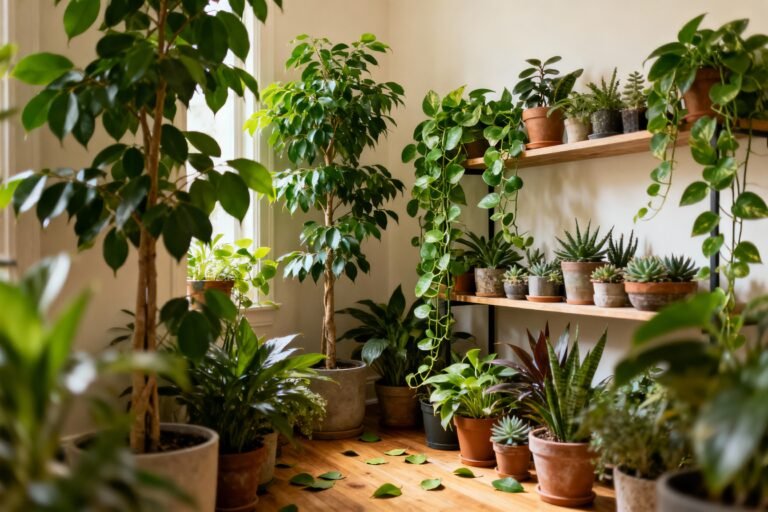
Hanging plants add instant texture and movement. They soften hard edges, frame windows, and make your ceiling feel higher.
They also keep nosy pets and curious toddlers away from the leaves—huge win. You also get more light options. Plants in the air catch light from different angles, so even that gloomy corner starts to feel alive.
And if your shelves stay messy (relatable), hanging plants distract from the clutter like a leafy magician.
Best Hanging Plants for Different Light
Pick your plant based on your light, not your vibes. Your vibes don’t photosynthesize—your plant does.
Low Light Champs
- Pothos (Epipremnum aureum): Practically unkillable, grows fast, trails like a champ.
- Heartleaf Philodendron: Soft leaves, forgiving nature, thrives in low to medium light.
- ZZ Raven (in a hanger): Not a classic trailer, but looks dramatic and tolerates low light FYI.
Bright, Indirect Light Stars
- String of Pearls: Cute and quirky, but wants bright light and well-draining soil.
- Hoya (wax plant): Thick leaves, beautiful blooms if happy, loves to hang and bask.
- Spider Plant: Easy, forgiving, and gives you baby plants to propagate for free.
Sun Lovers
- Burro’s Tail (Sedum morganianum): Succulent with trailing tails—fragile leaves, but worth it.
- String of Dolphins/Bananas: Fun shapes, bright light, minimal water.
What to Hang Them In (and Where)
Planters matter almost as much as plants. Function first, cute second.
Or both—IMO, both.
Planter Types
- Plastic nursery pot inside a decorative hanger: Best combo. Easy to lift out for watering, good drainage.
- Ceramic with drainage hole: Gorgeous, heavy, stable. Use a saucer insert or water outside.
- Self-watering pots: Handy for forgetful waterers; great for pothos and philodendrons.
- Macrame hangers: Affordable, stylish, adjustable.
Just pair with a pot that fits snugly.
Hardware That Won’t Fail You
- Ceiling hooks with anchors: Find a joist if possible; use toggle bolts for drywall.
- Adhesive hooks: Fine for tiny plants only. Seriously—soil weighs more than you think.
- Wall brackets: Perfect for renters who fear ceiling holes. Choose heavy-duty ones.
Placement Tips
- Near windows, not in them: Bright, indirect light beats harsh midday scorch.
- Away from vents: Drafts dry them out and cause crispy leaves.
- Eye-line layering: Stagger heights for a lush look without blocking your Netflix view.
Watering Without Making a Mud Puddle
Overwatering kills more hanging plants than anything else.
Out of sight can mean out of mind or “oops I water every day.” Let’s fix that.
Simple Watering Routine
- Check before you pour: Stick a finger in the soil. If the top 1-2 inches feel dry, water.
- Take it to the sink: Water thoroughly until it drains. Let it drip for 10-15 minutes before rehanging.
- Use a moisture meter if you’re nervous: Not essential, but helpful for succulents and strings.
- Mist?
Meh:
Misting doesn’t replace humidity. It clears dust, but that’s it.
Soil and Drainage
- Light, airy mix: Use potting soil with perlite for most plants. For succulents, add extra pumice or sand.
- Drainage above all: No drainage hole equals root rot risk.
Line with leca or mesh if needed.
- Fertilizer: Half-strength during spring/summer once a month. Skip in winter.
Pruning, Training, and Styling
You control the shape. Want dramatic vines?
Let them grow. Want bushier? Clip it.
Pruning Basics
- Pinch tips: Encourages branching and a fuller plant.
- Cut above a node: New growth pops from nodes—easy science.
- Remove leggy, pale vines: Redirects energy to healthy growth.
Training Ideas
- Ceiling swag: Guide vines along small hooks for a statement moment.
- Floating shelves + hangers: Create layers without blocking light.
- Wall trellis: Let philodendron or hoya climb, then trail—best of both worlds.
Style Combos That Always Work
- Green on green: Deep green pothos in a matte green pot—rich and cozy.
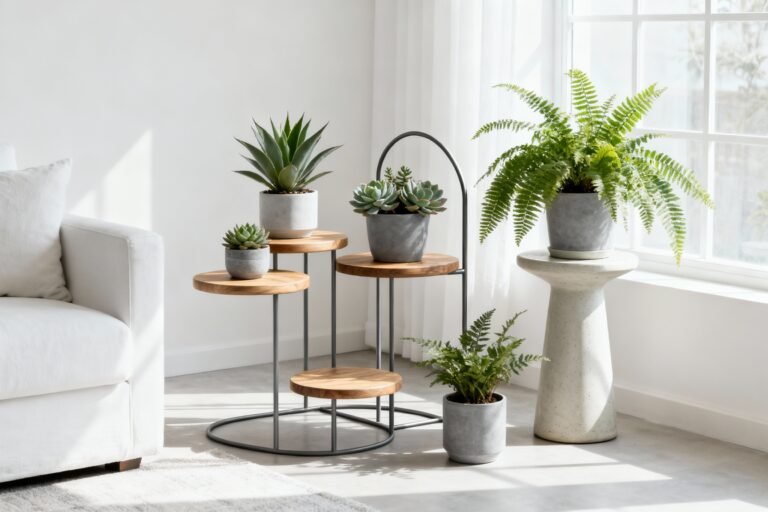
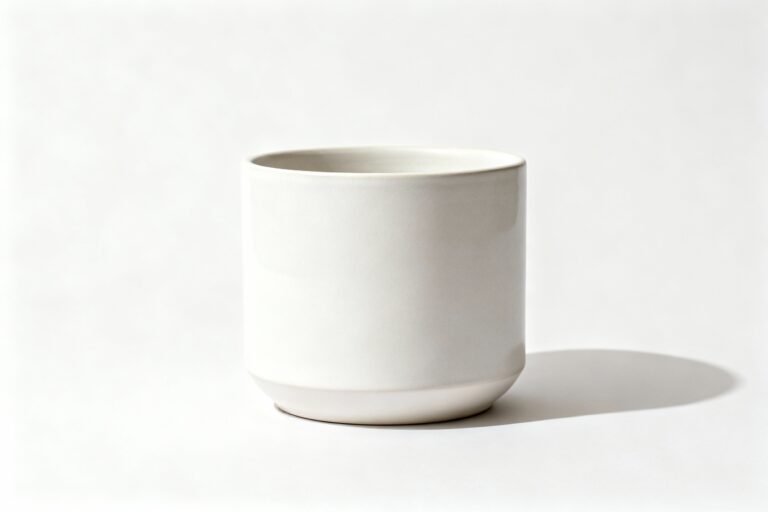
- Monochrome: White pot, green plant, natural macrame.
Minimal and clean.
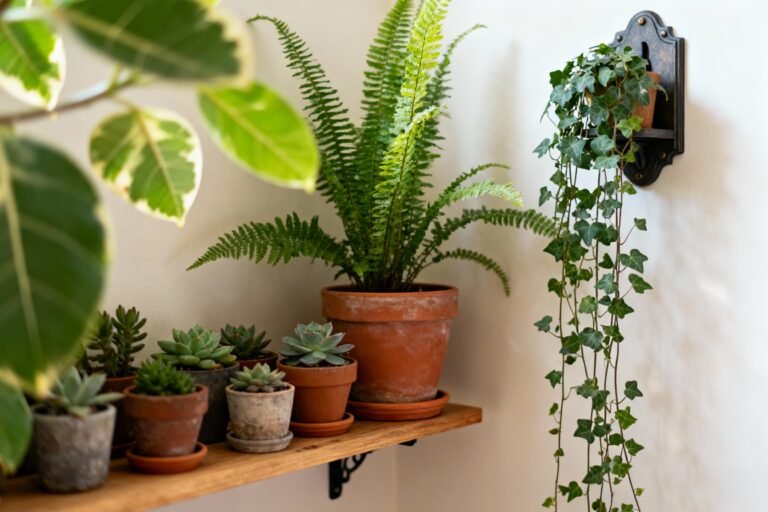
- Warm metals: Brass hooks + terracotta pot = plant museum vibes.
Common Problems (and Fast Fixes)
Every plant owner plays plant detective sometimes. Here’s your cheat sheet.
- Yellow leaves: Overwatering or poor drainage. Let soil dry more; check for compacted mix.
- Crispy edges: Underwatering or low humidity.
Water deeply, move away from vents, consider a humidifier.
- Stretched, sparse vines: Not enough light. Move closer to a window or upgrade bulbs.
- Gnats: Overwatered soil. Let it dry, add a layer of sand, use sticky traps.
- No growth: Winter dormancy or low light.
Be patient, then feed in spring.
Pet Safety and Smart Choices
Some hanging plants drop leaves or tempt cats with dangling vines. Cute, but risky. If your pet treats plants like salad, try safer picks.
Pet-Friendly Options
- Spider Plant
- Boston Fern (likes humidity, so bathrooms welcome)
- Peperomia varieties (not all trail, but some do—like watermelon peperomia in hangers)
FYI: Many pothos and philodendron varieties are toxic if ingested.
Keep them high or choose alternatives.
Budget Tips (Because Pots Add Up Fast)
Plants don’t need to bankrupt you. You can create a lush setup on a budget.
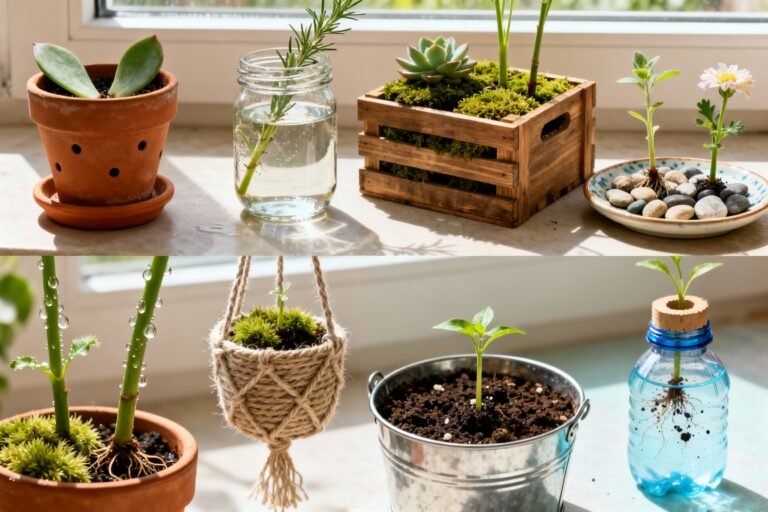
- Propagation party: Snip stems from pothos, philodendron, and hoya. Root in water, pot up, free plants.
- Thrift macrame and pots: Clean with soap and diluted bleach, then rinse well.
- DIY hangers: Cotton cord + a few knots = easy.
YouTube will teach you in 10 minutes.
- Buy small: Two 4-inch plants grow into a jungle faster than one pricey 8-inch, IMO.
FAQ
How often should I water hanging plants?
It depends on light, pot size, and plant type. As a rule, water when the top 1-2 inches of soil feel dry. In bright light and warm rooms, you’ll water more often.
In low light or winter, scale back.
Can I hang plants in the bathroom?
Totally. Bathrooms offer great humidity, which ferns adore. Just make sure your bathroom gets some natural light or use a grow bulb.
No window and no bulb equals sadness.
What’s the best way to hang plants without drilling?
Use wall-mounted tension rods in window frames, sturdy over-the-door hooks, or heavy-duty adhesive hooks for very small pots. For anything substantial, a floor stand with a hook arm keeps your security deposit safe and your plant upright.
Why do the vines look long but the top looks bald?
That’s normal as plants age and trail. Trim vines and replant the cuttings back into the pot to fill the crown.
More nodes at the base equals a fuller, lusher look.
Do I need special grow lights for hanging plants?
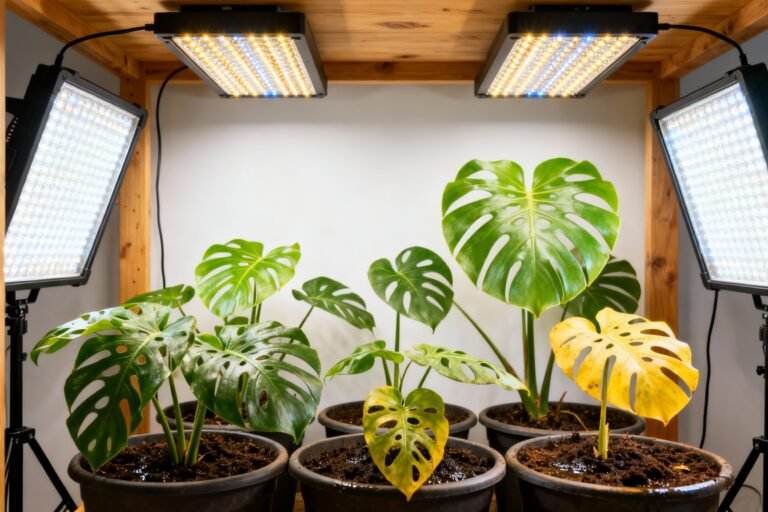
Not necessarily. Many thrive near bright windows. If your space feels dim, clip-on LED grow lights work wonders.
Aim for full-spectrum LEDs, 12-14 inches from foliage, on a 10-12 hour timer.
What size pot works best for hangers?
Smaller than you think. A 4-6 inch pot keeps soil from staying wet too long and avoids heavy, wobbly setups. Upsize only when roots circle the pot and watering becomes a daily chore.
Conclusion
Hanging plants deliver big style with minimal square footage.
Choose the right plant for your light, use breathable soil, and water with intention. Prune, train, and play with height until your space feels like a canopy. Do that, and your home turns into a low-key oasis—no greenhouse required, promise.