8 Ways To Know How Often To Water Your Monstera Properly
Your Monstera doesn’t need a daily bath. It needs timing, a little patience, and you paying attention like a plant detective. If your Swiss-cheese queen looks droopy or crispy, your watering schedule likely missed the memo.
Let’s fix that with simple, repeatable checks so you know exactly when to water—no guessing, no guilt.
Know Your Plant’s Rhythm (AKA, Don’t Water on a Calendar)
Monsteras don’t follow your planner—they follow light, temperature, and growth phases. In spring and summer, they drink more because they grow faster. In fall and winter, they chill and sip slowly. Rule of thumb: Water when the top 2–3 inches of soil feel dry, not every Tuesday.
Use changes in your home environment (more sun, heater on, AC blasting) to adjust frequency. Your plant tells you what it needs; your job is to listen.
Use the Finger Test (Yes, Literally)
Stick your finger into the soil up to the second knuckle. If it feels dry at that depth, water.
If it’s damp or cool, wait a few days and check again. Bonus tip: Hate the finger test? Use a wooden chopstick or skewer. Insert, pull out, and check for moisture or soil clinging.
Clean tool, clean hands, same accuracy.
Watch the Leaves: They Spill the Tea
Monsteras broadcast their mood with their leaves. Read them like text messages from your plant.
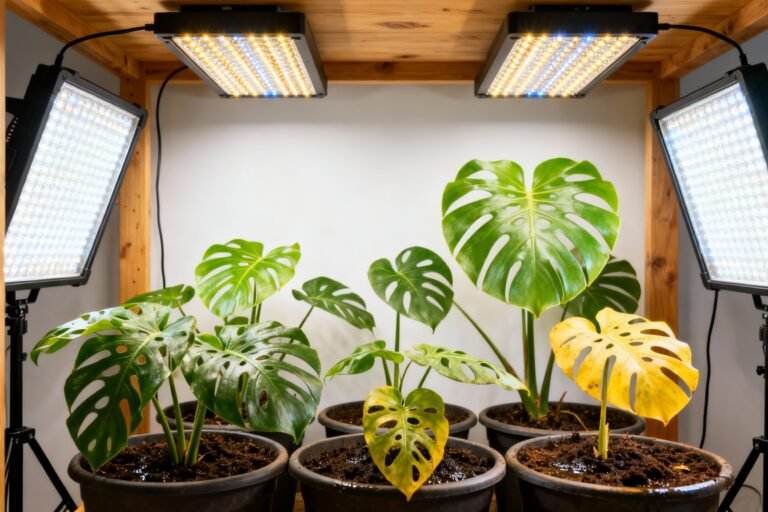
- Droopy, limp leaves: Usually underwatering. Check soil dryness first to confirm.
- Yellow leaves, especially lower ones: Often overwatering or poor drainage.
Don’t water “to fix yellow”—fix the soil and pot.
- Crispy brown edges: Underwatering, low humidity, or both. Water thoroughly and consider boosting humidity.
- Black/brown mushy spots: Overwatering and potential root rot. Time for a soil check.
New Leaves Tell You a Lot
If new leaves unfurl small, torn, or slow, the plant might struggle with inconsistent watering.
Keep a steady rhythm—don’t swing from drought to flood. IMO, consistency beats perfection here.
Weigh the Pot (Your Hidden Superpower)
This trick sounds goofy, but it’s deadly accurate. Lift your pot right after watering.
That “full tank” weight becomes your baseline. Then lift it daily or every other day. When it feels dramatically lighter, water again. Why it works: You bypass vague guesses and track actual moisture loss.
FYI, this method shines with larger plants and chunky soil mixes.
Know Your Soil Mix (It Matters More Than You Think)
The right mix keeps your Monstera hydrated without drowning it. A heavy, soggy mix suffocates roots. A chunky, airy blend drains well and invites roots to thrive.
Best Monstera Mix
Use a mix that drains well and holds some moisture:
- 1 part high-quality potting soil
- 1 part perlite or pumice
- 1 part orchid bark or coco chips
- Optional: a scoop of worm castings for nutrients
Result: You water thoroughly, excess drains out, and roots breathe.
You avoid the “mud pie” situation that causes rot and gnats. Win-win.
Check the Environment: Light, Temp, and Humidity
Your home acts like the plant’s weather system. Bright light and warm rooms speed up drying.
Dim corners and cool temps slow it down.
Light
Monsteras love bright, indirect light. Near a sunny window (but not in harsh midday rays), they’ll drink more often. In lower light, they’ll need water less often—sometimes half as much.
Temperature and Humidity
- Warm rooms (70–85°F): Soil dries faster.
- Cool rooms (60–68°F): Water less often and watch for soggy soil.
- Humidity sweet spot: 50–60%.
Dry winter air? Water needs can increase, but don’t compensate by overwatering the soil. Boost air moisture instead.
Water Thoroughly—Then Wait
Many people water often, but not enough.
That encourages shallow roots and cranky plants. Instead, water fully, then let your mix dry to that 2–3 inch mark before the next round.
How to Water Properly
- Take the plant to a sink or bathtub.
- Water evenly until it flows from the drainage holes.
- Let it drain for 10–15 minutes—no soggy saucers.
- Return it to its spot. Done.
Pro tip: If water runs straight through immediately, the soil might be hydrophobic.
Water slowly in rounds or bottom-water for 20–30 minutes, then drain.
Seasonal Adjustments: Grow Mode vs. Chill Mode
Your Monstera isn’t needy year-round. It’s strategic.
In spring and summer, you’ll likely water every 7–10 days in a bright spot. In fall and winter, every 2–3 weeks can be normal, especially in lower light.
Repotting and Growth Spurts
After repotting or when you add a moss pole, water needs can change. Fresh, airy soil dries faster at first.
New roots grow fast and drink more. Keep your eye on the finger test and pot weight during these transitions.
Drainage and Pot Choice: Don’t Sabotage Yourself
You can do everything right and still struggle if your pot traps water. Always use pots with drainage holes.
Cachepots are fine, but don’t let the inner pot sit in a puddle.
- Terracotta: Dries out faster. Great for heavy waterers.
- Glazed ceramic/plastic: Retains moisture longer. Great if you forget to water.
- Too-big pots: Hold extra wet soil, slow to dry, higher rot risk.
Size up only 1–2 inches wider.
Eight Quick Ways to Know When to Water
Let’s recap the 8 best signals you can trust:
- Finger test: Top 2–3 inches dry.
- Pot weight: Feels noticeably lighter than post-watering.
- Leaf cues: Slight droop = time to water; yellowing = check for overwatering.
- Soil mix: Chunky, airy mix dries predictably; dense mix stays wet longer.
- Light level: Brighter light = more frequent watering.
- Temperature/humidity: Warm/dry air speeds drying; cool/dim slows it.
- Drainage performance: Water should flow out freely; trapped water = wait and fix.
- Seasonal shifts: More in spring/summer, less in fall/winter. Adjust, don’t schedule.
FAQs
How often should I water my Monstera on average?
In bright, indirect light, many people land around every 7–10 days in warm months and every 2–3 weeks in cooler months. But averages can mislead.
Use the finger test and pot weight so you water when the plant needs it, not when a blog says it should.
Should I mist my Monstera to help with watering?
Misting doesn’t meaningfully water the plant, and humidity from misting disappears fast. If you want better humidity, use a humidifier or group plants together. Treat misting as a vibe, not a solution.
IMO, focus on proper watering and airflow first.
Can I bottom-water my Monstera?
Yes, especially if your soil repels water from the top. Place the pot in a tray of water for 20–30 minutes, then let it drain. Alternate with top watering so you flush salts and keep the entire root ball hydrated evenly.
Why are my Monstera’s lower leaves turning yellow?
Usually overwatering or poor drainage.
Check for soggy soil, compacted mix, or a pot without holes. Trim the yellow leaves if they’re fully gone, improve drainage, and return to a dry-then-water rhythm.
Do I need to use filtered water?
Most Monsteras handle tap water just fine. If your water is very hard or chlorinated and you see crunchy tips or weird buildup, try filtered or let tap water sit out overnight.
But don’t overthink it—consistency matters more.
What if my Monstera is in low light?
Then it’ll drink less. Move it closer to bright, indirect light if you can. If not, expect long gaps between waterings and slower growth.
Overwatering in low light is the fast track to root rot—so go slower and check that soil.
Conclusion
Watering a Monstera isn’t about memorizing a schedule—it’s about reading cues and responding. Use the finger test, lift the pot, watch the leaves, and consider your light and season. Water thoroughly, then wait for that sweet spot of dryness before the next drink.
Do that, and your Monstera will reward you with big, glossy leaves and zero drama—well, almost zero. FYI, plants love a little mystery.