How to Care for Indoor Plants: Complete Step-by-Step Guide
You want more life inside your home? Get a plant. Or three.
They boost your mood, clean the air (a bit), and make your space look like you know what you’re doing with your life. The best part: you don’t need a sun-drenched loft or a green thumb. You just need the right plant in the right spot, and a teensy bit of consistency.
Why We’re All Suddenly Plant People
Plants do more than sit there looking pretty.
They lower stress, add texture, and make any room feel intentional. You can turn a dull corner into a lush vibe with one good pothos. Bonus: plants push you to slow down. You water, you prune, you celebrate a new leaf like it’s a major life event.
And honestly? It is.
Light: The Make-or-Break Factor
You can fix overwatering. You can repot.
But if your plant hates the light, it will spiral. So let’s decode light without a botany degree.
- Bright, indirect light: Near a window with filtered sun. Think fiddle-leaf fig, monstera, bird of paradise, hoya.
- Medium light: A few feet from a window.Snake plant, ZZ plant, pothos, philodendron thrive here.
- Low light: Against an interior wall or north window. Cast-iron plant, ZZ, some ferns.
- Direct sun: Windowsills with raw sun. Cacti, succulents, rosemary, jade.
Quick window cheat sheet
- South-facing: Brightest.Great for sun-lovers with a sheer curtain.
- East-facing: Gentle morning light. Great for most tropicals.
- West-facing: Hot afternoon sun. Perfect for succulents or tough plants.
- North-facing: Low light.Use shade-tolerant champs.
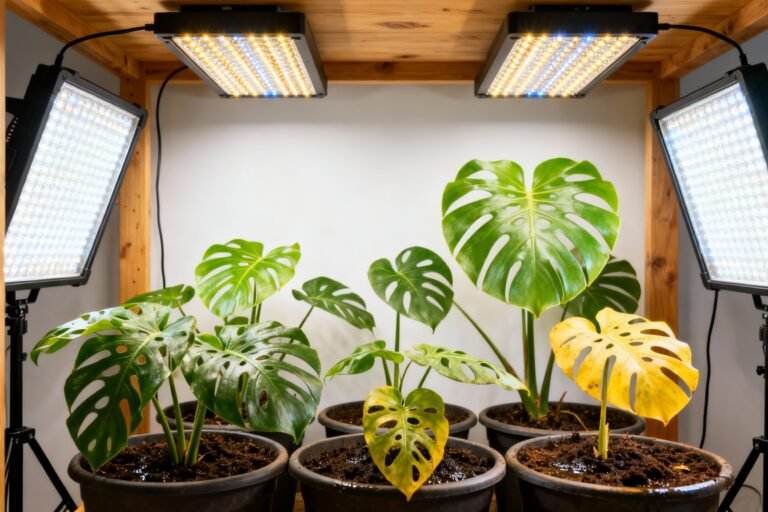
FYI: LED grow lights changed everything. You can grow a jungle in a basement now. Clip one to a shelf, run 8–12 hours daily, and boom—photosynthesis party.
Watering Without the Drama
Overwatering kills more plants than forgetting a week.
Roots need air as much as water. Saturated soil = root rot = sadness. How to water smarter:
- Finger test: Stick a finger 1–2 inches into the soil. Dry?Water. Damp? Wait.
- Water deeply: Fully soak until water drains, then stop.Empty saucers.
- Match pot to plant: Fast-draining mix for succulents; chunky mix for aroids (monstera, philodendron).
- Seasonal shift: Plants drink more in spring/summer, less in fall/winter.
The right soil mix, IMO
- Aroids: Potting soil + perlite + orchid bark.
- Succulents/cacti: Cactus mix + extra perlite or pumice.
- Ferns/calathea: Moisture-retentive potting mix + coco coir + perlite.
Beginner-Friendly All-Stars
Want wins right away? Start with these. They look stellar and forgive a few mistakes.
- ZZ plant: Thrives in low light.Tolerates dryness like a champ.
- Snake plant (Sansevieria): Minimal water, sculptural look, tough as nails.
- Pothos: Fast grower, easy propagation, handles medium to low light.
- Philodendron (heartleaf): Soft leaves, climbs or trails, easygoing.
- Spider plant: Cute “babies” for propagating. Forgiving and fun.
- Peace lily: Tells you when it’s thirsty by drooping. Pops white blooms.
- Monstera deliciosa: Iconic splits, tolerates some shade, grows quickly.
Pet-safe picks
If your cat thinks leaves are salad, try:
- Parlor palm
- Calathea (a bit picky but safe)
- Spider plant (can excite cats, but non-toxic)
- Peperomia
Styling Your Indoor Jungle
Plants aren’t decor afterthoughts.
They are the decor. Use them to play with height, texture, and movement.
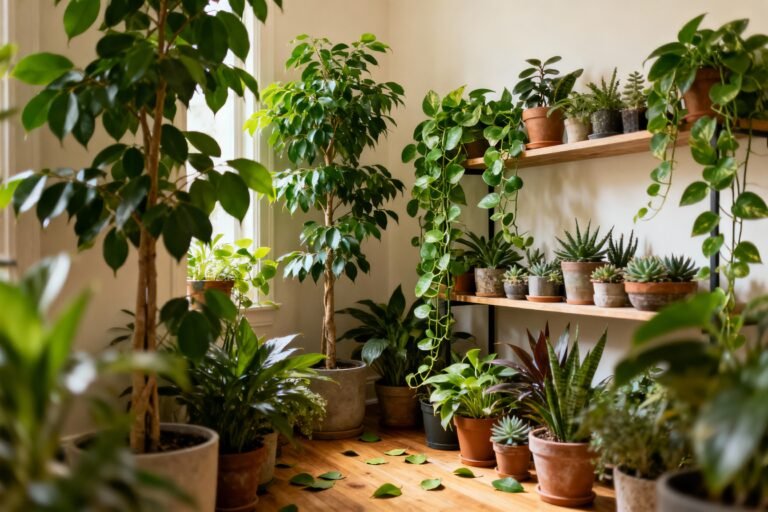
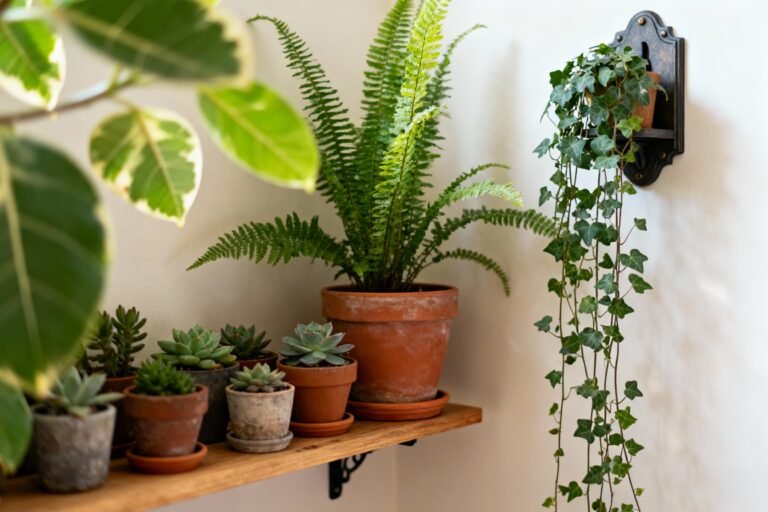
- Create layers: Tree-like plants on the floor, medium on stools, small on shelves.
- Play with planters: Terracotta breathes and prevents overwatering; ceramic locks in moisture and looks polished.
- Use vertical space: Hanging pothos, trailing philodendron, or wall-mounted shelves.
- Repeat textures: Pair glossy rubber plants with matte ferns for contrast.
One plant, big impact
A single large plant (bird of paradise, fiddle-leaf fig, rubber tree) can anchor a room. Give it a bright corner and a pot that fits your style.
Instant grown-up energy.
Repotting, Fertilizing, and Growth
Plants don’t want constant repotting. They like stability. Repot when roots circle the pot or grow out of the drainage holes. Repotting tips:
- Go up just one pot size.Too big = soggy soil.
- Loosen roots gently. Trim dead or mushy ones.
- Refresh the mix every 1–2 years even if the pot size stays the same.
Fertilizer basics:
- Spring–summer: Feed monthly with a balanced liquid fertilizer.
- Fall–winter: Cut back or pause; growth slows.
- Signs of hunger: Pale leaves, slow growth (assuming light is good).
Pruning and propagating
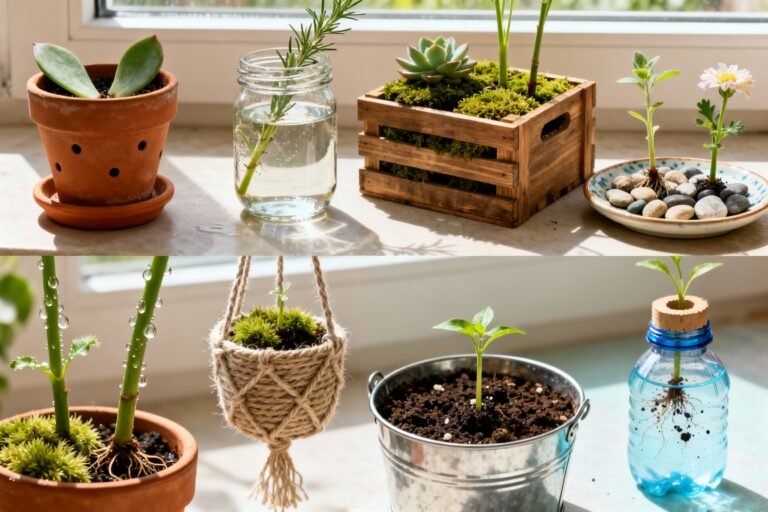
Snip leggy stems above a node to encourage bushier growth. Pop those cuttings in water or soil.
You get a fuller plant and free baby plants. It’s the buy-one-get-one of the plant world.
Pests and Problems (and Chill Solutions)
Even great plant parents get pests. Don’t panic.
You got this.
- Fungus gnats: Tiny flies from wet soil. Let soil dry more, add sticky traps, top-dress with sand or diatomaceous earth.
- Spider mites: Webbing and speckled leaves. Shower plant, wipe leaves, use neem or insecticidal soap weekly until gone.
- Mealybugs: White fuzz clumps.Dab with alcohol, then soap spray.
- Yellow leaves: Overwatering or low light. Adjust schedule or move closer to a window.
- Brown tips: Low humidity or mineral buildup. Trim and increase humidity; flush soil occasionally.
IMO: Prevention beats treatment.
Rinse leaves monthly, inspect new plants, and quarantine newcomers for a week.
Humidity, Temperature, and Other “Vibes”
Most houseplants come from tropical places. They love warmth and a bit of humidity. Your home can work with minimal effort.
- Temperature: 65–80°F is perfect.Avoid drafts and vents.
- Humidity: Group plants, use a pebble tray, or run a small humidifier near ferns and calathea.
- Airflow: Gentle airflow prevents mold. A small fan helps.
Leaf care
Dust blocks light. Wipe leaves with a damp cloth.
Skip leaf-shine sprays—clean leaves look better and breathe easier.
FAQ
Do indoor plants really purify air?
Yes, but not as dramatically as those viral charts claim. A few plants help, but not enough to replace ventilation or a purifier. Keep plants for aesthetics and sanity, and treat cleaner air as a nice side effect.
How do I stop killing succulents?
Give them direct sun and a gritty soil mix, then water only when the potting mix dries completely.
Use a pot with drainage. If you treat a succulent like a cactus and a cactus like a succulent, you’ll still do fine—just don’t baby them with constant water.
What’s the easiest plant for low light?
ZZ plant and snake plant. They tolerate neglect and dim corners, and they stay stylish.
If they stretch or lean, they want more light, but they won’t throw a tantrum overnight.
How often should I water my plants?
There’s no universal schedule. Check the soil weekly. Water when the top inch or two feels dry, and adjust for seasons and light.
In brighter spots, they drink faster.
Are self-watering pots worth it?
For thirsty plants or busy people, absolutely. They regulate moisture at the roots and reduce guesswork. Just refresh the reservoir and still let the soil breathe between fills.
Why are my leaf tips brown?
Usually low humidity, inconsistent watering, or mineral buildup from tap water.
Trim the tips, increase humidity, and occasionally flush the soil. If your plant is otherwise growing, don’t stress.
Conclusion
Indoor plants don’t demand perfection—just attention. Match the plant to the light, water with intention, and tidy the leaves now and then.
You’ll nail it faster than you think. Start with one easy plant, watch it thrive, and then—no promises—you might accidentally build a jungle. FYI: that’s a great problem to have.