Low-Maintenance Landscape Design for Busy Homeowners
You step outside and your yard just… exists. It’s fine. Grass is doing its grass thing.
A couple shrubs are plotting. But what if your outdoor space could actually make you want to hang out there? That’s the promise of landscape design: turning your yard into a place you love, not just mow.
Ready to make it look less “meh” and more “oh wow”? Let’s dig in—pun 100% intended.
What Landscape Design Actually Means (And Why You Should Care)
Landscape design isn’t just picking plants and hoping they don’t die. It’s the art and strategy of shaping your outdoor space so it looks great, feels welcoming, and works for your life.
Think flow, function, and personality. You create a plan that fits your climate, your budget, and your vibe. You also design for how you’ll use the space: parties, quiet coffee time, kid chaos, or a veggie garden that flexes on your neighbors. Good design solves problems and looks effortless.
Start With the Bones: Layout and Flow
Before you buy a single plant, map the space.
How do people move through it? Where does the sun hit? Where does water go after it rains?
You design around those answers. Divide your yard into zones:
- Hangout zone (patio, deck, fire pit)
- Green zone (lawn or groundcover for play)
- Grow zone (veggies, herbs, cutting flowers)
- Utility zone (compost, storage, trash… the glam squad)
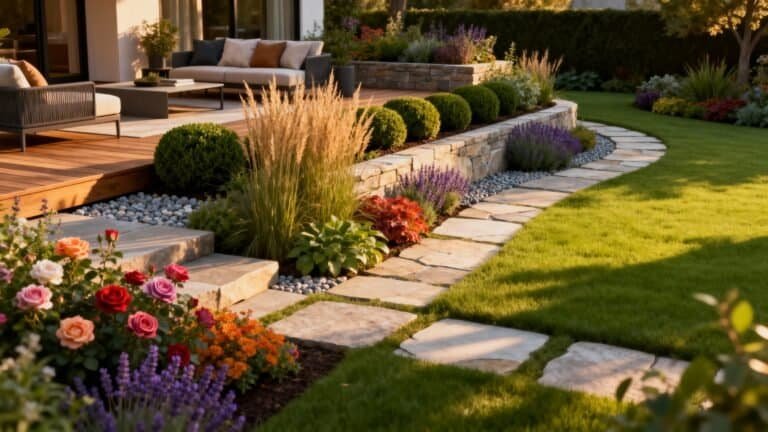
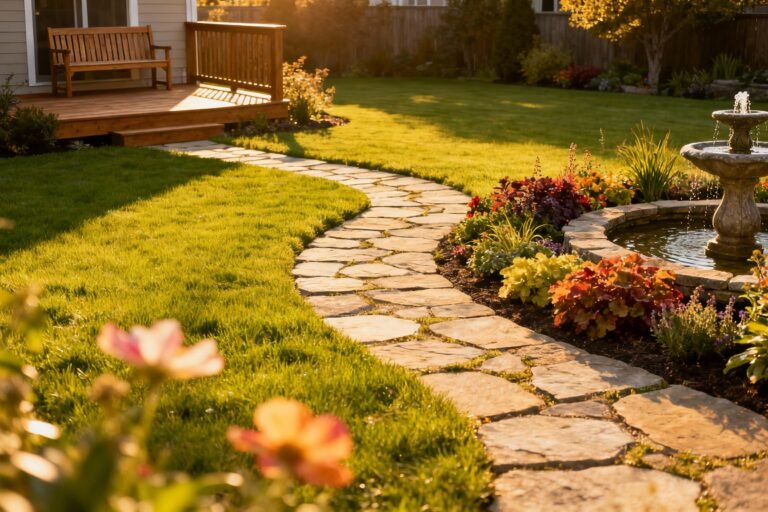
Create clear paths between zones. Curved lines feel relaxed; straight lines feel formal. Neither is “right”—pick the mood you want.
Pro move: Sightlines and focal points
Design the view from the places you stand the most: kitchen sink, back door, patio chair.
Add focal points like a Japanese maple, a water feature, a stunning urn, or even a sculptural shrub. Give your eye somewhere to land.
Planting Like a Pro (So It Doesn’t Look Random)
Plants are the outfit. Structure comes first (paths, beds, patios), then you accessorize. Choose plants with intention, and repeat them so your yard doesn’t look like a chaotic plant adoption center. Use layers:
- Canopy: Trees for shade, height, privacy
- Midstory: Shrubs for structure and seasonal interest
- Perennials/groundcovers: Texture, color, and weed suppression
Repeat plants across beds for rhythm.
Mix textures—fine leaves next to bold foliage—and vary height. And group in odd numbers. Why?
Because our brains like it. Don’t argue with biology.
Color and seasonal interest
You want something to look good in spring, summer, fall, and winter. Pair early bulbs with summer bloomers and fall foliage.
Add winter bones: evergreens, ornamental grasses, and shrubs with interesting bark.
Native vs. non-native
Native plants support pollinators and usually thrive with less fuss. Non-natives can still be great if they behave. IMO, aim for a solid native backbone and sprinkle in the divas where appropriate.
Soil, Sun, and Water: The Unsexy Stuff That Makes Everything Work
Your plants don’t care about your Pinterest board if the soil stinks.
Start here. Test your soil. Check pH, texture, and organic matter. If your soil compacts easily or drains poorly, fix it with compost and proper grading. Don’t just dump fertilizer and hope. Map your sun. Full sun means 6+ hours.
Part sun is 3–6. Shade is less than 3. Plant tags aren’t lying.
Put sun-lovers in sun. Shade-lovers in shade. Revolutionary, I know. Water wisely:
- Use drip irrigation for beds (efficient and plant-friendly)
- Mulch to retain moisture and smother weeds
- Group plants by water needs (called hydrozoning, FYI)
Hardscaping: Patios, Paths, and the Stuff That Lasts
Plants grow and change, but hardscape sets the stage.
Patios, walkways, walls, and edging create structure—and they’re worth doing right. Materials to consider:
- Pavers: Clean look, many styles, DIY-friendly
- Natural stone: Gorgeous, pricey, timeless
- Gravel: Affordable, great drainage, crunches satisfyingly underfoot
- Decking: Wood or composite for elevation or tricky grades
Size your patio for reality. If you want a table for six and a grill, give it space. And make your paths at least 36 inches wide, 48 inches if you want it to feel gracious.
Edging and containment
Edge beds with steel, stone, or brick to keep mulch where it belongs.
It looks sharp and saves you from weeding the lawn-bed border every two days. Your future self will thank you.
Privacy Without Building a Fortress
You want cozy, not bunker vibes. Use layers, not just a tall fence. Great privacy tactics:
- Strategic trees: Columnar evergreens, multi-stem trees, or fast-growing screens
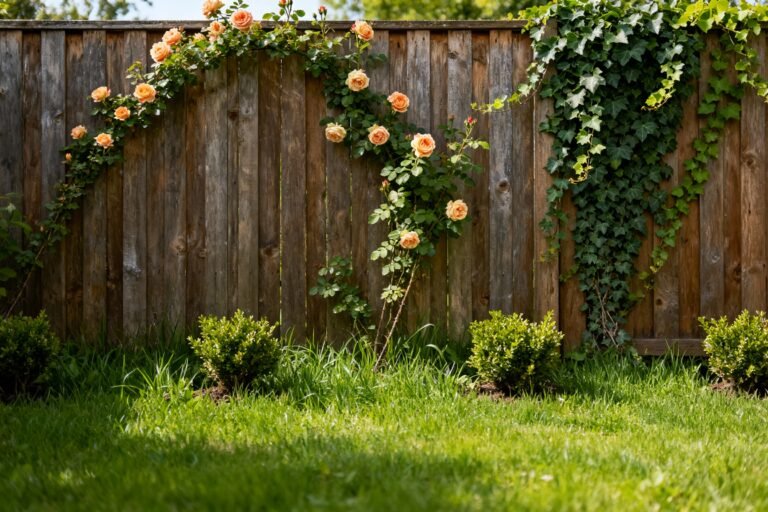
- Lattice or trellises: Train vines for green walls
- Elevation changes: Small berms or raised beds
- Sound masking: Water features or rustling grasses
Place screens where sightlines actually hit.
You don’t need a 100-foot hedge if the neighbor only peeks from one kitchen window.
Low-Maintenance Without Going Boring
You can have a beautiful yard that doesn’t eat your weekend. Choose plants that fit your climate and soil, and design to reduce chores. Make it easier:
- Go big on mulch and groundcovers to block weeds
- Use fewer plant varieties but repeat them more often
- Install drip irrigation with a timer
- Swap high-maintenance lawn for clover, no-mow fescue, or mixed groundcovers
- Prune lightly and regularly instead of emergency hacking
Lawn reality check
Lawn looks nice, sure. But it demands water, fertilizer, and constant mowing.
If you don’t use it, shrink it. Create larger planting beds or add a gravel terrace. IMO, less lawn equals more life.
Lighting, Furniture, and the Vibes
Function first, then icing.
Lighting extends your yard into the evening and makes it feel safe and magical. Furniture transforms a pretty space into a living space. Smart lighting plan:
- Path lights for safety (not a runaway airport strip)
- Uplights on trees or focal points
- String lights for ambiance (classic, because it works)
Choose durable, weatherproof furniture, and size it to your space. Add cushions and a throw, and boom—instant “let’s sit outside” energy.
Plants plus comfy chairs equals you actually using the yard. Radical.
Budgeting and Phasing Your Project
You don’t have to do it all at once. In fact, please don’t.
Phase your project and keep your budget sane. Phase plan idea:
- Fix grading, soil, and irrigation
- Install hardscape (paths, patio, edging)
- Plant trees and shrubs (they need time to grow)
- Add perennials and groundcovers
- Finish with lighting, decor, and a few splurges
Track costs and prioritize impact. A well-built patio and two stunning trees often beat a thousand random perennials, FYI.
Common Mistakes (And Easy Fixes)
We all mess up. Here’s how to avoid the greatest hits:
- Planting too close: Read mature sizes.
Give them room.
- Ignoring drainage: Water will win. Grade correctly and use permeable surfaces.
- Too many “one-offs”: Repeat plants and materials for cohesion.
- No winter interest: Add evergreens, grasses, and structure.
- Forgetting maintenance: If you hate pruning, don’t plant things that need constant shaping.
FAQs
How do I choose plants that won’t die on me?
Match plants to your sun, soil, and water reality. Start with natives or proven performers for your USDA hardiness zone.
Buy healthy plants, plant them at the right depth, mulch, and water deeply but not constantly while they establish. Then stop babying them so they grow strong roots.
Do I need a landscape designer or can I DIY this?
You can absolutely DIY smaller projects. If you tackle grading, complex drainage, or big hardscape installs, a pro can save you money and headaches.
A hybrid approach works well: pay for a plan or consultation, then DIY the planting and finishing touches.
What plants are good for low maintenance?
Look for drought-tolerant shrubs, tough perennials, and evergreen structure. Examples many climates love: boxwood or inkberry for structure, ornamental grasses for movement, salvia and coneflower for color, and groundcovers like pachysandra, creeping thyme, or ajuga. Always cross-check for your zone and soil conditions.
How much should I budget for a backyard makeover?
Costs vary widely.
As a rough guide: DIY planting beds can start a few hundred dollars. A modest paver patio might run a few thousand. Full designs with irrigation, lighting, and good hardscape can hit five figures fast.
Phase the work and invest first in infrastructure you don’t want to redo.
How do I make a small yard feel bigger?
Use fewer, larger elements rather than lots of tiny ones. Create diagonal sightlines, add vertical layers (trellises, columnar trees), and keep paths wide and clear. Repeat plants and materials to reduce visual clutter.
Mirrors outdoors? Sometimes yes—just place them thoughtfully.
Any quick upgrades if I have a weekend and $500?
Edge and redefine your beds, add 2–3 inches of mulch, plant three repeating groups of perennials, and pop in solar path lights. If budget allows, grab a statement pot with a thriller-filler-spiller combo near your entry.
Fast impact, low stress.
Conclusion
You don’t need a sprawling estate to design a landscape that makes you smile. Start with flow, add structure, pick plants that actually want to live at your house, and light the scene. Phase it, tweak it, and enjoy it.
The best yard isn’t perfect—it’s the one you use. IMO, that’s the whole point.