7 Ways To Minimize Garden Maintenance In Shady Areas
Shade gets a bad rap in the garden. People think “dark patch = high maintenance,” and then give up. But you can absolutely have a gorgeous, low-effort shady space without turning it into a mulch graveyard.
Ready to work smarter, not harder? Let’s keep your weekends free and your garden chill.
Choose Plants That Laugh at Low Light
You could babysit needy divas, or you could pick plants that just…do their thing. Go for shade-tolerant workhorses that don’t sulk when the sun ghosts them.
- Groundcovers: Pachysandra, sweet woodruff, wild ginger, and lamium knit together fast and block weeds.
Less weeding = more iced tea time.
- Perennials: Hosta, hellebore, epimedium, brunnera, lungwort, and Solomon’s seal bring texture and blooms without whining.
- Ferns: Japanese painted fern, Christmas fern, autumn fern—lush, layered, and zero drama.
- Shrubs: Hydrangea (oakleaf and smooth), aucuba, yew, and inkberry holly give structure and stay classy.
Plant Fewer Varieties, In Bigger Drifts
Repeat plants in groups of 3–7. It looks intentional and helps you remember what needs what. IMO, less variety = less confusion = fewer “why are you like this?” moments with individual plants.
Get Your Soil and Moisture Right (Once)
Shade often means tree roots and dry soil. Or swampy, compacted corners.
Fix the base layer and you’ll cut maintenance by half, easy.
- Top-dress with compost annually: Skip digging. Just spread 1–2 inches in spring. It feeds plants and improves texture for you.
- Mulch like a minimalist: 2–3 inches of shredded bark or leaf mold keeps soil moist and blocks weeds.
- Hydrozones: Put thirsty plants (astilbe, ligularia) together and drought-tough ones (epimedium, hellebore) elsewhere.
Deal With Tree Competition
Trees will out-compete everything for water (they’re greedy like that). Use drip lines or soaker hoses under mulch, run them deeply but infrequently, and you’ll reduce hand-watering and plant meltdowns.
Design for Coverage, Not Perfection
Bare soil invites weeds to a house party.
Your job? Don’t send invitations.
- Layer heights: Tall shrubs, medium perennials, groundcovers. The shade “stack” reduces weed light and creates a lush look without fuss.
- Edge smart: Install a discreet steel or paver edge once.
It keeps mulch in and grass out—no weekly trenching.
- Fill gaps with living mulch: Use low growers like ajuga or epimedium to carpet the in-betweens. FYI, they choke weeds while looking good.
Go Big on Texture
In shade, flowers are a bonus, but foliage does the heavy lifting. Mix leaf sizes and finishes—glossy aucuba, velvety brunnera, ruffled hosta—and your bed reads “designed” even when nothing blooms.
Swap High-Maintenance Plants for Hardscape
You know what never needs weeding? A stone.
You don’t need to go full patio, but a few hardscape moves cut your chore list.
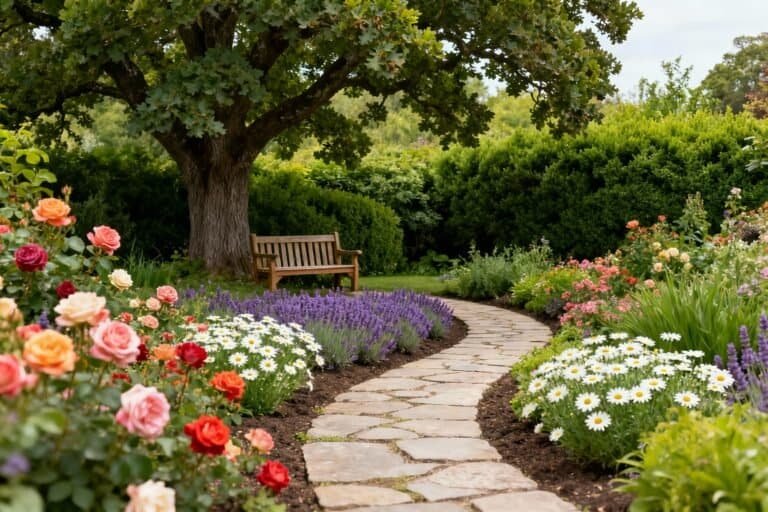
- Gravel ribbons or stepping stones: Define paths so you don’t stomp plants. Plus, instant order.
- Log rounds or timber edging: Rustic, cheap, and friendly to tree roots.
- Containers in deep shade: Pots with ferns and heuchera make a statement. They also sidestep crummy soil spots entirely.
Pick Materials That Don’t Fight You
Use angular gravel (stays put), heavier pavers (don’t heave as much), and breathable fabrics under stone where weeds persist.
Your future self will send a thank-you text.
Automate Irrigation and Forget About It
Dragging a hose around a dim garden corner isn’t a hobby. Install drip irrigation with a battery timer and walk away.
- Drip rings for shrubs and inline tubing for beds deliver water right to roots.
- Water deeply, less often: Aim for longer sessions 1–2x per week. Plants grow deeper roots and whine less.
- Rain sensor: Cheap, effective, and prevents overwatering.
Pro Tip: Use Zones
Group plants by water needs on separate valves if possible. It’s not fancy—it’s sanity.
IMO, this changes everything in root-heavy shade.
Cut the Drama With Right-Size Pruning
You don’t need to prune weekly. You just need to prune smart.
- Choose naturally tidy shrubs: Boxwood alternatives like inkberry or dwarf yew stay shapely without hedge-trimmer marathons.
- One big cleanup: Do a spring tidy—remove winter mush, snip dead stems, and call it a day.
- Limit reseeders: In shade, some plants (ajuga, lamium) spread like rumors. Keep a trowel handy and edit ruthlessly.
Know When to Walk Away
If a plant sulks for two seasons, replace it with a proven doer.
You garden for enjoyment, not hostage negotiations.
Lighten It Up—Without a Chainsaw
You don’t need full sun to succeed. But a little light tweak helps huge.
- Selective limb-up: Remove a few lower branches (legally and safely) to raise the canopy and let in dappled light.
- Reflective elements: Light-colored gravel, pale pots, or a simple mirror on a fence bounce light back in.
- Choose lighter foliage: Variegated hosta, brunnera ‘Jack Frost,’ and lamium brighten shade without needing more sun.
When to Call an Arborist
If big limbs loom or trees look stressed, hire a pro. One strategic prune can transform light levels and cut maintenance for years.
FAQ
Do I need to amend the soil in deep shade every year?
Top-dress with 1–2 inches of compost once a year and you’re golden.
You don’t need to till. Compost feeds soil life, improves texture, and slowly builds fertility—exactly what shade plants love.
Which groundcovers won’t take over the entire yard?
Try sweet woodruff, wild ginger, or epimedium. They form polite carpets without jumping fences.
If you want bolder coverage, ajuga and lamium work great, but keep an eye on them near lawns.
Can I grow vegetables in shade with low maintenance?
Not really. Most veggies sulk without 6+ hours of sun. If you want edible vibes in shade, go for herbs like mint (in a pot, please), chives, and parsley, or try leafy greens like spinach in bright shade during cool seasons.
How do I water plants under big trees?
Use drip or soaker hoses under mulch and water deeply.
Tree roots steal surface moisture, so long, slow sessions beat frequent sprinkles. A timer makes it painless and consistent.
Are hostas the only option for shade?
Nope, and thank goodness. Mix ferns, hellebore, brunnera, epimedium, heuchera, and hydrangea for texture and interest.
Hostas are great, but they don’t need to be the entire cast.
What mulch works best in shade?
Shredded hardwood, leaf mold, or fine bark. They stay in place, feed the soil as they break down, and look natural. Skip rock mulch in plant-heavy shade—it bakes roots and invites weeds in the gaps.
Conclusion
You don’t need more sunlight to have a low-maintenance shade garden—you just need a smarter plan.
Pick plants that thrive in low light, cover the soil, automate water, and use hardscape to your advantage. Tweak the light a little, prune thoughtfully, and let texture do the heavy lifting. Do that, and IMO your shady spots might become your favorite corners to ignore—in the best possible way.