7 Common Reasons Monstera Drooping Happens And How To Fix
Your Monstera looks like it pulled an all-nighter and now regrets everything? Droopy leaves usually mean your plant’s trying to tell you something—and it’s rarely “I’m fine.” The good news: it’s fixable. Let’s decode the flop, tweak a few habits, and get those big, glossy leaves back to drama-free glory.
Reason #1: Thirst (aka Underwatering)
If the top few inches of soil feel dry, the leaves look limp, and the pot feels weirdly light, your Monstera probably needs water.
Think floppy leaves that perk up after a drink—classic dehydration. Fix it:
- Water thoroughly until it drains from the bottom. Don’t just sprinkle the surface.
- Check soil moisture weekly. In growing season, you’ll likely water every 7–10 days.
- Use a well-draining mix so water reaches roots without pooling.
Pro tip
Bottom-water occasionally.
Set the pot in a tray of water for 20–30 minutes so roots drink from below. It helps hydrate evenly and reduces dry pockets.
Reason #2: Overwatering (and Root Rot Sneaking In)
Drooping can also mean too much love. Overwatered Monsteras look wilted but the soil feels wet or soggy, and leaves may yellow.
If it smells swampy, root rot might be on deck—yikes. Fix it:
- Let the top 2–3 inches dry before watering again. Stick a finger in—free moisture meter!
- Ensure drainage holes exist and aren’t clogged. No holes?
Repot immediately, IMO.
- Use a chunky mix: potting soil + perlite + orchid bark. Roots need air.
If rot already happened
- Slide the plant out and inspect roots. Snip mushy, brown roots with sterilized shears.
- Repot into fresh, dry mix.
Water lightly the first week.
- Reduce watering frequency and improve light to help recovery.
Reason #3: Low Light = Low Energy
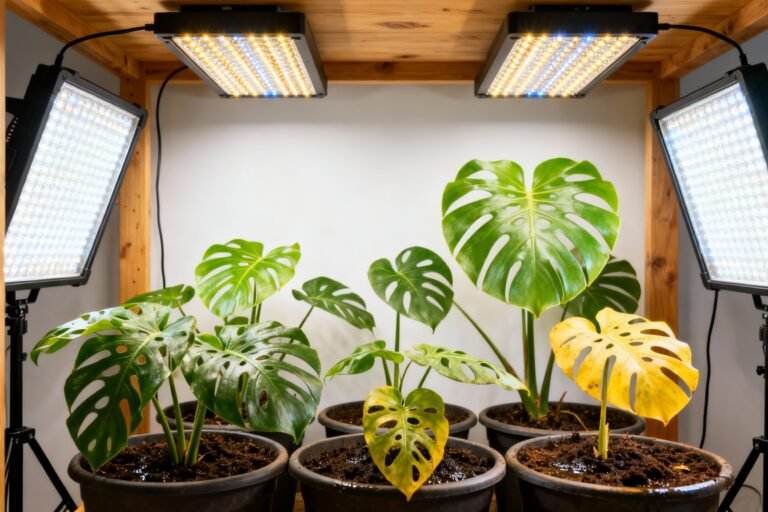
Monsteras love bright, indirect light. Put them in a cave (or a dim corner), and they’ll droop like a bored teenager. You’ll also see smaller leaves and fewer fenestrations. Fix it:
- Move the plant near a bright window with filtered light.
- Use sheer curtains if direct sun scorches.
- No bright window?
Add a grow light and run it 10–12 hours daily.
Quick light test
If you can read a book easily without turning on a lamp midday, your light’s probably fine. If not, upgrade.
Reason #4: Heat, Cold, and Drafts
Monsteras like it cozy. Cold drafts, heat blasts, or sudden temperature swings cause drooping and stress.
Think: next to a heater, under an AC vent, by a drafty door—hard pass. Fix it:
- Keep temps between 65–85°F (18–29°C). Avoid below 60°F (15°C).
- Move away from vents, radiators, and leaky windows.
- Stabilize the environment. Sudden changes = cranky plant.
Reason #5: Pot Too Big, Pot Too Small
Wrong pot size messes with moisture and root health.
A pot that’s too large stays wet for too long. A pot that’s too small causes root binding, quick dry-outs, and droopy drama. Fix it:
- Repot one size up (1–2 inches wider) when roots circle or poke through holes.
- Pick a pot with drainage—non-negotiable.
- Refresh with chunky soil to balance moisture and airflow.
Signs it needs repotting
- Water rushes through and the plant dries out in days.
- Roots are visible on top or through drainage holes.
- Stunted growth even with good light and care.
Reason #6: Low Humidity and Dry Air
Monsteras come from tropical vibes, not desert radiators. Dry air can cause droopiness, crispy edges, and overall meh leaves.
FYI, winter heating can tank indoor humidity. Fix it:
- Aim for 50–60% humidity. A small humidifier works wonders.
- Group plants to create a microclimate.
- Misting feels nice but doesn’t change humidity for long. Use it as a temporary boost.
Reason #7: Nutrient Issues or No Support
Hungry Monsteras droop and look dull.
So do Monsteras with heavy leaves that lack support. Sometimes it’s not the plant’s mood—it’s physics. Fix it (nutrition):
- Feed monthly in spring and summer with a balanced liquid fertilizer at half strength.
- Skip winter feeding when growth slows.
- Watch for salt buildup—flush the soil every few months.
Fix it (support):
- Add a moss pole or stake. Gently tie stems upright.
- Rotate the pot weekly so it grows evenly toward the light.
How to Diagnose Droop Fast
Overwhelmed?
Use this quick checklist to zero in on the culprit.
- Touch the soil: soggy = overwater; bone-dry = underwater.
- Check the light: bright, indirect? Or cozy dungeon?
- Feel the room: any drafts, heat vents, or temp swings?
- Peek at roots: pot-bound or waterlogged?
- Inspect leaves: yellowing (overwater), crispy edges (low humidity), small growth (low light/nutrients).
Set a simple routine
- Water on cues, not a calendar. The plant decides, not your planner.
- Dust leaves monthly so they photosynthesize better.
- Prune leggy growth to encourage fuller, sturdier stems.
When Drooping Is Totally Normal
Sometimes Monsteras droop for harmless reasons.
Don’t panic—yet.
- Right after repotting: transplant shock. Give it a week or two.
- Post-shipping or move: environmental change can cause a temporary flop.
- End of day: slight daily wilt can happen as the plant cycles water. Morning perk-up = fine.
But if it doesn’t bounce back…
Re-check watering, light, and roots.
Consistency fixes most issues, IMO.
FAQ
How often should I water my Monstera?
There’s no one-size schedule. Water when the top 2–3 inches of soil dry out. In bright light and warm temps, that might be weekly.
In lower light or winter, it could be every 2–3 weeks. Always let the plant, not the calendar, tell you.
Should I cut droopy leaves off?
Only if they’re yellow, crispy, or damaged. If a leaf looks healthy but droopy, fix the underlying issue first.
Cutting healthy leaves won’t solve watering, light, or root problems.
What kind of soil is best?
Use a chunky, airy mix. Try 40% high-quality potting soil, 30% orchid bark, 20% perlite, and 10% compost or coco coir. This keeps roots oxygenated and prevents waterlogging while holding enough moisture.
Do Monsteras need a moss pole?
They don’t need one, but they appreciate support as they mature.
A pole encourages larger leaves and prettier splits. Plus, it helps prevent drooping from heavy stems.
Can low humidity alone cause drooping?
Yes, especially in winter with indoor heating. Leaves may droop and edges crisp.
A humidifier and proper watering usually fix this—just avoid turning the room into a sauna.
Why does my Monstera droop after watering?
If it droops right after a drink, you might have underwatered for a while and then flooded it, or the roots lack oxygen due to compacted soil. Water slowly and ensure good drainage. If it doesn’t perk up in 24–48 hours, check the roots.
Conclusion
Droopy Monstera leaves aren’t a personality flaw—they’re a message.
Sort out water, light, temperature, pot size, humidity, and support, and your plant will reward you with big, shiny, Insta-worthy leaves. Stay consistent, watch the cues, and don’t overthink it. Your Monstera just wants a comfy home and a drink at the right time—relatable, right?