12 Steps To Stop Monstera Leaves Turning Yellow And Stressing Plant
Your Monstera is throwing yellow leaves and giving you side-eye, huh? Don’t panic. Yellowing leaves rarely mean instant doom, but they do mean your plant wants a few things fixed.
Let’s sort the “why” and give you 12 simple, practical steps to stop the yellow and de-stress your leafy friend—without turning your living room into a science lab.
First, decode the yellow: what is your Monstera telling you?
Yellow leaves can mean different things depending on the pattern. One-off yellow on an old, lower leaf? Normal. Multiple leaves yellowing fast? That’s a stress signal.
- Solid yellow + mushy stems: Overwatering, poor drainage, or root rot.
- Yellow between veins + crispy tips: Underwatering or too much direct sun.
- Pale new leaves: Nutrient deficiency or low light.
- Speckled yellow + sticky residue: Pests. Tiny demons, basically.
1) Fix your watering rhythm (the #1 culprit)
Most Monsteras suffer from love. Specifically, too much water love. Let the top 2–3 inches of soil dry out between waterings. Then water thoroughly until it drains from the bottom.
Easy rule: if the pot still feels heavy, wait.
How to check moisture properly
Use a finger, a wooden chopstick (look for dark, damp marks), or a moisture meter if you like gadgets. Water less in winter when growth slows.
2) Upgrade drainage like you mean it
If your pot has no drainage hole, your Monstera is basically living on a houseboat. Use a pot with drainage holes and put a saucer underneath. Dump excess water after 10–15 minutes.
Soil mix that actually drains
Monsteras love chunky, airy soil. Try:
- 40% high-quality potting soil
- 30% perlite or pumice
- 20% orchid bark
- 10% coco coir or peat
This combo prevents soggy roots and discourages fungus gnats.
Bonus points if you add a pinch of horticultural charcoal.
3) Get the light right (bright, but kind)
Monsteras want bright, indirect light. Think near a window with filtered sun. Harsh direct sun can scorch leaves and cause yellowing with brown edges.
Deep shade leads to pale, stretched growth and sad vibes.
Lighting tweaks that work
- Sheer curtains to soften south or west windows.
- Move 3–6 feet back from the window if leaves burn.
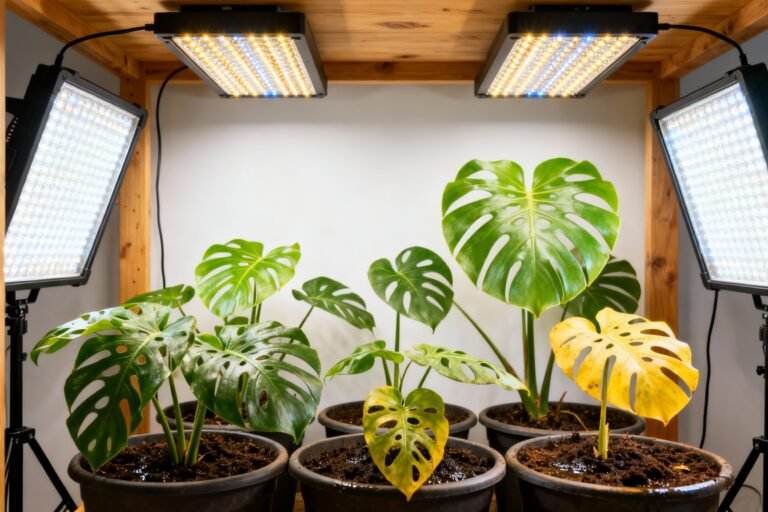
- Use a grow light for dark rooms—set it 8–12 hours/day.
4) Balance your feeding (not a salad bar, not a famine)
New growth looks pale or weak? You might need fertilizer. Feed monthly in spring and summer with a balanced liquid fertilizer at half strength. Skip or reduce in fall/winter.
Spotting nutrient issues
- Uniform yellowing on older leaves: Nitrogen deficiency.
- Yellow edges or interveinal yellowing: Possible potassium or magnesium issue.
IMO, keep it simple: use a gentle, balanced fertilizer and don’t overthink it.
5) Repot before the roots riot
Rootbound Monsteras can yellow from stress and poor nutrient uptake. Repot every 1–2 years or when roots circle the pot or push out of the drainage holes.
Size up only 1–2 inches in diameter to avoid soggy soil.
Rescue from root rot (if things got swampy)
- Slide the plant out, rinse roots gently.
- Trim brown, mushy roots with sterilized scissors.
- Dust cuts with cinnamon or sulfur (optional, FYI).
- Repot in fresh chunky mix and water lightly.
6) Lift humidity without turning your home into a rainforest
Monsteras like 40–60% humidity. Dry air can cause crispy edges and stress. Use a humidifier, group plants, or place a pebble tray under the pot.
Misting? Fun, but it doesn’t raise humidity for long.
7) Keep temps cozy and consistent
They prefer 65–85°F (18–29°C). Cold drafts from windows or AC can trigger yellowing.
Don’t park your Monstera next to a heater, either—hot/dry air equals crunchy leaves.
8) Stake and support for happier growth
Monsteras climb in nature. Give it a moss pole, coco pole, or trellis so it can channel energy into strong leaves instead of flopping. You’ll get bigger leaves and fewer stress signals.
9) Pest patrol: catch the culprits early
Check the underside of leaves and stems weekly. Spider mites leave stippling; mealybugs look like cotton; scale are brown bumps; thrips leave silvery streaks. If you see them:
- Shower the plant or wipe leaves with damp cloth.
- Use insecticidal soap or neem oil weekly for 3–4 weeks.
- Quarantine from other plants.
Sorry, social distancing again.
10) Prune yellow leaves the smart way
If a leaf turns fully yellow, it won’t turn green again. Prune at the base of the petiole with sterilized shears to let the plant redirect energy. If only a small part is damaged, you can trim the yellow/brown edges for looks.
11) Water quality matters more than you think
Hard water or water with lots of chlorine can cause yellow tips over time. If your tap water is harsh, let it sit 24 hours before using, or switch to filtered/rainwater.
IMO, this tweak helps especially with fussy or younger plants.
12) Set a routine and stop guessing
A consistent care rhythm keeps stress low. Try this:
- Weekly: Check soil moisture, inspect for pests, rotate the pot a quarter turn.
- Monthly (growing season): Light feed, wipe dust off leaves.
- Seasonally: Adjust watering and light as days shorten or lengthen.
You’ll notice issues earlier and fix them before leaves go full highlighter yellow.
Common yellowing scenarios (and quick fixes)
- Yellowing after a move: Normal adjustment. Keep care consistent; don’t overwater “out of sympathy.”
- Only bottom leaves yellowing slowly: Natural aging.
Remove when fully yellow.
- Sudden multiple yellow leaves + soggy soil: Overwatering. Let dry, increase airflow, check drainage.
- Pale, stretched growth + small leaves: More light needed, consider a grow light.
- Yellow with brown, crispy edges: Underwatering, low humidity, or too much direct sun.
FAQ
Should I cut yellow Monstera leaves?
Yes, if they’re fully yellow. Snip them at the base with sterilized shears to help the plant focus on new growth.
If the leaf is partly green, you can wait and see if the plant stabilizes first.
How often should I water my Monstera?
There’s no fixed schedule. Water when the top 2–3 inches of soil feel dry. In bright, warm conditions, that might be every 7–10 days; in winter, every 2–3 weeks.
The soil and pot size matter more than the calendar, FYI.
Why are new Monstera leaves yellowing?
New leaves should unfurl light green, then deepen. If new leaves stay pale or yellow, think low light, nutrient deficiency, or root stress. Check light first, then soil and feeding.
Can yellow leaves turn green again?
Nope.
Once a leaf turns yellow, those cells don’t regenerate chlorophyll. Use the yellowing as a clue to fix the root problem, then prune for aesthetics.
Is my plant dying if multiple leaves yellow at once?
Not necessarily. It’s shouting “help,” but you can turn it around.
Check drainage, adjust watering, improve light, and inspect roots. Monsteras bounce back fast when you fix the cause.
Do I need a moss pole?
You don’t need one, but your Monstera will love it. Support encourages bigger leaves and better fenestrations.
It also keeps the plant upright instead of sprawling like a chaotic toddler.
Wrap-up: yellow today, glow-up tomorrow
Yellow leaves don’t mean failure—they’re just feedback. Dial in watering, improve drainage and light, feed modestly, and keep an eye out for pests. With a few tweaks and a bit of patience, your Monstera will chill out and get back to throwing glossy, split leaves like a pro.
IMO, that’s a win for both of you.