Monstera Plant Aesthetic Inspiration for Modern Interiors
Monstera leaves look like they were designed by a graphic artist who moonlights as a jungle cat. Those split, glossy hearts instantly make any room feel cooler, calmer, and a little bit extra. If you’ve ever scrolled past a photo and thought, “Why does this space look expensive?”—there’s probably a Monstera lurking in the background.
Let’s talk about how to nail the Monstera plant aesthetic without turning your home into a rainforest you can’t maintain.
Why Monstera Steals the Show
Monstera deliciosa has that perfect combo of drama and chill. Those fenestrations (aka the splits and holes) look sculptural, but the plant doesn’t demand diva-level care. You get major visual payoff for minimal fuss—big leaves, bold shapes, and instant texture.
Plus, Monsteras photograph like supermodels. They cast beautiful shadows, they glow near windows, and they style themselves. Want free decor that grows?
This is it.
Choosing Your Monstera (Yes, You Have Options)
You don’t need the rarest plant in the world to get the look. But picking the right type helps you match your space and vibe.
Popular Varieties
- Monstera deliciosa: The classic big-leaf beauty. Great for living rooms and corners that need a “wow.”
- Monstera deliciosa ‘Borsigiana’: A slightly smaller, faster-growing form.
Perfect for apartments.
- Monstera adansonii (Swiss cheese vine): Smaller, viney, holey leaves. Cute for shelves and hanging planters.
- Variegated Monsteras (e.g., ‘Albo’, ‘Thai Constellation’): Creamy or speckled leaves. Beautiful, pricey, and a little fussy—FYI.
What to Look for When Buying
- Healthy roots: If you can, check the nursery pot holes for white, firm roots—not mushy spaghetti.
- Strong stems: Look for thick, upright petioles and a sturdy central stem.
- New growth: A fresh unfurling leaf screams “I’m happy and ready to thrive.”
- Reasonable size: Start with a medium plant.
You’ll avoid transplant shock and it’ll acclimate faster.
Styling Your Monstera Like a Pro
Let’s make your plant the star without turning your room into a jungle gym.
Placement That Works
- Bright, indirect light: Near a window with filtered sun. East or north windows work great.
- Give it space: Monsteras fan out. Corner placements let the leaves spread dramatically.
- Rotate monthly: You’ll get even growth and fewer lopsided “I only love the window” vibes.
Pot and Stand Combos
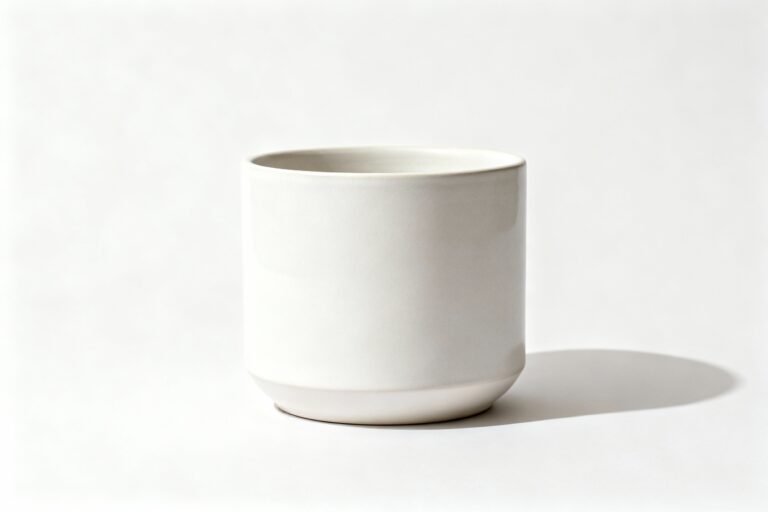
- Matte ceramic in neutral tones: Chic and timeless.
Matches almost any decor.
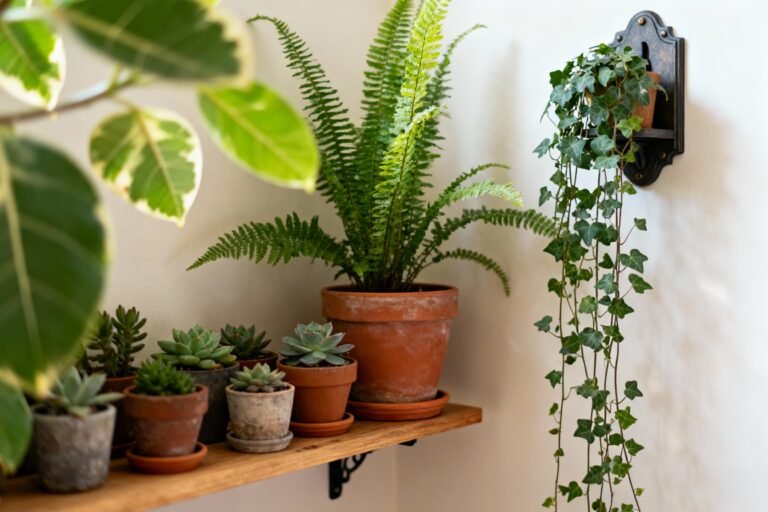
- Terracotta: Breathable and earthy. Great if you tend to overwater.
- Elevate with a stand: Lifts the plant, creates good visual lines, and helps the leaves drape.
Support Structures (So It Doesn’t Faceplant)
Monsteras are natural climbers. Give them something to grab and they’ll reward you with larger leaves and more splits.
- Moss pole: Classic.
Mist it occasionally so aerial roots adhere.
- Coco coir pole: Lower maintenance than moss, still grippy.
- Trellis: Geometric metal trellises look artsy and keep stems tidy.
Creating a Monstera-Centric Aesthetic
You can build a whole room around a single plant, IMO. Here’s how to lean into the look without overdoing it.
Color Palette
- Neutrals + green: White, beige, taupe, and wood tones let the leaves pop.
- Black accents: Frames, lamps, or stands add a sleek contrast to those glossy greens.
- Metallic hints: Brass or matte gold keeps it warm and modern.
Textures That Play Nice
- Linen and cotton: Airy textures keep the space fresh.
- Natural fibers: Jute rugs and rattan chairs bring in that tropical undertone without shouting it.
- Smooth finishes: Glazed pots and glass tables echo the leaf sheen.
Pairing Plants Without Chaos
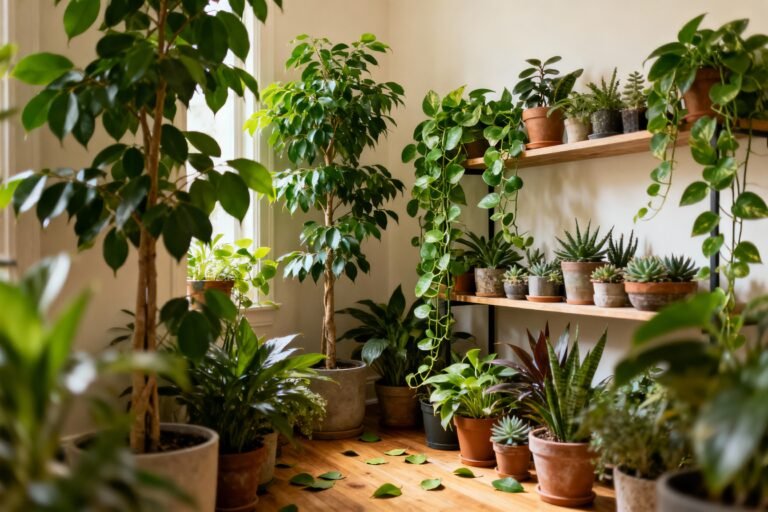
- Fiddle leaf fig or rubber plant: Big-leaf friends keep the scale consistent.
- Pothos or philodendron: Trails soften edges and fill shelves.
- One statement, several supporting players: Keep one Monstera as the main event.
Care That Keeps the Aesthetic Alive
A sad Monstera kills the vibe fast. Keep it thriving with simple habits.
Light, Water, Humidity
- Light: Bright, indirect is ideal.
A few hours of gentle morning sun? Perfect.
- Water: Water when the top 2 inches feel dry. If leaves droop, it’s often a thirst signal.
- Humidity: Aim for 50–60%.
A pebble tray or nearby humidifier helps, especially in winter.
Soil, Potting, Feeding
- Soil: A chunky aroid mix—potting soil + perlite + orchid bark. Good drainage = happy roots.
- Pot: A pot with drainage holes. No compromise here.
- Fertilizer: Feed monthly in spring and summer with a balanced liquid diluted by half.
Pruning for Shape
- Remove awkward stems: Cut back leggy growth to encourage fuller leaves.
- Clean leaves: Wipe dust monthly.
Shiny leaves = better photosynthesis and prettier selfies.
- Train upward: Tie stems loosely to your pole so they climb and produce bigger leaves.
Monstera Everywhere: Prints, Art, and Accessories
Want the vibe without another plant? Mix in some Monstera-inspired decor.
- Wall art: Line drawings or watercolor prints feel modern and soft.
- Pillows and throws: Choose subtle patterns—avoid the full jungle explosion.
- Tableware: Leaf-shaped trays or coasters add a tiny wink without kitsch (unless kitsch is your thing).
Photo Styling Tips
- Frame the leaf: Shoot from below for dramatic splits.
- Backlighting: Place the plant near a window and shoot toward the light for that glow.
- Include negative space: Let the leaf breathe in your composition.
Common Aesthetic Pitfalls (And Easy Fixes)
We all make choices. Some of them… we undo.
- Overcrowding: If you can’t see the floor, pull back.
Give your Monstera space to read as a statement.
- Too much pattern: Pair bold leaves with simpler textiles. Let the plant be the print.
- Ignoring scale: A huge Monstera needs a larger pot and stand; tiny plant, smaller vignette. Keep proportions balanced.
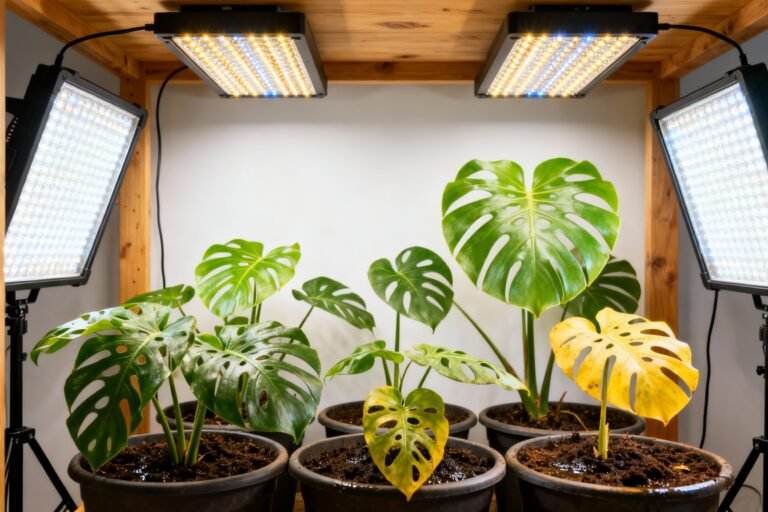
- Sad lighting: Yellow leaves or no splits?
Move it closer to bright light (not direct midday scorch).
FAQ
Why doesn’t my Monstera have splits yet?
Young plants start with solid leaves. Splits appear as the plant matures and receives enough light, support, and time. Give it bright, indirect light and a pole to climb.
Patience pays off—newer leaves usually show more fenestrations.
Can I keep a Monstera in a low-light room?
It’ll survive, but it won’t thrive. Expect slower growth and fewer splits. If low light is your reality, supplement with a full-spectrum grow light and keep it on for 8–10 hours.
How big will it get indoors?
Pretty big.
A happy Monstera deliciosa can hit 6–8 feet with leaves the size of dinner platters. Control the size with pruning and by limiting how much you upsize the pot. IMO, a medium-large plant looks the most balanced in most homes.
Is variegated Monstera harder to care for?
A bit.
The white parts can’t photosynthesize, so the plant needs more light and slightly gentler treatment. Avoid direct midday sun to prevent burn. It grows slower and costs more, but the look?
Chef’s kiss.
What’s the best way to propagate for a fuller look?
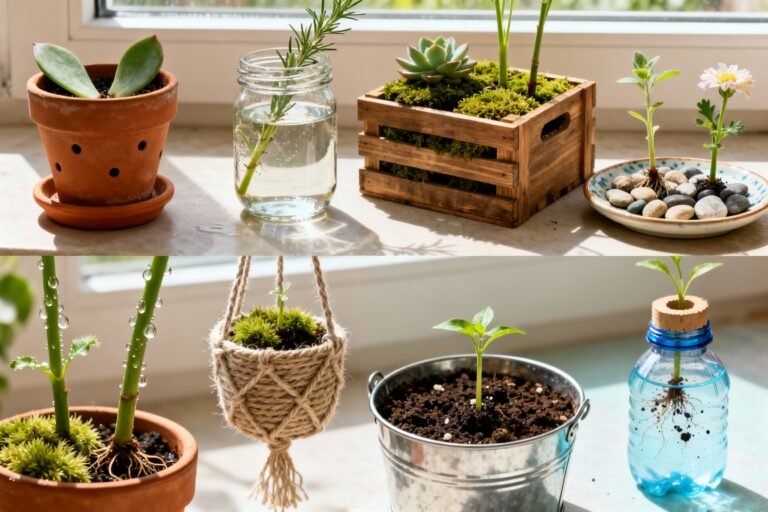
Take a cutting with at least one node (that bump on the stem). Root it in water or a moist, airy mix, then plant it back in the same pot to create a bushier vibe. It’s easy, fun, and yes—you’re basically cloning your favorite leaf.
Why are my leaves drooping?
Usually it’s thirst.
Check the soil depth with your finger. If it’s dry 2 inches down, water thoroughly. If the soil stays wet too long, aerate the mix and ensure that pot drains.
Also check for cold drafts—Monsteras hate them.
Conclusion
The Monstera plant aesthetic hits that sweet spot: bold, sculptural, and surprisingly low-stress. Give it bright light, a supportive pole, and a little space to shine, and it’ll make your room look curated without trying too hard. You get nature’s best design language—curves, shadows, and texture—with minimal fuss.
FYI: once you bring one home, you’ll probably want another.