7 Facts About Monstera Siltepecana That Every Plant Lover Should Know
Monstera siltepecana doesn’t scream for attention—until you notice those silver streaks and delicate leaves climbing up your bookshelf like it owns the place. It’s underrated, ridiculously pretty, and surprisingly easy to keep happy. If you love monsteras but want something a little more mysterious than the usual fenestrated star, this one’s your plant.
Let’s get into the good stuff—seven facts you’ll want to keep in your back pocket.
1) It’s a Monstera… but not the fenestrated kind (at first)
Monstera siltepecana starts life with small, lance-shaped leaves that show off dramatic silver veining. It looks almost like a completely different genus in its juvenile stage. That throws a lot of people off—no splits, no holes, just silver glam. Here’s the twist: as it climbs and matures, the leaves grow larger and can develop fenestrations.
You won’t see those classic Monstera “windows” on a tiny tabletop plant. Give it a tall support and time, and it will glow up.
Juvenile vs. mature leaves
- Juvenile: small, narrow leaves with strong silver patterns; no fenestrations.
- Mature: bigger, greener leaves; reduced silver; fenestrations possible with proper support.
- Trigger: consistent vertical climbing and brighter (indirect) light accelerate maturity.
2) It’s a natural climber that wants a vertical stage
You can grow it trailing and it’ll look cute, but you’ll hold it back. This plant evolved to climb trees in tropical forests, so it really wants to go up. Best supports:
- Moss pole: offers moisture and something to root into—great for faster leaf size increase.
- Coco pole: easier maintenance; still encourages larger leaves.
- Trellis or plank: sleek look, especially a wood plank you can mist for humidity.
Pro tip: help it attach
Use soft plant ties or clips to secure stems to the pole while aerial roots grab on.
Once it anchors, you’ll see growth speed up. Unreal, right?
3) Light and water needs: chilled but not lazy
You don’t need a greenhouse. You do need consistency.
Think bright, indirect light—not harsh sun that fries those delicate leaves. Light cheat sheet:
- Ideal: Bright, filtered light near an east or north window.
- Okay: A few hours of gentle morning sun.
- Avoid: Direct midday sun; it scorches and fades the silver.
Watering basics:
- Water when the top 1–2 inches of soil feel dry.
- Keep it slightly moist but never soggy; it hates wet feet.
- Use a pot with drainage. Yes, always.
Humidity and temperature
- Humidity: 50–70% keeps leaves lush; it handles normal homes but loves a boost.
- Temperature: 65–80°F (18–27°C). No drafts, please.
It sulks below 55°F.
4) The soil mix matters more than you think
Monstera siltepecana thrives in an airy, chunky mix that drains fast but holds some moisture. Regular potting soil alone compacts and suffocates roots. Easy DIY mix (IMO the sweet spot):
- 40% high-quality potting soil
- 30% perlite or pumice
- 20% orchid bark
- 10% coco coir or peat moss
Add a handful of horticultural charcoal if you have it. It helps with odor and keeps the mix fresher.
Not mandatory, just bougie.
Fertilizer rhythm
Feed lightly every 4–6 weeks during spring and summer with a balanced, diluted liquid fertilizer. Skip heavy feeding in winter. You want steady growth, not a sprint that ends in leggy stems.
5) Propagation: easy, fast, and kind of addictive
This plant propagates like a champ.
You just need a node (the bump where leaves and aerial roots grow). No node, no new plant—FYI. Step-by-step:
- Snip a vine just below a node with a clean tool.
- Remove the lower leaf to expose the node.
- Root in water, moss, or a perlite mix. Keep warm and humid.
- Transplant once roots hit 2–3 inches.
Water rooting looks fun in a jar, but moss or perlite give stronger, faster roots in my experience.
Root rot rarely happens if you keep the medium airy.
6) Pests and problems: what to watch for
Most of the time, Monstera siltepecana behaves. But like any houseplant, it invites drama if you ignore it. Common issues:
- Yellowing leaves: Overwatering or poor drainage. Check roots and adjust your schedule.
- Crispy edges: Low humidity or underwatering.
Mist lightly or use a humidifier.
- Faded silver: Too much sun or not enough light. Yes, both can dull the look—find that bright-indirect sweet spot.
Pests you might meet:
- Spider mites: Love low humidity. Look for stippling; treat with a shower + neem or insecticidal soap.
- Mealybugs: Cottony clusters on nodes; dab with alcohol and follow up weekly.
- Thrips: Silvery streaks and distorted leaves; sticky traps and systemic treatments help.
Preventative care
Dust leaves monthly so they photosynthesize like champs.
Inspect new plants before they move in—quarantine for two weeks if you can resist the urge to show them off immediately.
7) It’s beginner-friendly but collectors still obsess over it
This plant sits in that rare sweet spot: low-maintenance, visually unique, and genuinely rewarding over time. You can grow it as a delicate trailing plant or train it into a statement climber. Two looks, one plant—bargain. Why collectors care:
- Silver variegation in juvenile leaves looks luxe without the “mortgage payment” price tag.
- Mature fenestrations make it feel like a transformation project.
- Pairs beautifully with other aroids—hello, textured jungle vibe.
Styling ideas
- Let it cascade from a shelf for a soft, waterfall effect.
- Grow it on a tall moss pole to push maturity and leaf size.
- Mount on a wooden plank for that minimalist, botanical-nerd aesthetic.
IMO, chef’s kiss.
FAQs
Is Monstera siltepecana toxic to pets?
Yes. Like other aroids, it contains calcium oxalate crystals that can irritate mouths and stomachs if ingested. Keep it out of reach of curious pets and kids, and call your vet if your pet chews on it.
How fast does it grow?
In good light with a support, it grows moderately fast—expect several new leaves during the growing season.
Trailing without support slows it down and keeps leaves smaller. Give it a pole if you want that glow-up.
Why are my leaves losing their silver?
Two main reasons: too much direct sun or a plant transitioning toward maturity. Juvenile leaves show the most silver; as the plant matures, the pattern can soften.
Move it to bright, indirect light and keep it climbing to balance color and growth.
Can I keep it in low light?
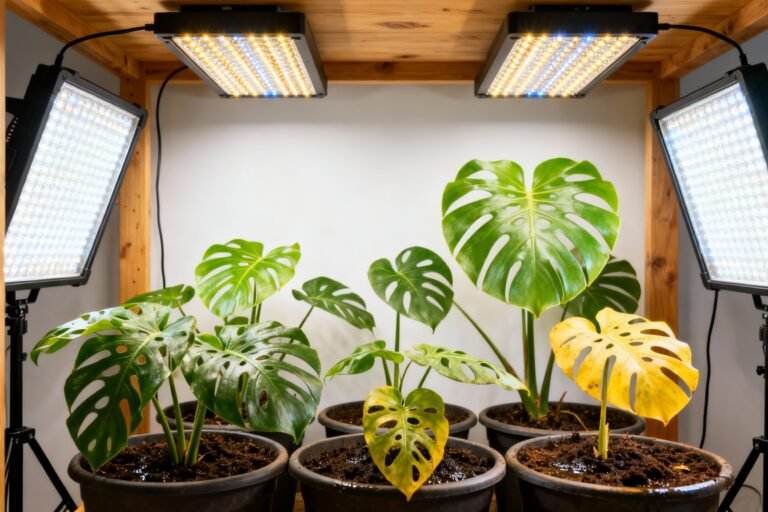
It will survive, but it won’t thrive. You’ll see slower growth, smaller leaves, and less contrast. A grow light fixes this easily—place it 12–18 inches above for 8–10 hours daily.
What’s the best pot: plastic, ceramic, or terracotta?
All three work if they drain well.
Terracotta breathes and helps prevent overwatering, which suits beginners. Plastic holds moisture longer—great for dry homes. Ceramic looks fancy; just make sure it has a drainage hole.
Non-negotiable.
When should I repot?
Repot every 12–18 months or when roots circle the pot and water runs straight through. Go up 1–2 inches in diameter to avoid waterlogged soil. Refreshing the mix often does more for the plant than jumping several pot sizes.
Conclusion
Monstera siltepecana gives you the best of both worlds: a stunning juvenile plant with silver drama and a climber that matures into a more classic Monstera look.
Keep the light bright and indirect, offer a good pole, and water with a little common sense. Do that, and you’ll own a plant that looks rare, behaves nicely, and makes your collection feel just a bit more curated—FYI, that’s a win.