Low-Maintenance Pond Landscaping Ideas for a Beautiful Garden
You could throw a bench and a birdbath in your yard and call it a day. Or you could go bolder and build a pond that turns heads, steals attention, and becomes the heartbeat of your outdoor space. Ponds add movement, sound, and a tiny slice of wildness that regular landscaping can’t touch.
Ready to turn a patch of grass into a living, breathing water world?
Start With the Vision (Not the Shovel)
Before you dig, picture the vibe. Do you want a Zen retreat with smooth stones and maples? A rustic hideaway buzzing with dragonflies?
Or a mini-ecosystem with fish, lilies, and gentle waterfalls? Ask yourself:
- How will you use the space? Coffee spot, wildlife viewing, kid play area, or moonlit hangout?
- What’s your maintenance appetite? Be honest. Some ponds are low effort.
Some are a hobby.
- What’s your budget? Liners, pumps, and rock costs add up. It’s better to plan than regret.
Pro tip: Location matters
Place the pond where you can see it from inside. A pond you can admire from the kitchen wins every time.
Also, avoid placing it under big trees unless you love scooping leaves for sport.
Design Basics That Make or Break It
You can build a “hole with water,” or you can build a pond that looks like nature sneezed perfection onto your yard. Big difference.
- Shape and edges: Curves feel natural; straight lines feel formal. Mix boulders, gravel, and planting shelves for depth and texture.
- Depth: Aim for 18–24 inches minimum.
Go 30–36 inches if you want fish to overwinter in cold climates.
- Circulation: Moving water looks better and keeps things healthy. A pump and a waterfall or spout go a long way.
- Sunlight: 4–6 hours of sun keeps plants happy but doesn’t supercharge algae. Partial shade is your friend.
- Access: Add a shallow beach or stepping stones.
Wildlife and kids will use it. You will too.
Natural vs. Formal
– Natural ponds use irregular shapes, mixed stone sizes, and layered plantings.
Think “found in the woods.” – Formal ponds use straight edges, clean geometry, and maybe a statue spout. Think “courtyard chic.” IMO, natural ponds hide flaws better and age gracefully. Formal ponds look stunning when immaculate but show every leaf and ripple.
Choose your adventure.
The Hardware: Liner, Pump, Filtration (aka The Boring Stuff That Matters)
You don’t see it, but it keeps your pond from turning into a sad puddle.
- Pond liner: EPDM rubber liner (45 mil) lasts and flexes well. Underlayment fabric protects it from punctures. Avoid cheap plastic sheets unless you enjoy leaks.
- Pump: Size it for your feature.
As a rule, turn over the pond’s volume at least once per hour. Tweak flow with a valve instead of picking a tiny pump that struggles.
- Filtration: Combine mechanical (catches gunk) and biological (friendly bacteria eat nutrients). A skimmer plus a biofalls box is a classic combo.
- Overflow and top-up: Add an overflow path for storms and a way to refill easily.
Hose bib nearby = less hassle.
Water Quality Essentials
– Aeration: Waterfalls help, but an air pump and diffuser keep oxygen high (especially in summer). – Beneficial bacteria: Monthly treatments feed the biofilter. FYI, it’s the cheapest “clarity upgrade.” – Algae control: Shade the surface with plants, keep nutrients in check, and don’t overfeed fish.
Planting Like a Pro: Layers, Color, and Seasonal Interest
Plants turn water into habitat. They clean the pond, shade it, and make it look like it belongs there.
Water Plants (in and around)
- Floaters: Water lettuce, water hyacinth (check local regulations).
They gulp nutrients and shade the surface.
- Marginals: Pickerel rush, iris, cattails (dwarf types), marsh marigold. Plant on shelves 6–12 inches deep.
- Submerged oxygenators: Hornwort, anacharis. They boost oxygen and help clarity.
- Lilies: Hardy water lilies bring big color and wide shade leaves.
Total show-offs.
Shoreline and Surroundings
Use a mix for year-round interest:
- Grasses: Carex, miscanthus, and Japanese forest grass add movement.
- Shrubs: Dwarf dogwood, spirea, inkberry, or dwarf conifers for structure.
- Perennials: Astilbe, hosta, heuchera for texture and color.
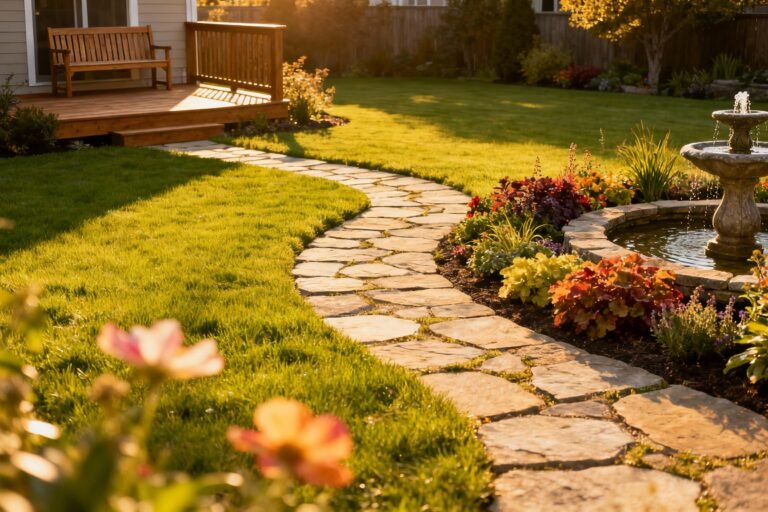
- Rocks and gravel: Create a “soft edge” where land blends into water.
Fish, Frogs, and the Rest of the Cast
Want fish? Great. Want frogs?
They’ll show up whether you invite them or not.
- Goldfish and shubunkins: Hardy, colorful, lower maintenance than koi.
- Koi: Gorgeous but big. They need more depth, stronger filtration, and secure edges (they dig).
- Stocking: Start light. Add slowly so your biofilter keeps up.
- Predator control: Herons love buffets.
Use deeper spots, plant cover, netting, or a decoy. Yes, the decoy sometimes works. Sometimes.
Wildlife-Friendly Features
– Add a shallow beach or flat stones at the edge for birds and butterflies. – Use native plants to attract dragonflies and pollinators. – Keep a no-chemical zone.
Your pond will thank you, and so will the frogs.
Maintenance Without Losing Your Weekend
You can keep it easy if you set it up right. Seriously.
- Weekly: Skim leaves, check pump, top up water. Five to ten minutes, tops.
- Monthly: Rinse filter pads, add beneficial bacteria, trim plants.
- Seasonal: Spring clean-out if needed, thin lilies, install netting in fall, remove pump in freezing climates.
- Algae reality check: Some green is normal.
If you see pea soup, reduce feeding, add shade plants, and check your filter flow.
Winter and Summer Tips
– Cold climates: Leave a hole in the ice for gas exchange with a de-icer or air pump. Don’t smash ice (shock wave = bad for fish). – Hot climates: Add shade sails, increase aeration, and top up more often.
Style Moves: Waterfalls, Lights, and Seating
Let’s dress it up. These touches turn a nice pond into a “wow, I live here” pond.
- Waterfall or stream: Even a small cascade adds sound and oxygen.
Hide the source with rocks and plants.
- Spillways and scuppers: Great for a modern look with clean lines.
- Lighting: Submersible LEDs make lilies glow at night. Path lights and uplights around trees create layers.
- Seating: Put a bench where you can hear the water and catch morning sun. This is your coffee throne now.
Budget-Friendly Enhancements
– Use mixed gravel and a few hero boulders for impact. – Choose solar lights for quick ambiance. – Start small with a preformed liner and upgrade later.
FYI, many folks go bigger after year one—pond fever is real.
Common Mistakes (So You Don’t Make Them)
- Too shallow: Shallow = green, hot, and winter risk. Go deeper.
- No skimmer or prefilter: Leaves will clog your pump. Ask me how I know.
- Overstocking fish: More fish = more waste.
Keep it balanced.
- Planting gap: Not enough plants means algae party. Fill those shelves.
- Ignoring overflow: Heavy rain needs an exit path that won’t erode your yard.
FAQ
How big should my pond be?
Start with at least 6×8 feet and 18–24 inches deep for stability. Bigger water bodies swing less in temperature and chemistry, which makes life easier.
If you’re debating size, go one size up. You won’t regret it, IMO.
Do I need a filter if I have plants?
Plants help a lot, but you still want filtration for clarity and fish health. A skimmer catches leaves, and a biofilter handles ammonia and nitrites.
Plants + filtration = stable, clear water.
Can I build a pond myself?
Absolutely. Many DIYers handle small to medium ponds over a few weekends. Use a quality liner, underlayment, and a pump/filter kit.
If you want big waterfalls, complex stonework, or a koi palace, consider a pro.
How do I control algae without chemicals?
Shade the surface with lilies and floaters, keep fish feeding minimal, and clean filters regularly. Add beneficial bacteria and run strong circulation. Over time, a balanced pond starves algae of nutrients—no magic potion required.
Will a pond attract mosquitoes?
Not if the water moves and you add fish or mosquito dunks (safe for wildlife).
Mosquitoes prefer stagnant puddles. A circulating pond with predators is basically a mosquito no-go zone.
What’s the best time to build?
Spring and early fall offer mild temps and less plant stress. You can build anytime the ground isn’t frozen, but working in blazing summer heat is… a choice.
FYI, plants establish faster when it’s not scorching.
Conclusion
A pond changes your yard’s vibe instantly. It draws you outside, invites wildlife, and gives you a front-row seat to nature doing its thing. Plan the basics, pick the right plants, move the water, and keep maintenance simple.
Do that, and you won’t just own a pond—you’ll own your new favorite place to be.