The Ultimate Guide to Pot Plants: Types, Care, and Styling Tips
If you’ve ever bought a plant, stuck it in a cute pot, and expected instant interior magic… same. A “pot plant” sounds simple—plant + pot = vibes. But there’s a little more to it if you want your greenery to thrive and not just decor-fade behind your sofa.
Let’s walk through what actually matters so your plants stay alive, look great, and make you feel like a plant whisperer (without the drama).
Pot Plant 101: What We Actually Mean
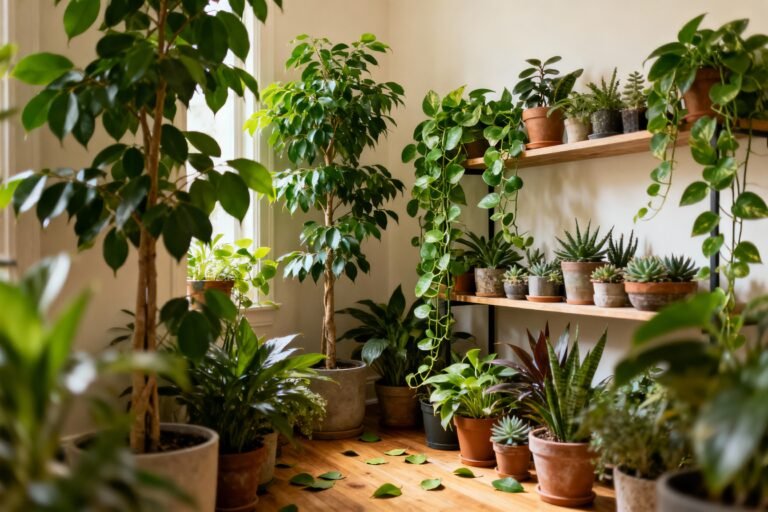
A pot plant is any plant you grow in a container instead of the ground. That’s it. But the pot and the plant form a team.
Choose the wrong pot, and the plant sulks. Pick the wrong plant for your light, and you’re watering a ghost. The goal: pick a plant that fits your space, pair it with the right container and soil, and give it a routine that suits its needs. Easy?
Kind of. Doable? Absolutely.
Choosing the Right Plant for Your Space
Before you buy anything, check your home’s light.
Not your hopes—your actual light.
- Bright, direct light: South- or west-facing windows. Great for succulents, cacti, rosemary, citrus, bird of paradise.
- Bright, indirect light: Near windows but not blasted by sun. Monstera, pothos, rubber plant, peace lily.
- Low light: Hallways, bathrooms, shaded corners.
Snake plant, ZZ plant, philodendron.
Also, be honest about your habits. Forgetful waterers? ZZ plant, snake plant, cacti. Chronic over-waterers?
Try peace lily, ferns, calathea (they’ll forgive you… mostly).
Match Size With Ambition
Small pots dry fast but fit shelves. Big pots hold moisture longer but need more soil and stability. New to plants?
Start medium—6 to 10 inches. Not too needy, not too heavy. Goldilocks approved.
Pots: The Container Glow-Up
You can’t talk pot plants without… pots.
They’re not just cups for greenery—they determine drainage, airflow, and whether your plant throws a tantrum.
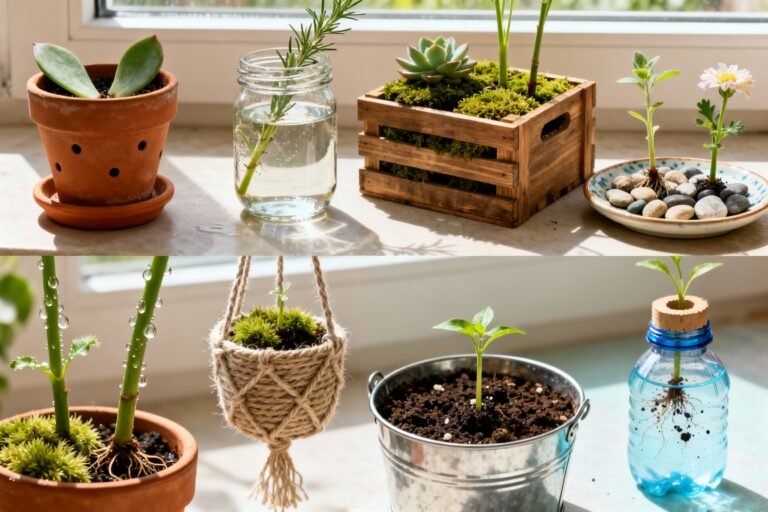
- Drainage holes = non-negotiable. No hole? Use it as a cachepot and keep the plant in a plastic nursery pot inside.
- Terracotta: Breathable, wicks moisture, great for plants that hate wet feet. But dries fast.
Water more often.
- Ceramic (glazed): Holds moisture longer, looks sleek. Heavy = stable for tall plants.
- Plastic: Lightweight and cheap. Retains moisture.
Perfect for shelves or hanging setups.
Size tip: Repot up only 1–2 inches wider than the current pot. Huge pot = excess wet soil = root rot. Don’t do that to your plant.
It will remember.
Drainage Hacks (If You Must)
No hole and determined to use it anyway? Place an inch of LECA or pebbles at the bottom, keep the plant in a nursery pot, and empty excess water. FYI, the “pebble drainage layer” doesn’t magically fix overwatering, but it helps you avoid water pooling at the roots.
Soil: The Secret Sauce
Soil mixes matter more than people think.
Garden soil compacts in pots and suffocates roots. Use a potting mix designed for containers.
- All-purpose mix: For most foliage plants. Add perlite for extra drainage.
- Semi-arid/succulents: Gritty mix with sand, perlite, and cactus soil.
Fast-draining or bust.
- Aroids (monstera, pothos): Chunky mix—regular potting soil + orchid bark + perlite. Roots like air.
- Ferns/calatheas: Moisture-retentive mix with coco coir and a bit of compost. Don’t let it turn swampy.
IMO: a $5 bag of perlite and a handful of orchid bark make you look like a pro.
Because you are one now. Sort of.
Watering: The Fastest Way to Win or Lose
Overwatering kills more pot plants than anything else. Don’t water on a schedule; water when the plant needs it.
Radical concept, I know.
- Check the top inch: Dry? Water. Still damp?
Wait.
- Water deeply: Saturate the soil until water drains out the bottom. Then let it drip before putting it back.
- Adjust with seasons: Plants drink more in spring/summer, less in fall/winter.
Signs You’re Over/Underwatering
- Overwatered: Yellow leaves, soggy soil, fungus gnats, mushy stems. Smells… not fresh.
- Underwatered: Crispy edges, soil pulling from sides, plant looks floppy but perks up after watering.
Pro move: Lift the pot.
Learn how light/dry feels versus heavy/wet. Your hands won’t lie.
Light, Temperature, and Humidity: The Vibe Check
Houseplants evolved somewhere. Try to mimic that.
Not perfectly. Just… close-ish.
- Light: Most foliage plants love bright, indirect light. Direct sun can scorch soft leaves.
Rotate the pot every couple of weeks for even growth.
- Temperature: 65–80°F is the sweet spot. Keep plants away from AC blasts, heaters, and drafty doors.
- Humidity: Tropical plants love 50%+. Bathrooms and kitchens usually help.
Pebble trays work a bit. Humidifiers work a lot.
Grow Lights: When Your Window Isn’t Enough
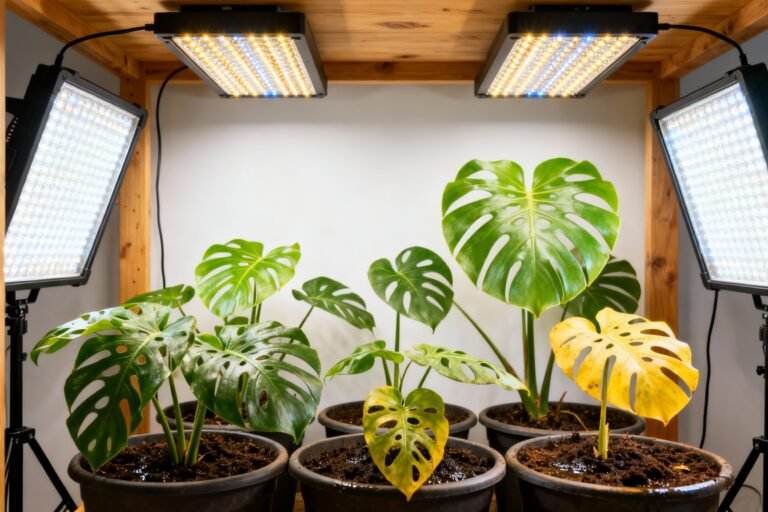
Got cave vibes? Use LED grow lights.
Aim for 12–14 hours daily, hung 12–24 inches above the plant. Choose full-spectrum lights and set a timer so you don’t forget. Your plant won’t judge your window situation.
Promise.
Feeding, Repotting, and Style (Yes, Style)
Plants eat, but not like teenagers. Light drives growth; fertilizer supports it.
- Fertilizer: Use a balanced liquid fertilizer at half strength every 4–6 weeks during spring/summer. Less in winter.
- Repotting: Repot every 1–2 years or when roots circle the pot, soil drains poorly, or growth slows.
Go up one pot size.
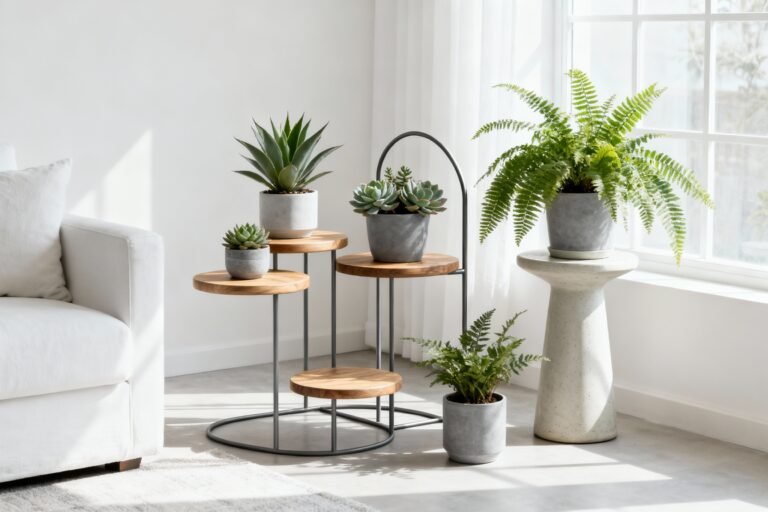
- Styling: Group plants by care, not just looks. Cluster moisture lovers, give trailing plants shelves, and use plant stands for height layers.
Clean Leaves = Better Photosynthesis
Dust blocks light. Wipe leaves every month with a damp cloth.
Skip the mayonnaise leaf-shine trick (I can’t believe I have to say that). Use a simple water + drop of dish soap solution if they’re grimy.
Common Problems (And How to Fix Them Without Meltdown)
You’ll hit bumps. You’ve got this.
- Root rot: Smelly soil, mushy roots.
Trim rot, repot in fresh mix, reduce watering, increase light. Cross fingers.
- Fungus gnats: Annoying flies from soggy soil. Let soil dry more, bottom-water, use yellow sticky traps, add a top layer of sand or use mosquito bits.
- Leggy growth: Plant stretches for light.
Move closer to a window or add a grow light. Prune to encourage bushiness.
- Brown tips: Could be low humidity, underwatering, or mineral buildup. Trim tips, increase humidity, and flush soil monthly.
- Leaves dropping: Normal when acclimating.
Check light, drafts, and watering. Don’t panic-prune.
Pests: Uninvited Guests
Spider mites, mealybugs, aphids—classic freeloaders. Quarantine new plants, inspect leaves weekly, and treat early with insecticidal soap or neem oil.
Repeat weekly until gone. Persistence beats perfection, IMO.
FAQ
Is a “pot plant” the same as a “potted plant”?
Yes—same idea: a plant grown in a container. Some regions use “pot plant,” others “potted plant.” Context matters, but the care tips stay the same.
How do I know when to repot?
If roots circle the pot, water runs straight through, the plant dries out fast, or growth stalls despite good light, it’s time.
Choose a pot 1–2 inches wider and refresh the soil. Spring is ideal.
Do I need drainage holes?
Strong yes. Drainage holes prevent water from stagnating at the bottom and causing root rot.
If your decorative pot has no hole, keep the plant in a plastic nursery pot and drop it inside as a liner.
What’s the easiest pot plant for beginners?
Snake plant, ZZ plant, pothos, or philodendron. They handle low-ish light and tolerate missed waterings without writing an angry Yelp review. Add a monstera when you feel braver.
Why are my plant’s leaves turning yellow?
Usually overwatering or low light.
Check the soil moisture, improve drainage, and move the plant to brighter indirect light. Old leaves yellow and drop naturally too—if new growth looks healthy, don’t spiral.
Can I use tap water?
Often yes. If your plant gets brown tips and you have hard or heavily chlorinated water, let it sit out overnight or use filtered water.
Calatheas and some ferns act extra sensitive—treat them like the divas they are.
Conclusion
A thriving pot plant doesn’t require a greenhouse, a PhD, or witchcraft. Just give it the right light, a pot with drainage, a suitable soil mix, and thoughtful watering. Tweak as you go, learn your plant’s quirks, and enjoy the tiny wins (new leaf day deserves a celebration, FYI).
Keep it simple, stay curious, and your plants will return the favor with fresh growth and seriously good vibes.