Simple Front Yard Landscaping Ideas to Boost Curb Appeal
You don’t need a ride-on mower or a landscape architect to make your front yard look amazing. You need a plan, a few weekend projects, and a healthy respect for mulch. The goal: clean, welcoming, low-maintenance, and not boring.
Ready to turn your yard from “meh” to “oh hey, that’s nice”?
Start With the Bones: Edging and Shape
Clean edges instantly make your yard look intentional. Sharp lines signal “I care” without screaming “I spend every weekend gardening.”
- Define your beds with steel, aluminum, or paver edging. Steel looks sleek, bends easily, and stays put.
- Curves > chaos. Gentle swoops feel natural and guide the eye.
Avoid weird wiggles that look accidental.
- Right-size the beds. A 2–4 foot depth along walkways gives enough room for layers without swallowing your lawn.
Pro tip: Use a hose as a guide
Lay out a garden hose to test curves before you commit. Tweak until it feels balanced from the street and the front door. Then cut a crisp edge with a flat spade.
Instant upgrade.
Plant Smarter, Not Harder
You don’t need botanical fireworks. You need reliable, repeatable plants that don’t throw tantrums if you skip a watering. Think in layers.
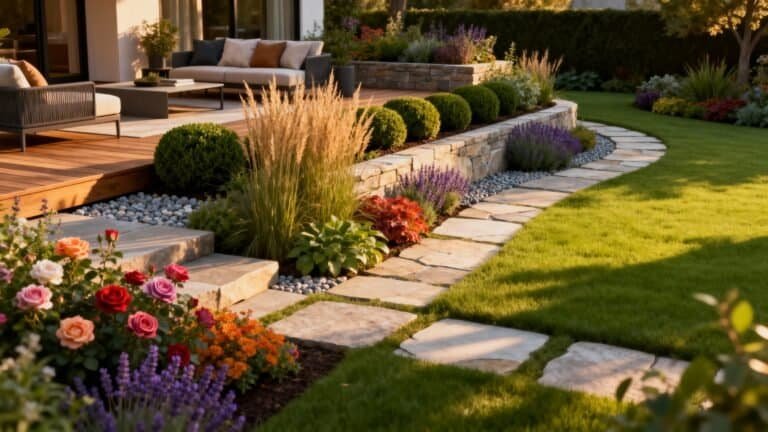
- Back layer (structure): Small shrubs like boxwood, dwarf holly, spirea, or lavender cotton.
They hold shape all year.
- Middle layer (color and texture): Perennials like salvia, coneflower, heuchera, daylilies, or catmint. They bloom, they chill, they come back.
- Front layer (edges): Groundcovers like creeping thyme, ajuga, or mondo grass. They soften borders and stop weeds.
Match plants to your sun
– Full sun (6+ hours): Salvia, roses, Russian sage, yarrow – Part sun (3–6 hours): Heuchera, hydrangea (panicle), daylily – Shade (under trees/porches): Hosta, ferns, hellebore, astilbe If a plant tag says “full sun” and your porch gets 2 hours?
Hard pass, friend.
Repeat for rhythm
Plant in groups of 3–5 and repeat those groups down the bed. Your yard will look designed, not random. IMO, repetition is the difference between “neat” and “chef’s kiss.”
Mulch: The Lazy Gardener’s Secret Weapon
Mulch makes everything look finished and keeps weeds in check.
Use it generously, but not sloppily.
- Depth: 2–3 inches. More suffocates plants and invites pests. Less won’t block weeds.
- Type: Shredded hardwood or pine bark for most yards.
Skip dyed mulch against white siding unless you enjoy stains.
- Mulch doughnuts: Keep mulch a few inches away from trunks and stems. Volcano mulching? Nope.
Pathways and Entry: Guide the Eye (and Feet)
Your front path does heavy lifting.
Even minor tweaks make a huge difference.
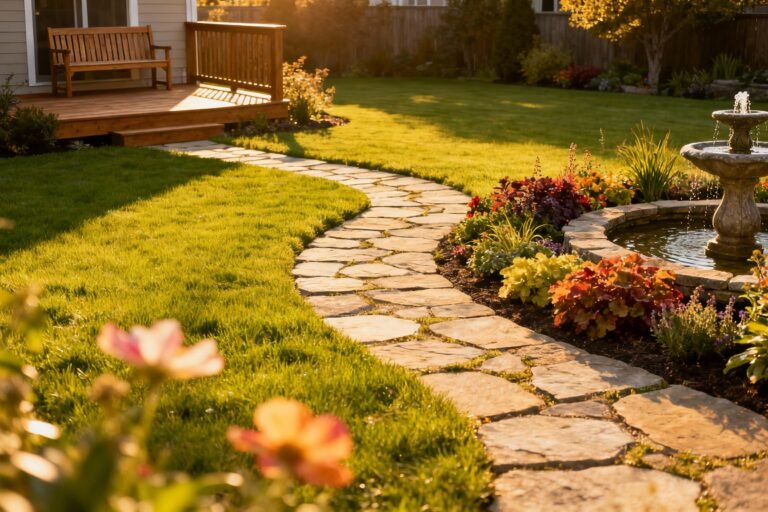
- Widen narrow paths with planting bands or pavers. A 3-foot walk feels stingy; 4–5 feet feels inviting.
- Flank the entry with two medium shrubs or large containers. Symmetry near the door looks classic and tidy.
- Upgrade your house numbers and mailbox. Tiny changes boost curb appeal faster than a new lawn.
Container combo that never fails
– Thriller: Upright grass or dwarf evergreen – Filler: Heuchera or petunias – Spiller: Creeping jenny or sweet potato vine Change seasonally.
FYI, containers bail you out when your beds need time to mature.
Low-Maintenance Lawn Hacks
You don’t need a golf course out front. You need “clean, green, and not patchy.”
- Right grass, right place: Fescue for cooler climates, Bermuda/Zoysia for warm zones. Talk to a local nursery, not the internet (yes, the irony).
- Mow high: 3–4 inches shades out weeds and reduces watering.
- Edge along sidewalks every couple weeks.
Crisp edges make even an average lawn look great.
- Overseed thin spots in fall (cool season) or late spring (warm season). Fast facelift.
Lighting: Small Price, Big Payoff
A few low-voltage or solar lights transform your front yard at night. Also: you’ll stop tripping over the last step.
- Path lights every 6–8 feet, staggered.
Avoid the “runway” look.
- Uplights on one or two focal points, like a tree or the house number wall.
- Warm white (2700–3000K) keeps it cozy and not like a parking lot.
Color and Texture: Keep It Simple
Pick a palette and stick to it so your yard reads “intentional” from the street.
- Two to three bloom colors plus green. Example: purple, white, soft pink. Done.
- Mix leaf shapes (spikes, mounds, frills) for interest even when nothing blooms.
- Evergreens anchor the look year-round.
Add at least one per bed.
Seasonal interest, no drama
– Spring: Tulips, daffodils, hellebore – Summer: Coneflower, daylily, catmint – Fall: Sedum ‘Autumn Joy,’ asters, ornamental grasses – Winter: Boxwood, holly, colorful bark dogwoods Plant a few of each so something always shows off.
Budget-Friendly Wins
You can stretch your dollars without stretching your patience.
- Start with structure: Edge, mulch, and a couple shrubs. Add perennials over time.
- Buy small plants. 1-gallon shrubs and 4-inch perennials catch up fast and cost half.
- Divide perennials. Many double in a year. Free plants?
Yes please.
- Use stone or brick you already have for accents or small borders.
Quick Weekend Project Ideas
– Add a simple crushed gravel strip between driveway and lawn for clean lines. – Build a low bed around your mailbox with a dwarf shrub, perennial, and groundcover. – Swap tired plants by the door for two matching containers. – Install a 3-stone step-out from the sidewalk into your main bed for easy access. – Refresh all mulch and edge lines. Honestly, it’s the fastest glow-up.
FAQ
How do I plan a simple front yard without overthinking it?
Sketch your walkway, porch, and beds. Mark sun and shade zones.
Pick 3–5 plants that fit your light and repeat them in groups. Add edging, mulch, and one focal point by the door. If you hesitate, simplify.
Fewer plants, bigger groups.
What’s the easiest way to keep weeds under control?
Edge hard, mulch 2–3 inches, and plant densely. Fill gaps with groundcovers. Spot-weed weekly for 10 minutes before they set seed.
It’s the flossing of landscaping—tiny effort, huge payoff.
How much should I water new plants?
Water deeply 2–3 times per week for the first month, then taper. Aim for the root zone: slow soak, not a quick sprinkle. After plants establish (about one season), water only during dry spells.
Overwatering drowns more plants than drought does, IMO.
Can I mix native and non-native plants?
Absolutely. Use a backbone of regionally native shrubs/perennials for wildlife support, then mix in well-behaved ornamentals for color or structure. Avoid invasives.
Local extension offices publish solid native plant lists—gold mines, FYI.
What if my yard is tiny?
Go bold and simple. One curved bed, three shrubs, a cluster of perennials, and clean groundcover. Use vertical elements like a small trellis or narrow evergreen to add height.
Small yards magnify clutter, so edit hard.
Are rocks better than mulch?
Rocks work in desert or modern designs and around drainage zones. They don’t break down, but they heat up and can cook roots. For most suburban yards, organic mulch wins for plant health and weed control.
Mix both if you like the look—just keep rocks away from thirsty plants.
Conclusion
Simple front yard landscaping boils down to clean lines, the right plants in the right places, and a few high-impact touches. Edge it, mulch it, repeat a short plant list, and light the path home. You’ll get a yard that looks cared-for, doesn’t eat your weekends, and makes the neighbors say, “Okay, fancy.” Not bad for a couple of Saturdays and a trunk full of mulch.