Sloped Backyard Landscaping Ideas to Transform Your Yard
Sloped backyards look dramatic… until you try to mow them, sit on them, or stop your mulch from migrating to the neighbor’s driveway. The good news? That slope is pure potential.
With the right design moves, you can turn that incline into terraces, tucked-away seating, and a garden that actually waters itself. Let’s turn your hillside headache into a hillside flex.
Understand Your Slope (Before You Start Moving Dirt)
You don’t need a surveyor’s degree, but you should know what you’re dealing with. How steep is the grade?
Where does water flow after a storm? Do you have soil that holds together or crumbles when you look at it funny? Quick slope check:
- Gentle (under 3:1): You can walk it easily. Groundcovers and curved beds work great.
- Moderate (3:1 to 2:1): You’ll want terraces, steps, or stabilizing plants.
- Steep (over 2:1): Bring in retaining walls, serious erosion control, and probably a professional.
IMO, it’s worth it.
Watch the water
After a heavy rain, go outside and literally watch. Where does water cut channels? Where does it pool?
You’ll design smarter when you respect what gravity already does.
Terracing: The Hero Move
Terracing breaks one big slope into smaller, usable “rooms.” It gives you flat areas for seating, veggie beds, or that grill you swore you’d use more. Ways to terrace:
- Natural berms: Gentle mounds and swales for mild slopes. Low-cost and pretty.
- Timber walls: Budget-friendly and warm. Use rot-resistant wood and proper drainage.
- Stone or block walls: Clean look, durable, great for taller drops.
Install drains or you’ll build a beautiful water bomb.
Retaining wall must-dos
- Drainage, drainage, drainage: Perforated pipe behind the wall, gravel backfill, and filter fabric.
- Proper base: Compact a gravel base so frost and weight don’t shift your wall.
- Step the wall on very steep slopes for stability and style.
Planting Strategy: Stabilize First, Pretty Second
Plants lock the soil, slow water, and make everything look intentional. Choose tough, deep-rooted species and layer them. Smart plant picks (adjust for your zone):
- Groundcovers: Creeping thyme, sedum, vinca, creeping phlox. They knit the slope together.
- Grasses: Little bluestem, switchgrass, fescues.
Roots like rebar.
- Shrubs: Spirea, juniper, ninebark. Anchor points with low maintenance.
- Trees: Serviceberry, redbud, Japanese maple for structure and shade.
Planting tips on a slope
- Dig horizontal, not vertical: Carve a shelf for each plant so water doesn’t bail immediately.
- Mulch smart: Use shredded bark or pine straw; it grips better than chunky nuggets.
- Stagger plants: Triangle spacing prevents erosion and looks lush faster.
Paths and Steps You’ll Actually Use
If you can’t safely get up and down, you won’t enjoy any of it. Design paths that flow with the slope. Build a path you trust:
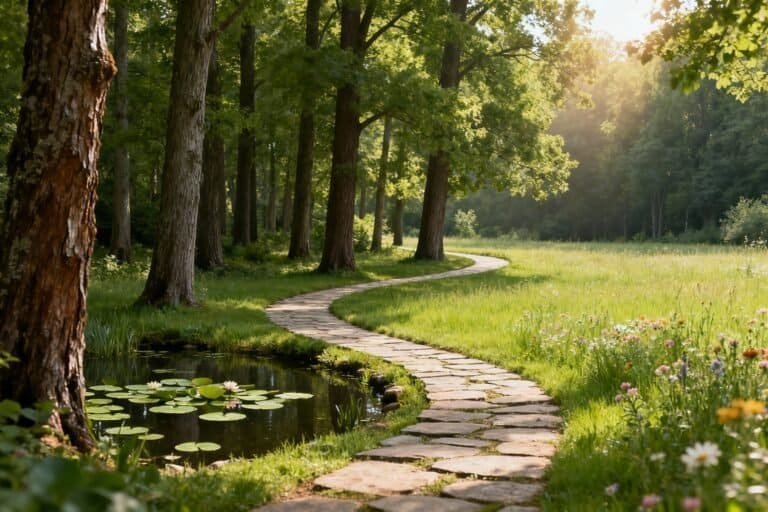
- Curved routes: Gentle S-curves feel natural and slow water.
- Steps every 18–24 inches of rise for comfort.
Keep risers consistent or your shins will file a complaint.
- Materials: Gravel with edging for economy, flagstone for style, or timber risers for a rustic vibe.
Step construction basics
- Riser height: 6–7 inches. Treads 12–16 inches.
- Base: Compact gravel. No shortcuts here.
- Handrails on steeper runs.
Your future self will thank you.
Water Management: Make Gravity Work for You
You’ll never beat water. So guide it. Control runoff and use it to irrigate plants instead of your neighbor’s garage. Pro moves:
- Swales: Shallow ditches with gentle slopes that carry water along the contour.
- French drains: For persistent soggy areas or behind retaining walls.
- Dry creek beds: Functional and good-looking.
Line with fabric, add river rock, and plant along the edges.
- Rain gardens: A planted bowl that captures runoff and filters it. FYI, pollinators love them.
Mulch and erosion control
- Erosion blankets or jute netting on new slopes until plants establish.
- Rock drip lines under roof edges to slow water and save your mulch.
- Check dams (small rock mounds) in swales to slow the flow.
Designing Spaces: Zones With a View
You can turn each level into a room with a purpose. Think function first, then style. Ideas that work:
- Top terrace: Dining or lounge area for sunset views.
- Middle level: Kitchen garden or herb beds—closer to the house wins.
- Lower level: Fire pit or play lawn with privacy from plant screens.
- Hidden nook: A bench tucked into a curve or beneath a small tree.
Lighting and vibes
- Path lights along steps for safety and drama.
- Uplights on trees to highlight structure at night.
- String lights across a terrace for instant “we entertain” energy.
Low-Maintenance Tips (Because Weekends Matter)
We love a gorgeous yard, but nobody wants to babysit it.
Plan for low effort.
- Drip irrigation on each terrace. Water roots, not weeds.
- Native plants that thrive in your zone. They handle your climate, insects, and you forgetting to water.
- Edging to keep mulch and gravel in place.
- Right plant, right place: Sun lovers up top, shade-tolerant species where the slope shadow falls.
IMO, this avoids 80% of plant drama.
DIY vs. Hiring a Pro
You can DIY gentle slopes with groundcovers, small steps, and a dry creek bed. For anything over a few feet of wall height or major drainage tweaks, call a pro.
It costs more upfront, but it saves you from future wall failure memes. DIY sweet spot:
- Planting and mulching
- Timber steps and short risers
- Small berms and swales
Bring in a pro for:
- Retaining walls over 3–4 feet
- Complex drainage or hillside stabilization
- Permits and engineering (yes, those exist)
FAQ
What’s the cheapest way to landscape a sloped backyard?
Focus on plants and mulch first. Use groundcovers, grasses, and shrubs to stabilize soil, then add simple timber steps or a gravel path. Skip big walls at first and shape gentle berms and swales to direct water where you want it.
Do I need a retaining wall?
Not always.
Gentle slopes can thrive with plants, erosion blankets, and curved beds. If you want flat entertaining areas or you see soil washing out consistently, a retaining wall (or a few short ones) makes life easier and safer.
How do I stop mulch from washing away?
Use shredded mulch or pine straw, not chunky bark. Install a rock border at the base of slopes and along drip lines, and add small check dams in swales.
Plant densely—roots and foliage slow water better than any mulch can.
What plants work best for erosion control?
Deep-rooted natives win. Think little bluestem, switchgrass, creeping thyme, sedum, junipers, and spirea. Mix groundcovers with grasses and shrubs so you get quick coverage, strong roots, and year-round interest.
Can I add a lawn on a slope?
You can, but it’s a pain to mow and water.
If you must, keep the slope gentle and use drought-tolerant fescues. Otherwise, terrace a small flat lawn area and use groundcovers on the steeper parts. Your knees will thank you.
How do I plan for drainage without creating a swamp?
Map water flow, then layer solutions: swales to move it, dry creek beds to slow and display it, and rain gardens to absorb it.
Include perforated pipe and gravel behind any walls. Test after a big rain and tweak—iterate until it behaves.
Conclusion
A sloped backyard doesn’t need to be a slippery, mow-hating menace. Shape it with terraces, guide the water, and plant like you mean it.
Build steps you trust, add a few lights, and boom—your hillside becomes the best “room” in the house. FYI, once you see that sunset from your new terrace, you’ll wonder why you didn’t start sooner.