How to Fix Light Problems in Small Space Gardens
Why Tiny Gardens Struggle With Light
Small spaces magnify every mistake. One bright spotlight can feel like a lighthouse. One dim solar stake can turn your patio into a haunted house.
You also fight tight sightlines. Light bounces off walls, glass, and shiny planters. That means glare, hot spots, and weird shadows.
Add plants that don’t love harsh light and you’ve got drama. Good news: a few tweaks with placement, color, and power solve most problems.
Glare: The Number One Mood Killer
Glare ruins ambiance faster than a bug zapper at a wedding. In a small space, your eyes sit close to the fixtures, so bad angles blind you. Fix it with:
- Shielded fixtures: Choose lights with hoods or louvers that block the bulb from direct view.
- Lower mounting: Keep lights below eye level when seated. Aim them at surfaces, not faces.
- Indirect bounce: Wash light off a wall, fence, or planter for soft glow.
- Frosted lenses: Diffusers cut hot spots and soften edges.
Pro move: Layered aim
Aim one light down a path, another up a feature plant, and one sideways across a wall.
You get depth without squinting. IMO, if you can see the light source, you aimed it wrong.
Harsh or Weird Color: Plants Hate It, You Will Too
Color temperature changes everything. Small spaces exaggerate the hue cast by your fixtures. Use this cheat sheet:
- 2700K–3000K (warm): Cozy.Great for patios, wood decks, and evening hangouts.
- 3000K–3500K (neutral): Clean and versatile for foliage without going hospital-white.
- 4000K+ (cool): Crisp but can look harsh on brick and make leaves look plastic.
CRI matters (color rendering index). Aim for CRI 90+ so greens look lush and flowers pop. Low CRI LEDs make your plants look sad.
Your succulents deserve better, FYI.
Match tones to materials
– Warm light loves terracotta, cedar, and brick. – Neutral light flatters metal, stone, and painted fences. – Keep one palette across the space for cohesion. No light salad.
Hot Spots, Shadows, and the “Flashlight Under the Chin” Effect
Small gardens get blotchy fast. One hard spotlight creates cartoon shadows.
Your fern shouldn’t look like a crime scene. Solve with spread and layering:
- Wider beam angles (36–60°) for small areas. Narrow beams punch holes.
- Wall wash lights to soften transitions and make spaces feel bigger.
- Under-cap or strip lights under benches, steps, and rails for invisible glow.
- Two smaller lights beat one big one. Even coverage, zero glare.
Uplight without drama
Place well lights slightly off-center from trunks and angle them past foliage, not into your eyes.
Add a honeycomb louver to tame spill.
Power Problems: Solar, Batteries, and Tricky Wiring
Small spaces often rely on portable or solar lighting. That works—until it doesn’t. Solar truths:
- They need real sun: Partial shade means weak output and sad flicker by 9 pm.
- Panel placement matters: Move the panel to the sunniest spot with an extension lead.
- Cheap cells fade fast: Expect brightness drop after a season.
Battery tips:
- Use rechargeable NiMH and replace annually for consistent performance.
- Set timers or motion sensors to stretch runtime.
- Keep batteries dry and warm; moisture kills contacts and capacity.
Low-voltage wiring (12V) gives the best reliability in small gardens. It’s safer, flexible, and easy to dim and control.
Run a short loop, use waterproof connectors, and keep transformer near an outlet. IMO, if you plan to host regularly, go low-voltage and be done with it.
Smart controls without the headache
Skip the complicated hubs. Use a simple outdoor smart plug on your transformer.
Schedule at sunset, dim when guests arrive, done.
Moisture, Rust, and Fixtures That Age Poorly
Tiny gardens trap humidity. Fixtures corrode, lenses fog, and spiders move in like they pay rent. Buy for weather, not just looks:
- Material: Powder-coated aluminum or brass beats flimsy steel.
- IP rating: Aim for IP65+ for exposed fixtures, IP67 for ground lights.
- Seals and gaskets: Replaceable gaskets keep lenses clear.
- Drainage: Don’t bury fixtures in mulch; elevate or gravel around them.
Maintenance that actually helps:
- Wipe lenses every month. Dirt halves your output.
- Clear cobwebs.They scatter light and look spooky.
- Tighten connections and re-aim after storms or pruning.
Space Illusions: Make Small Feel Bigger With Light
Use light to guide the eye and stretch the boundaries. You don’t need brighter; you need smarter. Tricks that work:
- Edge lighting: Highlight borders and steps to define depth without flooding.
- Bright back, dim front: Put a soft wash on the far wall or trellis. It visually pushes it away.
- Accent only a few heroes: One specimen plant + one texture wall + one path.That’s it.
- Hide the source: If you can’t see the bulb, your space feels calmer and larger.
Plants and heat
LEDs stay cool compared to halogen, but don’t jam fixtures into foliage. Leave airflow so leaves don’t scorch or collect moisture.
Common Layouts That Work (Steal These)
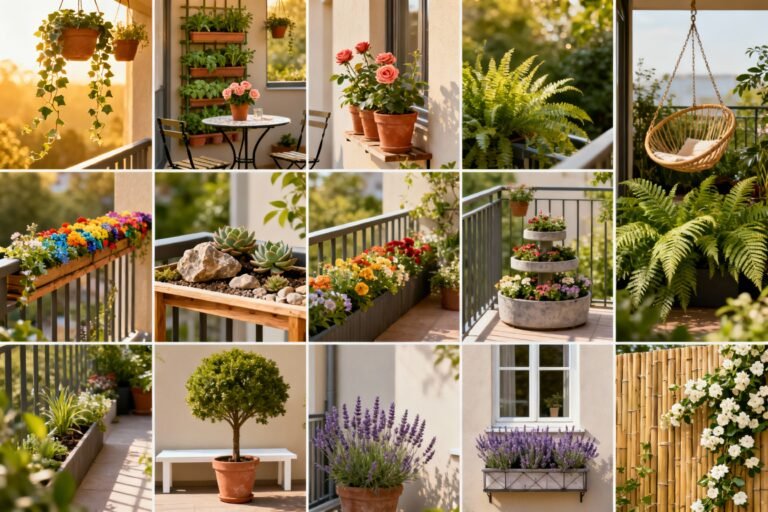
– The Balcony Glow-Up:
- LED strip under the railing for diffuse light.
- Small wall washer on the far side for depth.
- Micro uplight for one plant. Done.
– Courtyard Cozy:
- Two downlights from a pergola or wall for general light.
- Low path lights with shields along the seating edge.
- Warm 2700K across everything for that evening lounge vibe.
– Narrow Side Return:
- Staggered wall spots aimed at textural plants.
- Motion-activated step lights for function.
- Cooler neutral 3000–3500K to clean up tight spaces.
FAQ
How bright should garden lights be in a small space?
Think lumens, not watts.
For cozy seating, aim for 100–300 lumens per fixture. Accents can sit at 150–400 lumens depending on distance and beam spread. Keep path lights around 50–150 lumens to avoid runway vibes.
Can I mix solar and wired lights?
Yes, and it often works great.
Use wired low-voltage for primary lighting and sprinkle solar accents where wiring feels impossible. Just keep color temperatures consistent so it doesn’t look mismatched.
What’s the best color temperature for plants and people?
Use 2700–3000K for gatherings and relaxation, 3000–3500K if you want foliage to look crisp without going clinical. Save 4000K+ for security or modern, minimal spaces only.
High CRI (90+) keeps colors true, FYI.
How do I avoid attracting bugs?
Warm light attracts fewer insects than cool light. Use 2700K, aim light down, and avoid UV-heavy bulbs. Keep lights away from doors and seating if possible, or add motion sensors so lights don’t run all night.
Do I need a transformer for low-voltage lighting?
Yes.
A 12V transformer matches the total wattage of your fixtures plus a buffer (25–30%). Choose one with a timer or connect it to a smart outdoor plug for easy schedules and dimming.
Why do my fixtures corrode so fast?
Moist microclimates, salty air, and cheap metals do that. Upgrade to brass or quality powder-coated fixtures, use IP65+ ratings, and avoid burying fixtures in wet mulch.
Periodic cleaning helps more than you’d think.
Conclusion
Small gardens don’t need more light; they need smarter light. Shield the source, pick the right color, layer with intention, and power it reliably. Do that, and your tiny patch goes from “blinding porch spotlight” to “wow, this is cozy” in one evening.
IMO, that’s the best kind of glow-up.