Terrace Garden Design Ideas to Transform Your Outdoor Space
You’ve got a flat roof or balcony just begging for some personality? Perfect. A terrace garden turns that “meh” space into your favorite hangout—part lounge, part jungle, part therapy session.
You don’t need acres, a crew, or a trust fund. You just need a plan, a few containers, and the audacity to put tomatoes next to your reading chair. Let’s build a sky-high oasis you’ll actually use.
Start With a Vision (and Your Reality)
Before you buy every cute pot on the internet, step outside and look.
How much sun hits the terrace? Where does water collect? Will wind try to yeet your basil off the ledge?
You’ll design smarter when you answer those first. Pick a vibe. Cozy café? Mediterranean courtyard? Edible jungle?
Your plants, materials, and furniture should align with that mood. Measure everything. You can’t plan good flow if you don’t know the space. Measure the longest wall, the railing height, the awkward corners—yes, that annoying pipe too. Set limits. Weight matters. Check building regulations and structural limits.
Soil + water + planters = heavy. FYI: Lightweight containers and expanded clay reduce load.
Sun, Wind, and Privacy = Your Design Triad
– Sunlight: 6+ hours = tomatoes, peppers, succulents. 3–5 hours = herbs, leafy greens, shade-tolerant ornamentals. – Wind: Use screens, trellises, or clustered planters to slow gusts. Your plants (and wine glasses) will thank you. – Privacy: Tall grasses, bamboo in containers, or lattice with climbers creates a green cocoon—without the nosy neighbors.
Layout: Make It Flow, Not Cluttered
We want a space that feels open, not an obstacle course of pots.
Start with zones, then layer. Think in zones: – Lounge zone: A small bistro set or cushy chairs near the best view. – Green zone: A main planting area with depth (tiered planters or raised beds along the edges). – Utility zone: Tools, potting area, water access—hide it a bit, but keep it reachable. Create a backbone. Put tall planters or trellises at the rear or along walls. They anchor the design and guide the eye. Leave pathways. Aim for at least 24–30 inches of clear walking space. Your ankles will vote yes.
Vertical Wins: Walls That Work
You want more plants without eating floor space?
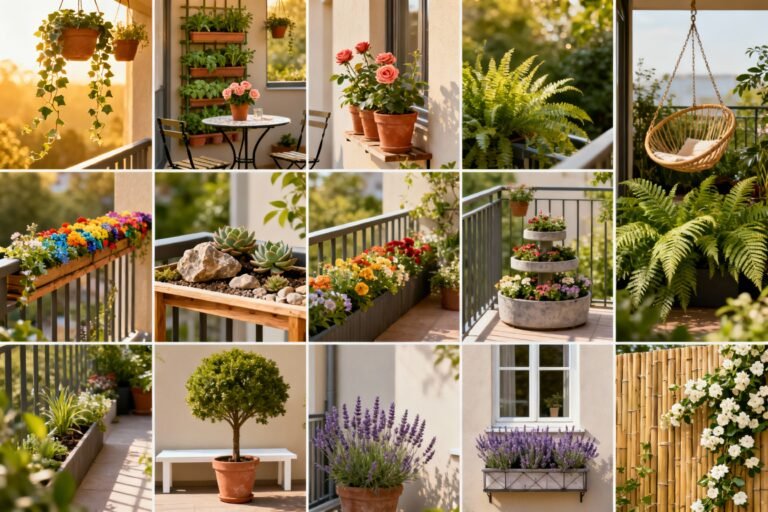
Go vertical. – Trellises + climbers: Jasmine, passionflower, beans, or cucumbers. Pretty and productive—IMO the best combo. – Modular wall planters: Great for herbs and trailing plants. Choose irrigation-friendly systems to avoid daily watering marathons. – Shelving: Staggered plant shelves add layers.
Use metal or treated wood and secure them properly. Gravity remains undefeated.
Containers: Mix Materials, Nail the Drainage
Your containers do the heavy aesthetic lifting. They’re also the difference between happy roots and swampy sadness. Choose materials wisely: – Fiberglass or resin: Lightweight, durable, sleek. – Terracotta: Classic, breathable, dries faster (great if you overwater). – Wood planters: Warm and natural.
Line with pond liner to extend life. – Metal: Modern look; can heat up—mind plant choice and exposure. Drainage = non-negotiable. – Drill holes if needed. – Add a thin layer of expanded clay or gravel. – Use high-quality potting mix, not garden soil. – Consider saucers with risers to protect flooring.
Right Plant, Right Pot
– Deep-rooted veggies: 12–18 inches deep (tomatoes, peppers, dwarf citrus). – Herbs and greens: 6–8 inches (basil, mint—in its own pot, unless you like chaos—lettuce). – Shrubs and small trees: 18–24 inches; choose dwarf varieties. Olive, bay laurel, and dwarf pomegranate look chic and handle pots well.
Plant Palette: Mix Beauty and Bites
You can have flowers and food. It’s not a competition—it’s a team sport. Foolproof choices: – Sun lovers: Rosemary, thyme, lavender, marigolds, zinnias, dwarf sunflowers, tomatoes. – Partial shade: Mint, chives, parsley, lettuce, ferns, begonias, hydrangeas. – Wind-tough: Ornamental grasses, oleander (toxic—keep away from pets), pittosporum, yucca. Color and texture pairings: – Pair feathery grasses with glossy-leaf shrubs for contrast. – Use silver foliage (sage, dusty miller) to cool a hot palette. – Add trailing plants (sweet potato vine, ivy, creeping jenny) to soften edges. Seasonal rotation? Absolutely. – Spring: peas, radishes, pansies. – Summer: basil, tomatoes, peppers, geraniums. – Fall: kale, chard, mums. – Winter: evergreens, heather, hellebores in mild climates.
Pollinator-Friendly Touches
Add nectar-rich plants like salvia, lavender, and echinacea.
Skip pesticides; use neem or insecticidal soap if necessary. The bees will RSVP with enthusiasm.
Watering and Irrigation: Keep It Simple
Water makes or breaks terrace gardens. You want consistency without turning your life into a watering schedule. Best practices: – Water early morning. – Check soil with your finger before watering—wet top doesn’t mean wet root zone. – Group plants by thirst levels. Upgrade ideas: – Drip irrigation with a timer: Uses less water and saves you on hot days or vacations. – Self-watering planters: Built-in reservoirs reduce frequency. – Mulch: Bark, coco coir chips, or pebbles reduce evaporation and look tidy.
Drainage and Runoff
– Ensure slight floor slope toward a drain. – Use saucers and don’t overfill. – If runoff bothers neighbors below, install a simple gutter tray under the planter line.
Good fences make good neighbors; good drainage makes them even better.
Furniture, Lighting, and Vibes
This is where your terrace stops being a plant shelf and starts being a room. Choose compact, foldable, or modular furniture. Bistro tables, nesting stools, storage benches. Keep shapes clean to avoid visual clutter. Lighting sets the mood. – String lights for ambience. – Solar lanterns for low-effort charm. – Low-voltage spotlights to highlight trees or a feature pot. Little luxuries (do it): – Outdoor rug to define the lounge. – Weatherproof cushions. – Small fountain for white noise—FYI, it also masks traffic.
Safety and Practicalities
– Secure tall pots against tipping with brackets or weights. – Keep plants 6–12 inches from edges if wind gets wild. – Use non-slip outdoor tiles or deck tiles. Wet feet plus terracotta equals cartoon fall.
Care Routine: Keep It Healthy Without Babysitting
A terrace garden thrives on small, regular habits rather than heroic weekend rescues. Weekly to-dos: – Deadhead spent flowers. – Check for pests under leaves. – Rotate containers for even growth. Monthly to-dos: – Feed with a balanced liquid fertilizer (or tomato feed for fruiting crops). – Top up mulch. – Prune anything blocking airflow—fungus loves crowded leaves. Seasonal resets: – Refresh potting mix annually for heavy feeders. – Clean and oil wood furniture. – Swap out tired annuals and replant.
Budget-Friendly Hacks That Still Look Luxe
– Go big on fewer, larger planters. They look intentional and need less watering. – Use cuttings and seed swaps. Free plants are the best plants. – Paint old pots one color palette. Instant cohesion. – DIY trellis from bamboo or conduit for pennies. – Upcycle crates into shelves—line them for durability.
FAQ
How do I stop roots from damaging the terrace?
Use containers or raised beds with liners, never plant directly into the roof substrate.
Add saucers and ensure drainage layers so water doesn’t pool. If you plan big planters, add protective mats underneath.
What’s the easiest edible crop for beginners?
Start with herbs: basil, mint (in its own pot), chives, and parsley. Then try cherry tomatoes and salad greens.
They forgive a few mistakes and reward you fast—IMO the best confidence boost.
Can I have a terrace garden with only afternoon sun?
Yes, but choose wisely. Afternoon sun can scorch. Opt for heat-tolerant plants like rosemary, oleander (again, toxic), lantana, and succulents.
Add shade cloth or a pergola for delicate plants.
How do I deal with strong wind?
Create windbreaks with lattice panels, reed screens, or grouped tall planters. Choose sturdy, low-profile containers and heavier soils (mix potting soil with some garden loam). Prioritize flexible plants like grasses that move instead of snap.
Do I need special soil?
Use high-quality potting mix designed for containers.
It drains well yet holds moisture. For edibles, blend in compost and a slow-release organic fertilizer. Avoid heavy garden soil; it compacts and suffocates roots.
What about watering when I travel?
Set up a drip system with a timer or use self-watering planters.
For short trips, water deeply, mulch heavily, and move pots out of direct sun. Your plants won’t throw a tantrum while you’re gone.
Conclusion
A terrace garden isn’t a mini version of a yard—it’s its own clever ecosystem. Start with a vibe, map the sun and wind, and build upward with smart containers, verticals, and plants that love your conditions.
Layer in comfy seating and warm lighting so you actually hang out there. Keep care simple, enjoy the blooms, and snack on a tomato you grew ten feet off the ground. That’s peak main-character energy, IMO.